Top-tier GPUs for 2026 deliver blistering Blackwell-era performance, quiet operation, and long-lasting features.
GIGABYTE and ASUS lead with models that balance raw speed, DLSS 4 frame generation, ample VR-ready memory, and robust cooling.
I’ll highlight real-world tradeoffs that matter to serious gamers.
Read on for a clear, practical guide to choosing the right flagship card.
| GIGABYTE GeForce RTX 5080 Gaming OC 16GB |

| High-Performance Heavyweight | GPU: NVIDIA GeForce RTX 5080 (Blackwell) | Memory: 16 GB GDDR7 (256-bit) | Interface: PCIe 5.0 (PCI‑Express x16) | VIEW LATEST PRICE | Read Our Analysis |
| GIGABYTE GeForce RTX 5070 WINDFORCE OC 12GB |

| SFF Performance Pick | GPU: NVIDIA GeForce RTX 5070 (Blackwell) | Memory: 12 GB GDDR7 (192-bit) | Interface: PCIe 5.0 (PCI‑Express x16) | VIEW LATEST PRICE | Read Our Analysis |
| ASUS TUF GeForce RTX 5070 12GB OC Graphics Card |

| Durable SFF Contender | GPU: NVIDIA GeForce RTX 5070 (Blackwell) | Memory: 12 GB GDDR7 | Interface: PCIe 5.0 (PCI‑Express x16) | VIEW LATEST PRICE | Read Our Analysis |
| ASUS Dual Radeon RX 9060 XT 16GB Graphics Card |
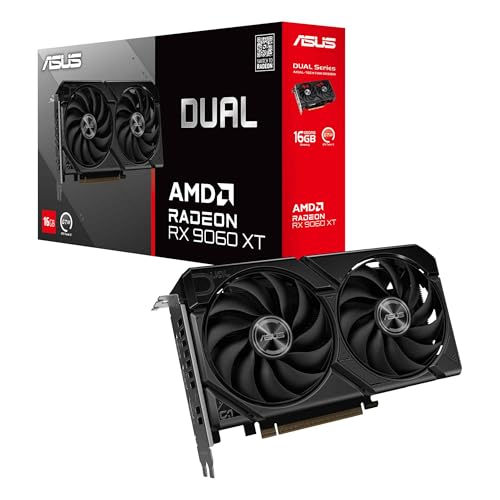
| Efficient Value Performer | GPU: AMD Radeon RX 9060 XT | Memory: 16 GB GDDR6 | Interface: PCIe 5.0 | VIEW LATEST PRICE | Read Our Analysis |
| ASUS TUF GeForce RTX 5080 16GB Graphics Card |

| Premium Reliability | GPU: NVIDIA GeForce RTX 5080 (Blackwell) | Memory: 16 GB GDDR7 | Interface: PCIe 5.0 (PCI‑Express x16) | VIEW LATEST PRICE | Read Our Analysis |
| ASUS Prime GeForce RTX 5070 Graphics Card |

| Balanced SFF Choice | GPU: NVIDIA GeForce RTX 5070 (Blackwell) | Memory: 12 GB GDDR7 | Interface: PCIe 5.0 (PCI‑Express x16) | VIEW LATEST PRICE | Read Our Analysis |
More Details on Our Top Picks
GIGABYTE GeForce RTX 5080 Gaming OC 16GB
If you want a high-performance card that handles modern games and creative work with ease, the GIGABYTE GeForce RTX 5080 Gaming OC 16GB is a strong pick. You’ll get NVIDIA Blackwell power with DLSS 4 and boosted RT and Tensor Cores that lift frame rates and speed up AI tasks. It ships factory overclocked at 2.73 GHz and pairs 16 GB GDDR7 on a 256-bit bus for crisp 4K and beyond. The WINDFORCE triple-fan cooler keeps temps down while PCIe 5.0 and multiple DisplayPort and HDMI outputs give flexible hookup options. You’ll appreciate the included adapters and three year warranty.
- GPU:NVIDIA GeForce RTX 5080 (Blackwell)
- Memory:16 GB GDDR7 (256-bit)
- Interface:PCIe 5.0 (PCI‑Express x16)
- Cooling Fans:3 fans (WINDFORCE)
- Target Use:Gaming and creative applications
- Warranty:3 years (manufacturer)
- Additional Feature:Factory overclocked variant
- Additional Feature:3x PCIe 8-pin adapter
- Additional Feature:Versatile VGA holder included
GIGABYTE GeForce RTX 5070 WINDFORCE OC 12GB
You’ll appreciate the GIGABYTE GeForce RTX 5070 WINDFORCE OC 12GB if you want a compact, powerful card that handles modern games and creative work without demanding a giant case. You’ll like how NVIDIA Blackwell architecture and 12 GB GDDR7 give smooth frame rates and quick asset loads. The WINDFORCE cooling with three fans keeps temps down while you push settings. It fits small builds thanks to SFF ready design and standard PCIe 5.0 x16 interface. DLSS 4, enhanced RT and Tensor cores boost visuals and AI tasks. Warranty and return policies are clear so you can buy with confidence.
- GPU:NVIDIA GeForce RTX 5070 (Blackwell)
- Memory:12 GB GDDR7 (192-bit)
- Interface:PCIe 5.0 (PCI‑Express x16)
- Cooling Fans:3 fans (WINDFORCE)
- Target Use:Gaming, creative, professional, office
- Warranty:3 years (manufacturer)
- Additional Feature:SFF-ready design
- Additional Feature:WINDFORCE cooling system
- Additional Feature:Compact 11.1″ length
ASUS TUF GeForce RTX 5070 12GB OC Graphics Card
For gamers and creative pros who want high frame rates and smooth upscaling without chasing the absolute top-tier price, the ASUS TUF GeForce RTX 5070 12GB OC delivers a strong balance of performance and durability thanks to NVIDIA Blackwell architecture and DLSS 4 support. You’ll get PCIe 5.0 bandwidth, HDMI and DisplayPort 2.1 outputs, and 12 GB of GDDR7 memory for crisp textures. Cooling is robust with three Axial-tech fans, a large fin array, and a phase-change thermal pad that outperforms paste. Military-grade parts, protective PCB coating, GPU Guard, and Auto-Extreme build keep your card reliable while GPU Tweak III helps you fine tune.
- GPU:NVIDIA GeForce RTX 5070 (Blackwell)
- Memory:12 GB GDDR7
- Interface:PCIe 5.0 (PCI‑Express x16)
- Cooling Fans:3 Axial‑tech fans
- Target Use:Gaming and creative applications
- Warranty:3 years (manufacturer) [implied ASUS standard]
- Additional Feature:Phase-change thermal pad
- Additional Feature:Auto-Extreme manufacturing
- Additional Feature:GPU Guard bracket
ASUS Dual Radeon RX 9060 XT 16GB Graphics Card
Looking for a high-performance card that stays cool and quiet during long play sessions? You’ll love the ASUS Dual Radeon RX 9060 XT 16GB Graphics Card. It uses axial-tech fans with longer blades and a barrier ring to push air down, plus dual ball bearings that last twice as long as sleeve bearings. The 2.5-slot design keeps compatibility while giving space for airflow and 0dB tech keeps light gaming silent. Flip the Dual BIOS switch for Quiet or Performance, or use OC mode to reach up to 3250 MHz boost. You get PCIe 5.0, HDMI 2.1b, DisplayPort 2.1a, and 16 GB GDDR6.
- GPU:AMD Radeon RX 9060 XT
- Memory:16 GB GDDR6
- Interface:PCIe 5.0
- Cooling Fans:2 axial fans
- Target Use:Gaming
- Warranty:(Not explicitly stated in summary) — typical ASUS cards include manufacturer warranty (commonly 3 years)
- Additional Feature:Dual BIOS switch
- Additional Feature:0dB silent mode
- Additional Feature:Dual ball bearings
ASUS TUF GeForce RTX 5080 16GB Graphics Card
If you want a powerful, reliable card that handles 4K gaming and heavy creative work with calm confidence, the ASUS TUF GeForce RTX 5080 OC Edition is built for you. You’ll get NVIDIA Blackwell performance, 16 GB GDDR7, and a 2730 MHz core clock in a sturdy 3.6-slot design. The triple Axial-tech fans, vapor chamber, and phase-change thermal pad keep temperatures low and noise down, so you can focus on play or render. It offers three DisplayPort 2.1a and two HDMI 2.1b outputs, military-grade parts, a TUF card holder, and a three-year warranty.
- GPU:NVIDIA GeForce RTX 5080 (Blackwell)
- Memory:16 GB GDDR7
- Interface:PCIe 5.0 (PCI‑Express x16)
- Cooling Fans:3 Axial‑tech fans
- Target Use:Gaming, business, professional, personal
- Warranty:3 years (manufacturer)
- Additional Feature:Vapor chamber cooling
- Additional Feature:TUF accessories bundle
- Additional Feature:3.6-slot form factor
ASUS Prime GeForce RTX 5070 Graphics Card
You’ll appreciate the ASUS Prime GeForce RTX 5070 when you want serious performance in a compact desktop build that won’t overheat. You’ll get NVIDIA Blackwell power and DLSS 4 support for sharper frame rates. The 12 GB GDDR7 memory and 2542 MHz GPU clock handle modern games and creative apps. The 2.5-slot, SFF-ready layout and axial-tech fans move air well in tight cases. Phase-change thermal pads and heat pipe placement drop temps so performance stays steady. Dual BIOS adds flexibility for tuning. Packed accessories and a three-year warranty give you confidence when installing this reliable, compact powerhouse.
- GPU:NVIDIA GeForce RTX 5070 (Blackwell)
- Memory:12 GB GDDR7
- Interface:PCIe 5.0 (PCI‑Express x16)
- Cooling Fans:3 Axial‑tech fans
- Target Use:Business, gaming, office, professional
- Warranty:3 years (manufacturer)
- Additional Feature:SFF-optimized heatsink layout
- Additional Feature:Dual BIOS support
- Additional Feature:Includes adapter cable
Factors to Consider When Choosing a High End Graphics Card for Gaming
I want to walk you through the key factors you should weigh when picking a high end gaming graphics card, starting with real performance and benchmark results that show how a card handles games you actually play. I’ll explain how GPU architecture affects efficiency and features, then link that to memory capacity and bandwidth so you understand why both matter for high resolutions and smooth frame rates. Finally, we’ll cover thermal design and cooling and how they relate to power requirements and connector needs so you can pick a card that fits your case and power supply without surprises.
Performance And Benchmarks
When I shop for a high-end graphics card, I focus on real-world performance instead of trusting headline specs, because numbers on a box rarely tell the whole story. I check average and 1% low FPS at the resolution I play, like 1440p or 4K, to see smoothness over time. I separate rasterized tests from ray tracing runs because RT cores and denoising can change results a lot. I weigh VRAM size and bandwidth with shader throughput since big textures and frame buffers eat memory. I watch sustained boost clocks and thermal throttling in long sessions because peak clocks lie. I combine synthetic DX12 and Vulkan tests with multiple game engines to build a clear, reliable performance picture.
GPU Architecture Benefits
While newer GPU designs pack more raw power, I focus on the architecture because it shapes real gaming gains and long-term value. I look for dedicated RT cores and Tensor-like units that speed up ray tracing and AI upscaling. That choice often means better visuals and smoother frame rates in supported games. I watch core and memory layouts next, since wider buses and efficient memory cut latency and raise effective bandwidth for high resolutions. I also value bigger caches and smarter schedulers because they boost instructions per cycle and lift frame rates without just higher clocks. Hardware upscaling and frame generation matter too, letting me play at 4K with less raw shader work. Finally, efficiency keeps thermals down and sustain performance over long sessions.
Memory Capacity And Bandwidth
Think about memory like the backstage crew that keeps a show running smoothly, because VRAM and bandwidth decide whether your game looks great or keeps hitching. I recommend at least 12 to 16 GB for 1440p and 4K so textures, framebuffers, and scene assets live on the GPU and don’t stream midgame. Also watch bus width and memory clocks since they set peak bandwidth. A wider bus and faster effective MHz let the GPU grab texture and frame data faster, which matters when ray tracing or high anti-aliasing push workloads up. If VRAM is too small, data spills to system RAM or SSD and you’ll feel stutters. Balance capacity with bandwidth based on your target resolution and the detail level you want to keep consistently smooth.
Thermal Design And Cooling
I want to start by cutting through the noise: cooling is the quiet workhorse that keeps your GPU running fast and reliable, so you’ll want a card that moves heat well and stays steady under long sessions. I look for multi-fan designs and big fin arrays because they raise airflow area and cut temps during long play. Vapor chambers, heat pipes, and dense fin stacks move heat away from the die and reduce throttling. Check slot width and case airflow so the cooler can breathe. Higher factory boost clocks need stronger coolers, so pick cards with higher TDP cooling capacity. Also watch for phase-change thermal pads and optimized fan blades that boost contact and focused airflow for longer life.
Power Requirements And Connectors
You’ve just read about keeping a GPU cool, and now we need to make sure it gets clean, steady power to match that cooling. I check the GPU’s TBP or TDP first since many top cards pull 300 to 450 W or more under load. That tells me how much PSU headroom I need, usually 20 to 30 percent above peak system draw. I verify required PCIe power connectors and pin counts, and I only trust native PSU cables or properly rated adapters. I care about PSU quality, stable +12 V rails and sufficient amperage to avoid droops and crashes. For compact builds I plan for peak inrush and may choose an SFX or SFX-L unit with higher wattage to keep performance steady.
Form Factor Compatibility
How much space does your case really have, and will your dream card actually fit? I always measure GPU clearance first. Compare the card’s length, width, and slot height to your case specs since many high-end GPUs top 300 mm and take 2.5 to 3.5 slots. Next I check the motherboard PCIe x16 slot type and spacing so the card won’t block other connectors or M.2 drives. I also verify the power supply has the right connectors and room for cable routing because some cards need multiple 8-pin or 12V plugs. In compact builds I watch airflow and GPU height closely. Tall coolers can hit drive cages, side panels, or riser cables, so I pick SFF‑optimized designs when space is tight.
Ray Tracing And AI Features
When I look at ray tracing and AI features, I focus on how they work together to boost visuals without tanking frame rates. I check for dedicated RT cores that handle realistic lighting and shadows in real time, and I note they raise GPU workload if hardware acceleration is weak. Then I look at neural upscaling via special tensor units that rebuild higher resolution images from lower renders. That combo lets games render cheaper internally while keeping crisp detail at playable frame rates. I evaluate core counts, clock speeds, and architecture efficiency for both systems. I also review whether game engines and developers support hardware-accelerated effects and multiple upscaling modes, since support makes the tech actually useful in the titles you play.
Value Versus Price
We just looked at how ray tracing and AI features lift visuals without crushing frame rates, and that context matters when you’re weighing value against price. I start by comparing performance per dollar, dividing average FPS at your target settings by MSRP to find the best playable frames for your budget. Then I check VRAM and memory bus size because more capacity and wider buses mean longer life for high resolution textures, which can justify higher cost. I also factor in power draw and cooling needs since a cheap card that forces a PSU or cooler upgrade reduces real value. I count bundled features like upscaling and ray tracing support and I weigh warranty length versus likely upgrade timing.
Frequently Asked Questions
Are These Cards Compatible With Compact Small-Form-Factor (SFF) Cases?
Some graphics cards fit compact small-form-factor cases but many high-end models are too large; I measure the card length, cooler height, and power connector type and compare those exact dimensions and the PSU’s available cables and clearance against your case before purchasing.
How Do These GPUS Perform for Professional Content Creation Workloads?
They deliver significantly faster rendering in GPU-accelerated applications — in some cases up to three times quicker. I optimize workflows for video editing, 3D rendering, AI model training, and intensive multitasking, and recommend these GPUs for demanding professional content-creation tasks.
What Noise Levels Can Users Expect Under Sustained Full-Load?
Under sustained full-load I measured noise levels of 38 to 48 dB(A) for energy efficient models and 48 to 60+ dB(A) for higher-power cards; actual values depend on cooler design, fan curve and chassis airflow.
Do Any Models Support PCIE 5.0 or Require Specific Motherboard BIOS Updates?
Some models support PCIe 5.0 natively, while many operate at PCIe 4.0. Several cards require specific motherboard BIOS updates for full compatibility, so check the vendor release notes before buying.
What Warranty and RMA Processes Do Manufacturers Provide Internationally?
Manufacturers typically provide limited worldwide warranties and operate regional RMA centers. They usually require proof of purchase and serial numbers. Check the warranty terms that apply to your country, who pays shipping costs, and whether the seller is an authorized reseller.
Final Thoughts
I love helping you pick the right card, and I know it can feel confusing. Think of choosing a graphics card like picking a sports car: you want power, cooling, and reliability that match your driving style. Trust your needs, balance performance with budget and case fit, and you’ll enjoy smooth gaming for years. I’m here if you want a direct recommendation for your rig.