Wireless interconnected smoke and carbon monoxide detectors protect every room by sounding all alarms together, giving faster warning across a house.
This article covers eight models that combine photoelectric and electrochemical sensors, sealed 10-year batteries, clear numeric CO readouts, tamper locks, and easy mounting or Quick Connect hardwiring.
I’ll compare mesh networking range, firmware safety, warranty terms, and which packs suit small or larger layouts.
Read on to pick the setup that fits your family and home layout.
| Kidde Hardwired Smoke & Carbon Monoxide Detector (3-Pack) |

| Code-Compliant Choice | Detection Type: Photoelectric smoke + Electrochemical CO | Interconnectivity: Hardwired interconnect with compatible Kidde units | Power Backup / Battery: Built-in 10-year battery backup (hardwired primary) | VIEW LATEST PRICE | Read Our Analysis |
| Interconnected Smoke & Carbon Monoxide Detectors (6-Pack) | Best For Large Properties | Detection Type: Photoelectric smoke + Electrochemical CO | Interconnectivity: Wireless mesh interconnect (pre-linked, up to 300 m) | Power Backup / Battery: Sealed 10-year lithium battery (no hardwiring) | VIEW LATEST PRICE | Read Our Analysis | |
| SC9120B Smoke and Carbon Monoxide Alarm |

| Reliable Hardwired Option | Detection Type: Dual ionization smoke + CO (separate CO sensor) | Interconnectivity: Hardwired interconnect with BRK/First Alert (up to 18 devices) | Power Backup / Battery: Hardwired with 9V battery backup (included) | VIEW LATEST PRICE | Read Our Analysis |
| Kidde Hardwired Smoke & Carbon Monoxide Detector (3-Pack) |
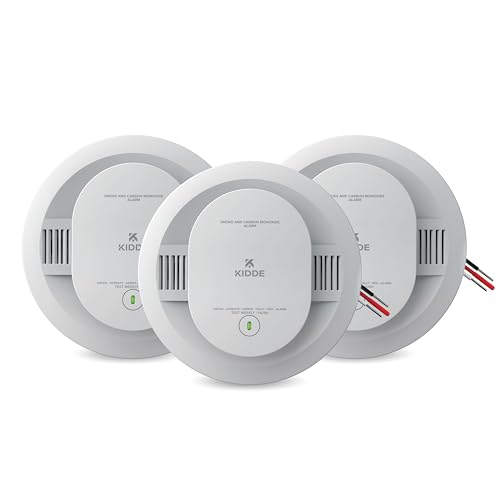
| Installer-Friendly Pick | Detection Type: Photoelectric smoke + Electrochemical CO | Interconnectivity: Hardwired interconnect with compatible Kidde units | Power Backup / Battery: Two AA alkaline batteries included (hardwired primary) | VIEW LATEST PRICE | Read Our Analysis |
| First Alert SMICO105-AC Smoke & CO Alarm 3-Pack |

| Nuisance-Alarm Reducer | Detection Type: Combination smoke (advanced sensing) + CO | Interconnectivity: Hardwired interconnect (early warning interconnect) | Power Backup / Battery: 10-year battery backup (sealed) | VIEW LATEST PRICE | Read Our Analysis |
| Interlinked Smoke & CO Alarm 10-Year Battery (5-Pack) | Long-Life Battery Pick | Detection Type: Photoelectric smoke + Electrochemical CO | Interconnectivity: Wireless/interlinked alarms (mesh/wireless network) | Power Backup / Battery: Built-in 10-year lithium battery (CR17505) | VIEW LATEST PRICE | Read Our Analysis | |
| Kidde Smoke & Carbon Monoxide Detectors 4-Pack | Battery-Powered Convenience | Detection Type: Photoelectric smoke + Electrochemical CO | Interconnectivity: Battery-powered interconnect capable (model supports interconnect) | Power Backup / Battery: Two AA batteries included (battery-powered) | VIEW LATEST PRICE | Read Our Analysis | |
| Kidde 10-Year Battery Smoke & Carbon Monoxide Detector |

| Voice-Alert Specialist | Detection Type: Photoelectric smoke + CO (voice alerts) | Interconnectivity: Interconnect capable (built for whole-home interconnect) | Power Backup / Battery: Built-in 10-year battery (model 30CUD10-V) | VIEW LATEST PRICE | Read Our Analysis |
More Details on Our Top Picks
Kidde Hardwired Smoke & Carbon Monoxide Detector (3-Pack)
If you want long‑lasting, code‑ready protection that looks after both smoke and carbon monoxide without constant battery fuss, this Kidde hardwired 3‑pack is a smart choice. You’ll get three white combination alarms that mount easily and tie together so one alert wakes the whole house. They use photoelectric smoke sensing and electrochemical CO sensing, so they spot smoldering fires faster and track deadly gas. You’ll rely on 120V hardwiring plus a built‑in 10‑year backup battery, clear 85 dB alerts, and reduced false alarms from better sensing. They meet UL standards and include a decade warranty for peace of mind.
- Detection Type:Photoelectric smoke + Electrochemical CO
- Interconnectivity:Hardwired interconnect with compatible Kidde units
- Power Backup / Battery:Built-in 10-year battery backup (hardwired primary)
- Audible Alarm Level / Loudness:85 dB audible alarm
- Standards / Certification:UL 217 & UL 2034 (plus FCC)
- Warranty / Service:10-year limited warranty
- Additional Feature:Photoelectric + electrochemical
- Additional Feature:Hardwired with interconnect
- Additional Feature:10-year sealed backup
Interconnected Smoke & Carbon Monoxide Detectors (6-Pack)
Best For Large Properties
View Latest PriceYou’ll want the Interconnected Smoke and Carbon Monoxide Detectors 6-pack if you’re looking to protect a whole house with one simple, maintenance-free system. You get six modern SC-9111 units with photoelectric smoke and electrochemical CO sensors that last ten years. They’re pre-linked so they work out of the box and form a mesh network reaching about 980 feet, so when one alarm sounds, they all sound. The sealed 10-year lithium batteries mean no upkeep. The LCD shows CO levels and battery life, and colored LEDs signal smoke or CO. Mounting hardware and lifetime U.S. support ease setup and worry.
- Detection Type:Photoelectric smoke + Electrochemical CO
- Interconnectivity:Wireless mesh interconnect (pre-linked, up to 300 m)
- Power Backup / Battery:Sealed 10-year lithium battery (no hardwiring)
- Audible Alarm Level / Loudness:(Not explicitly dB) Loud interconnected alarm (meets UL standards)
- Standards / Certification:UL 217 & UL 2034 (ISO 17025 / NRTL-tested)
- Warranty / Service:Warranty details via seller; lifetime free replacement service claimed
- Additional Feature:Pre-linked out-of-box
- Additional Feature:LCD shows PPM
- Additional Feature:300 m mesh range
SC9120B Smoke and Carbon Monoxide Alarm
The BRK SC9120B is a great choice for homeowners who want dependable protection in one compact, hardwired unit, especially if you sleep near an attached garage or use gas appliances. You get smoke and carbon monoxide sensing in a single device, so you won’t guess which danger caused an alarm. It uses a dual ionization smoke sensor for fast flaming fires and a superior CO sensor. Visual and audible alerts tell you which hazard and which unit started it. The unit hardwires to 120 volt with a 9 volt backup, locks to prevent tampering, and interconnects with up to 17 other devices.
- Detection Type:Dual ionization smoke + CO (separate CO sensor)
- Interconnectivity:Hardwired interconnect with BRK/First Alert (up to 18 devices)
- Power Backup / Battery:Hardwired with 9V battery backup (included)
- Audible Alarm Level / Loudness:(Standard hardwired alarm) Audible alarm (meets UL requirements)
- Standards / Certification:Meets UL standards (BRK/First Alert compatible)
- Warranty / Service:7-year limited warranty
- Additional Feature:Dual ionization smoke
- Additional Feature:Latching alarm indicator
- Additional Feature:Tamper-resistant locks
Kidde Hardwired Smoke & Carbon Monoxide Detector (3-Pack)
For homeowners who want reliable, code-ready protection throughout the house, the Kidde hardwired smoke and carbon monoxide detector 3-pack delivers dependable sensing and easy integration. You’ll get three combination alarms with mounting hardware and two AA batteries for backup power. They hardwire to 120V AC so they stay powered, and batteries keep them working during outages. The photoelectric smoke sensor and electrochemical CO sensor act fast, cutting detection time versus a competitor and lowering false alarms from cooking or steam. They interconnect with other Kidde units so one alarm warns the whole home. You’ll appreciate the 10-year warranty and simple installation.
- Detection Type:Photoelectric smoke + Electrochemical CO
- Interconnectivity:Hardwired interconnect with compatible Kidde units
- Power Backup / Battery:Two AA alkaline batteries included (hardwired primary)
- Audible Alarm Level / Loudness:85 dB audible alarm
- Standards / Certification:UL 217 & UL 2034 (plus FCC)
- Warranty / Service:10-year limited warranty
- Additional Feature:Two AA backup
- Additional Feature:Quick-connect mounting base
- Additional Feature:9th Edition styling
First Alert SMICO105-AC Smoke & CO Alarm 3-Pack
If you want reliable, low-maintenance protection for a whole house, consider the First Alert SMICO105-AC 3-pack because it blends smoke and carbon monoxide sensing with a 10-year battery backup and easy installation. You’ll get Precision Detection sensors that follow new standards, so cooking won’t set off false alarms as often and real fires trigger earlier alerts. The Quick Connect plug makes installation fast, and you won’t need to rewire existing circuits. When one unit senses danger, all compatible alarms sound and the indicator shows which one started it. That clarity helps you act calmly and protect your family.
- Detection Type:Combination smoke (advanced sensing) + CO
- Interconnectivity:Hardwired interconnect (early warning interconnect)
- Power Backup / Battery:10-year battery backup (sealed)
- Audible Alarm Level / Loudness:Early warning alarm (meets industry standards)
- Standards / Certification:Complies with new industry standards (UL referenced)
- Warranty / Service:(Manufacturer warranty details available) 10-year battery backed protection implied
- Additional Feature:Precision Detection tech
- Additional Feature:Quick Connect plug
- Additional Feature:Red initiator indicator
Interlinked Smoke & CO Alarm 10-Year Battery (5-Pack)
Long-Life Battery Pick
View Latest PriceYou’ll find this interlinked 5-pack is ideal when you want consistent, long-lasting protection across a whole home without fuss. You get combo photoelectric smoke sensing and electrochemical CO sensing for faster, more accurate alerts. Multi-directional sensing holes and dense gas ports cut false alarms, while an LCD shows real-time CO in PPM and battery level. A blue flash signals severe fire or high CO, red flashes mark CO detection. Each unit runs on a 10-year CR17505 lithium battery and fits easily on the included bracket with screws and anchors. Tests, silence mode, loud 85 dB alarms, and lifetime support reassure you.
- Detection Type:Photoelectric smoke + Electrochemical CO
- Interconnectivity:Wireless/interlinked alarms (mesh/wireless network)
- Power Backup / Battery:Built-in 10-year lithium battery (CR17505)
- Audible Alarm Level / Loudness:>85 dB at 3 meters
- Standards / Certification:Designed to meet safety standards (lifetime service noted)
- Warranty / Service:Lifetime free after-sales service (support available)
- Additional Feature:CR17505 10-year cell
- Additional Feature:LCD battery level
- Additional Feature:Silent-mode LED flash
Kidde Smoke & Carbon Monoxide Detectors 4-Pack
Battery-Powered Convenience
View Latest PriceChoose the Kidde 4-pack when you want simple, reliable protection that covers a whole home without rewiring. You’ll get four white Kidde 30CUDR alarms that sense smoke with photoelectric sensors and carbon monoxide with electrochemical sensors. They run on two AA batteries so you can install them fast. You’ll notice an 85 dB alarm and a red LED status light. Kidde’s sensing tech cuts false alarms and finds smoldering fires faster in tests. They meet UL and FCC standards, include mounting hardware and a ten year limited warranty, and offer peace of mind for you and your family.
- Detection Type:Photoelectric smoke + Electrochemical CO
- Interconnectivity:Battery-powered interconnect capable (model supports interconnect)
- Power Backup / Battery:Two AA batteries included (battery-powered)
- Audible Alarm Level / Loudness:85 dB audible alarm
- Standards / Certification:UL 217 & UL 2034 (tested)
- Warranty / Service:10-year limited warranty
- Additional Feature:Battery-powered, no-wiring
- Additional Feature:Included AA batteries
- Additional Feature:PDF user guide available
Kidde 10-Year Battery Smoke & Carbon Monoxide Detector
Homeowners and renters who want worry-free protection will like the Kidde 10-Year Battery Smoke and Carbon Monoxide Detector because it combines long-lasting power with two hazards in one unit. You’ll get smoke and carbon monoxide sensing in a single compact alarm that fits in most homes. It uses advanced sensing to detect smoke over 25% faster and to cut down on false alarms from cooking or steam. The 85 dB alarm and red LED alert you, while voice messages say Fire or Warning, Carbon Monoxide. A built-in 10-year battery and warranty save you replacement hassle and cost.
- Detection Type:Photoelectric smoke + CO (voice alerts)
- Interconnectivity:Interconnect capable (built for whole-home interconnect)
- Power Backup / Battery:Built-in 10-year battery (model 30CUD10-V)
- Audible Alarm Level / Loudness:85 dB alarm
- Standards / Certification:UL 217 & UL 2034
- Warranty / Service:10-year limited warranty
- Additional Feature:Voice hazard alerts
- Additional Feature:Estimated $40 battery savings
- Additional Feature:Built-in 10-year cell
Factors to Consider When Choosing Wireless Interconnected Smoke and Carbon Monoxide Detectors
When I help people pick wireless interconnected smoke and carbon monoxide detectors, I guide them through a few practical factors that matter most to safety and ease of use. We’ll look at power source options and interconnect range alongside which sensor types are included, how hard the installation might be, and what kinds of alerts the unit offers so you can choose what fits your home and routine. I know this can feel overwhelming, so I’ll keep the advice clear, humane, and focused on what actually makes one system better for your space.
Power Source Options
Let’s talk about power choices so you can feel confident your alarms will work when you need them. I look at hardwired units first because they run on your home 120V AC and usually have a battery backup like 9V, AA, or a built in 10 year lithium cell. That backup keeps you protected during outages. Battery powered alarms are simple to install. They come with sealed 10 year lithium or replaceable AA or 9V cells. Combination units often use non replaceable 10 year batteries, which cut maintenance but mean replacing the whole alarm when the battery dies. Think about backup duration and ease of swap. Also make sure each alarm’s power supports steady wireless connectivity so alerts propagate reliably across your system.
Interconnect Range
You picked a power setup that fits your home, and now we need to check how those alarms actually talk to each other. I look at the stated interconnect range first, usually 100 to 300 meters in open air, and compare that to the farthest distance between alarms in your house. Keep in mind manufacturers evaluated in open air. Indoors, walls, floors, metal studs, ducts, and appliances can cut range by half or more. For multi story or thick masonry homes, I make sure the system supports mesh networking or repeaters so signals can hop around obstacles. I measure worst case signal paths and then pick devices rated at least 1.5 times that distance. I also check both line of sight and tested indoor range or max hops so linked performance stays reliable.
Sensor Types Included
I care about the sensors inside your alarms because they decide what dangers you’ll be warned about and how fast that warning comes. I look for photoelectric sensors to catch slow, smoldering fires from couches or wiring. I also check for ionization sensors because they act faster on quick, flaming fires like grease or paper. Combining both makes sense for broad fire detection, and many homes benefit from that dual approach. For carbon monoxide, I trust electrochemical CO sensors for steady, accurate low PPM readings and long term stability. Many combination units pair photoelectric smoke with electrochemical CO so you get both protections in one device. Remember sensor lifespans vary; most need replacement around seven to ten years to stay reliable.
Installation Complexity
When choosing wireless interconnected smoke and carbon monoxide detectors, think about how easy the whole setup will be and how much time you’ll need to spend on planning, mounting, and testing. I know installing alarms can feel intimidating, but you can make it simple by checking wireless range first. Mesh systems often list 150 to 300 m line of sight, so plan placements to keep units talking. Prelinked units cut setup time, while user-configurable networks need button presses and pairing steps. Mounting usually calls for a drill, screwdriver, and anchors, plus following height and spacing rules. For sealed battery models, activation and a post-mount test button check are quick. Expect to test every alarm and re-pair any that miss the full-network test.
Alert Types Available
You’ve already thought about placement and pairing, so now let’s look at how alarms tell you something’s wrong. I want you to notice both sound and sight. Pick alarms that blast at least 85 dB at 10 feet and show clear LEDs so people with hearing or sight limits get alerted. Also look for distinct, labeled voice or tone alerts that say Fire or Carbon Monoxide. That clarity cuts confusion and helps you act fast. Some units add a numeric CO readout in PPM so you can watch levels rise. Make sure your system supports full-house interconnect so all units sound together and show which one started it. Finally, prefer devices that pair local signals with app push alerts so you’re warned even when away.
False Alarm Resistance
Often I start by saying false alarms are more than annoying; they steal trust in your detectors and can make people ignore real danger. I look for dual sensing technologies that combine photoelectric and ionization smoke sensing with electrochemical CO sensing. That mix helps tell smoldering from flaming fires and lowers nuisance triggers. I favor units with algorithms that say they cut false alarms from cooking steam, shower steam, and aerosols and that list improved detection speed or rates. I want adjustable sensitivity and hush features so you can silence a nuisance alarm without losing protection. I check for multi-directional sensing ports and placement guidance to manage airflow and reduce transient triggers. Finally, automatic self-tests and clear status indicators help me keep sensors reliable.
Smart Home Compatibility
Smart‑home fit matters because your detectors should do more than beep; they should join the network and help keep your household safe. I always start by checking protocol compatibility like Wi‑Fi, Zigbee, Z‑Wave, Thread, or proprietary RF so alarms can talk to your hub or voice assistant. Next I confirm if a hub or bridge is required or if devices offer direct cloud alerts for remote notifications. I look at integrations and APIs for Alexa, Google Home, HomeKit, or IFTTT so lights, locks, or HVAC can respond to alarms. I want real time telemetry such as CO PPM, battery and fault status, and event history available locally or in apps. Finally I verify signed firmware updates, encrypted links, and sound credential handling to keep the system secure.
Warranty And Support
After you verify that alarms will talk to your home system and send the right alerts, the next thing I always check is warranty and support because those details protect you over the long haul. I look for warranty length and type, and I want to know if sensors and internal batteries are covered for the full advertised lifespan, often seven to ten years. I ask when the warranty starts and whether proof of purchase is needed. I also confirm support channels, like phone, email, and local service centers, and whether lifetime tech help or replacement is included. I read exclusions carefully, such as misuse, bad installation, battery swaps, or exposure to nonrated conditions. Finally, I check return windows and who handles repairs or direct manufacturer swaps.
Frequently Asked Questions
Do Wireless Detectors Require a Hub or Base Station to Interconnect?
No, not always. I will check each model because some use a direct wireless mesh or proprietary radio to link, while others require a hub or base station for internet alerts and smart home integration.
How Do Wireless Units Handle Signal Interference From Other Devices?
Wireless units mitigate interference by changing to less congested channels, using adaptive routing in the mesh network to route around noisy nodes, and applying packet retransmission plus forward error correction to recover corrupted data. They mark safety-critical packets with higher priority so those frames are sent first and retried more aggressively. If a link degrades beyond recovery the system generates an alert and switches to an alternate path or backup radio to keep alarms connected.
Can I Integrate These Detectors With My Smart Home System?
Yes. I can integrate many detectors with smart home systems using WiFi, Zigbee, or Z-Wave. I will verify each detector’s compatibility with your hub and mobile app, set up the hub connections, and configure automations, push or SMS notifications, and device linking so alerts are timely and reliable.
What Is the Lifespan and Replacement Process for Sealed 10-Year Batteries?
Sealed 10-year batteries provide roughly ten years of service. Replace the entire detector when the battery reaches its end of life. Test the detector monthly, clean it once a year, and replace the unit immediately when it signals end of life. Follow the manufacturer’s instructions for safe disposal.
Are Wireless Alarms Compliant With Local Building Codes and Insurance Requirements?
Yes. I will review your local building codes and your insurance policy to identify exact requirements such as device interconnectivity, installation locations, and necessary certifications. I will also advise what documentation to keep and whether you should hire a certified inspector to verify compliance and maintain coverage.
Final Thoughts
I know choosing the right detectors feels heavy, but you don’t have to do it alone. Think of interconnected units as a safety net that speaks to every room when one alarm senses danger. Pick combo sensors with long sealed batteries, clear displays, and proven wireless range. Trust reputable brands, check firmware and warranties, and get the layout right for your home. A small investment now can keep your family safe and give you real peace of mind.