
When you buy clothes in Europe, knowing about clothing conversion is very important. You might have problems because of different sizing systems. For example, US sizes usually fit more loosely. European sizes are often tighter. This can cause confusion and disappointment when clothes don’t fit right.
Also, there are no universal sizing standards. This means brands make their own size charts. Different ideas about fit can make your choices harder. To avoid these problems, use a good size chart. Make sure you have your correct measurements before you buy.
Women’s Clothing Conversion
Women’s Size Chart
When shopping for women’s clothing in Europe, you will notice significant differences in sizing compared to the US. European sizes often run smaller, which can lead to confusion. For example, a US size 8 may correspond to a European size 36 or 38. Understanding these differences is crucial for finding the right fit.
To help you navigate these differences, here is a size conversion chart for women’s clothing:
US Size | European Size | Bust (cm) | Waist (cm) | Hip (cm) |
|---|---|---|---|---|
2 | 34 | 82 | 64 | 90 |
4 | 36 | 86 | 68 | 94 |
6 | 38 | 90 | 72 | 98 |
8 | 40 | 94 | 76 | 102 |
10 | 42 | 98 | 80 | 106 |
12 | 44 | 102 | 84 | 110 |
14 | 46 | 106 | 88 | 114 |
Tip: Always check the specific brand’s size chart, as sizes can vary between manufacturers.
Fit Considerations
When selecting clothing, consider your body measurements. Accurate measurements will help you find the best fit. For instance, if your bust girth is 100 cm, your hip girth is 104 cm, and your height is 176 cm, you would typically wear a size code of 100BG in European sizing.
Here’s a quick reference for how body measurements correspond to European women’s clothing sizes:
Body Measurement Type | Measurement (cm) | Clothing Size |
|---|---|---|
Bust Girth | 100 | Size Code: 100BG |
Hip Girth | 104 | Size Code: 100BG |
Height | 176 | Size Code: 100BG |
Using a fit guide can enhance your shopping experience. It helps you understand how different styles may fit your body shape. Remember, the right size can vary based on the cut and fabric of the clothing. Always prioritize comfort and confidence when choosing your outfits.
Men’s Clothing Conversion
Men’s Size Chart
When you shop for men’s clothing in Europe, you will notice differences in sizing compared to the US. European sizes often run smaller than their American counterparts. For example, if you wear a US size medium, you might need a European size large. Understanding these differences is essential for finding the right fit.
Here’s a size conversion chart for men’s clothing:
EU Size | US Size | Chest Girth (cm) |
|---|---|---|
36 | XS | 84 |
37/38 | S | 92 |
39/40 | M | 100 |
41/42 | L | 108 |
43/44 | XL | 116 |
45/46 | XXL | 124 |
Tip: Always check the specific brand’s size chart, as sizes can vary between manufacturers.
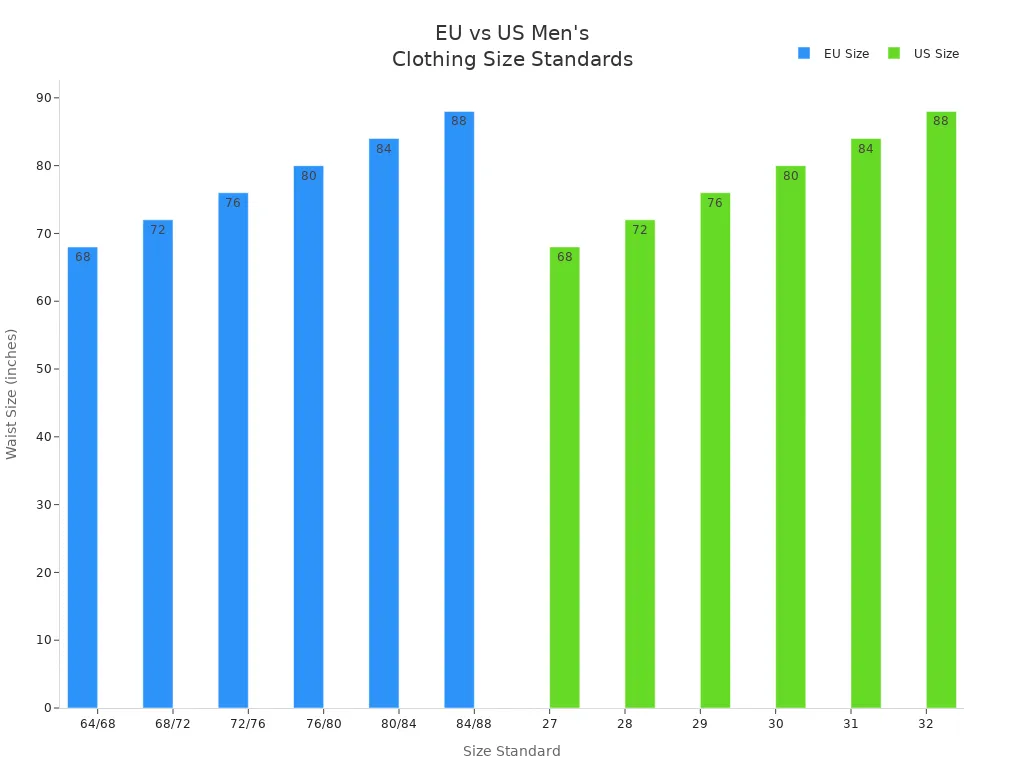
You may also want to consider your waist size when selecting pants. Here’s a waist size conversion chart:
EU Size | US Size | Waist Size (inches) |
|---|---|---|
64/68 | 27 | 68 |
68/72 | 28 | 72 |
72/76 | 29 | 76 |
76/80 | 30 | 80 |
80/84 | 31 | 84 |
84/88 | 32 | 88 |
Neck Size Measurement
To find your neck size for European shirts, you need to measure accurately. Wrap a tape measure around your neck, positioning it about an inch below your Adam’s Apple. It’s best to have someone help you with this measurement. Ensure that you can fit two fingers between the tape and your neck for comfort.
Common Fit Issues
When purchasing European-sized clothing, many men report specific fit issues. Here are some common concerns:
European clothing often runs 2-4 sizes smaller than expected.
Jackets and shirts may feel shorter and tighter than in previous years.
Many consumers express confusion and frustration due to these sizing discrepancies.
Understanding these potential issues can help you make better choices when shopping for clothing in Europe. Always prioritize comfort and fit to ensure you feel confident in your new outfits.
Children’s Clothing Conversion
When you buy children’s clothes in Europe, you will see big differences in sizes compared to other places. European sizes often use height in centimeters. In the United States, they use a mix of numbers and letters. For example, a size ‘2T’ in the US shows a specific age. But European sizes like ‘104 cm’ show the child’s height. This can make it hard to find the right fit for your child.
Here’s a size conversion chart for children’s clothing:
US Size | UK Size | European Size | Australian Size |
|---|---|---|---|
12 | 11-12 | 146-152 cm | 12 |
10 | 9-10 | 134-140 cm | 10 |
8 | 7-8 | 122-128 cm | 8 |
6 | 5-6 | 110-116 cm | 6 |
4 | 3-4 | 98-104 cm | 4 |
Tip: Always check the specific brand’s size chart, as sizes can vary between manufacturers.
Age and Size Correlation
In Europe, children’s clothing sizes usually match their height, not age. For example, a size ‘120’ fits a child about 120 cm tall. This usually means the child is around 5 to 6 years old. But as kids grow, this can change. So, measuring your child’s height is often a better way to find their size than just using age.
Here are some common problems parents face when changing children’s clothing sizes:
Brand Inconsistency: Different brands may have different size rules, which can confuse parents.
Growth Spurts: Kids grow at different speeds, making age-based sizes tricky.
Plus-Size Options: It can be hard to find clothes for plus-size kids.
To avoid sizing problems, always check the specific size chart of the brand you are buying from. Remember, a size in one brand might not be the same in another.
When measuring your child for clothes, follow these steps:
Lay your child’s well-fitting t-shirt flat on a surface.
Measure from the highest point of the shoulder to the bottom of the shirt (torso length).
Measure from one end of the sleeve to the other end of the sleeve.
Measure across the chest from armpit to armpit.
Measure from the top of the shoulder to the end of the cuff.
By taking accurate measurements, you can ensure a better fit for your child’s clothing. This method helps you deal with the challenges of clothing conversion and makes shopping easier.
International Size Chart Comparison

Global Sizing Overview
When you buy clothes from other countries, you see different sizing systems. Each area has its own rules, which can be confusing. Here’s a quick look at some main international size systems:
System | Size Range | Notes |
|---|---|---|
EU | 32-34-36-38-40-42 | Sizes can be smaller, especially in Italian and French clothing. |
US | 0-2-4-6-8-10 | Usually larger than EU sizes. |
UK | 6-8-10-12-14 | Similar to US but with different numbers. |
Brazilian | 34-36-38-40 | Uses a different number system. |
European sizes usually use centimeters for measurements. US sizes often use inches. For example, a European size 38 is like a US size 8. Knowing these differences helps you shop better.
Key Differences in Fit
Fit can change a lot between regions. Here are some important differences to think about:
European Sizes: These sizes are often smaller, especially in Spanish, Italian, and French clothing. German and Scandinavian sizes are usually more accurate.
US Sizes: These sizes often go up for vanity sizing. A US medium might feel bigger than a European large.
Asian Sizes: Sizes in Asia often show height and body measurements in centimeters. For example, a size 175/100A means a height of 175 cm and a chest size of 100 cm.
These differences can affect your shopping experience. Sizing problems cause up to 50% of returns in fashion. Each return costs stores between $21 and $46, showing how important accurate size conversion is.
To avoid sizing issues, always check an international size chart before buying. This helps you pick the right size and makes your shopping experience better.
Using the right size chart is very important when buying European clothes. Good size charts give you fit details that matter. This is key in a market with different sizing rules. They help cut down confusion, which means fewer returns and happier customers.
Look at the charts given to make sure you pick the right size. This will make your shopping better and help you find clothes that fit nicely. Remember, wearing the right size makes you feel more confident and comfortable.
Tip: Always measure yourself before you shop. This easy step can save you time and stress.
FAQ
What are European dress sizes compared to US sizes?
European dress sizes often run smaller than US sizes. For example, a US size 8 typically corresponds to a European size 36 or 38. Always check size charts before purchasing clothing.
How do I measure myself for clothing?
To measure yourself, use a tape measure. Measure your bust, waist, and hips. For dresses, also consider your height. Accurate measurements help you find the right European dress sizes.
Why do clothing sizes vary by brand?
Different brands have unique sizing standards. This inconsistency can lead to confusion when shopping for clothing. Always refer to the specific brand’s size chart for the best fit.
Can I convert my size from US to European easily?
Yes, you can convert your size using a size chart. However, remember that fit may vary by style and brand. Always try on clothing when possible to ensure a good fit.
What should I do if my size falls between two sizes?
If your measurements fall between two European dress sizes, choose the larger size for comfort. You can also consider tailoring for a perfect fit.