

I once watched a bulky drive turn a quick backup into a coffee break, and that’s then I stopped settling for slow storage. When you’re moving 4K video, game files, or daily backups, the right portable SSD can feel less like a gadget and more like a time saver with a lock on it. I’ll compare six strong options, from rugged SanDisk models to fast SSK and Samsung picks, so you can see which one fits your setup best.
| SanDisk 1TB Extreme Portable External SSD (SDSSDE60-1T00-G25) |

| Best Rugged Pick | Capacity: 1TB | Read Speed: Up to 550MB/s | Write Speed: Up to 550MB/s | VIEW LATEST PRICE | Read Our Analysis |
| SSK Portable SSD 500GB USB-C External Drive |

| Fastest Budget | Capacity: 500GB | Read Speed: Up to 1050MB/s | Write Speed: Up to 1000MB/s | VIEW LATEST PRICE | Read Our Analysis |
| Samsung T7 Portable SSD 1TB (MU-PC1T0T/AM) |
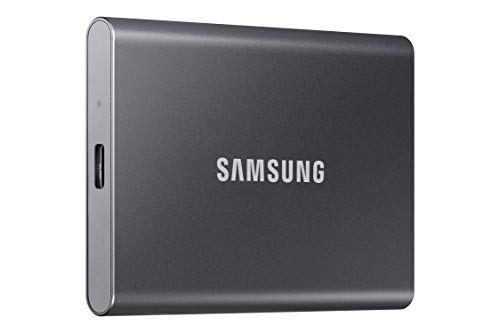
| Best Premium Pick | Capacity: 1TB | Read Speed: Up to 1050MB/s | Write Speed: Up to 1000MB/s | VIEW LATEST PRICE | Read Our Analysis |
| SanDisk 2TB Extreme Portable SSD (SDSSDE61-2T00-G25) |
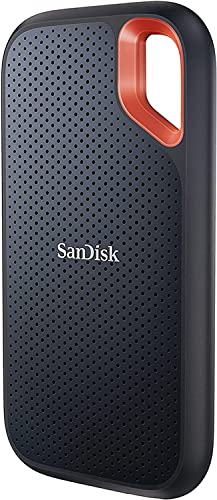
| Best High-Capacity | Capacity: 2TB | Read Speed: Up to 1050MB/s | Write Speed: Up to 1000MB/s | VIEW LATEST PRICE | Read Our Analysis |
| SanDisk 4TB Extreme Portable SSD (SDSSDE61-4T00-G25) |
| Best for Power Users | Capacity: 4TB | Read Speed: Up to 1050MB/s | Write Speed: Up to 1000MB/s | VIEW LATEST PRICE | Read Our Analysis |
| SSK Portable 1TB USB-C External SSD |

| Best Compact Pick | Capacity: 1TB | Read Speed: Up to 1050MB/s | Write Speed: Up to 1000MB/s | VIEW LATEST PRICE | Read Our Analysis |
More Details on Our Top Picks
SanDisk 1TB Extreme Portable External SSD (SDSSDE60-1T00-G25)
If you need a compact, rugged SSD for fast file transfers, the SanDisk 1TB Extreme Portable External SSD is a strong pick. You get up to 550MB/s read and transfer speeds, so you can move hi-res photos and videos quickly. Its pocket-sized build fits easily in your bag, and the IP55 rating helps it handle water, dust, shocks, and vibration. You can connect it with USB-C on PC or Mac, and SanDisk includes both Type-C cables and a Type-C to Type-A adapter. It’s backed by a 3-year limited warranty.
- Capacity:1TB
- Read Speed:Up to 550MB/s
- Write Speed:Up to 550MB/s
- Interface:USB 3.1 Type-C
- Form Factor:Portable
- Included Cables:USB-C to USB-A adapter; USB-C to USB-C cable
- Additional Feature:IP55 water resistance
- Additional Feature:Shock-resistant up to 1500G
- Additional Feature:2m drop resistance
SSK Portable SSD 500GB USB-C External Drive
The SSK Portable SSD 500GB USB-C External Drive is a strong pick for you should you need fast, truly portable storage that moves easily between devices. You get a 500GB M.2 NVMe drive in a compact 2-inch aluminum shell that weighs just 36.6g. It connects through USB 3.2 Gen 2 and can hit 1050MB/s read and 1000MB/s write speeds, with SLC caching helping sustain performance on transfers under 150GB. It includes USB-C and USB-A cables, works with Windows, Mac, Android, and iPhone 15, and even supports 4K60 ProRes HDR capture.
- Capacity:500GB
- Read Speed:Up to 1050MB/s
- Write Speed:Up to 1000MB/s
- Interface:USB 3.2 Gen2
- Form Factor:Portable
- Included Cables:USB-C to A cable; USB-C to C cable
- Additional Feature:SLC caching support
- Additional Feature:S.M.A.R.T. monitoring
- Additional Feature:4K60Hz ProRes capture
Samsung T7 Portable SSD 1TB (MU-PC1T0T/AM)
Samsung’s T7 Portable SSD 1TB is a strong pick for you whenever you need fast, dependable storage in a compact drive that travels easily. You get PCIe NVMe performance with read speeds up to 1,050 MB/s and write speeds up to 1,000 MB/s, so transfers move quickly over USB 3.2 Gen 2. The 1TB capacity works well for backups, gaming files, and 4K video. You can connect it to PC, Mac, Android devices, consoles, and phones with the included USB-C cables. Its aluminum body, shock resistance, AES encryption, and 3-year warranty add peace of mind.
- Capacity:1TB
- Read Speed:Up to 1050MB/s
- Write Speed:Up to 1000MB/s
- Interface:USB 3.2 Gen 2
- Form Factor:Portable
- Included Cables:USB-C to C; USB-C to A
- Additional Feature:256-bit AES encryption
- Additional Feature:6-foot drop protection
- Additional Feature:Aluminum unibody construction
SanDisk 2TB Extreme Portable SSD (SDSSDE61-2T00-G25)
SanDisk’s 2TB Extreme Portable SSD (SDSSDE61-2T00-G25) is a strong pick whenever you need fast, compact storage you can trust on the go, especially should you work across a laptop, desktop, or tablet and want easy USB-C access. You get NVMe speeds up to 1,050 MB/s read and 1,000 MB/s write, though your device can cap results. Its IP65 rating, 3-meter drop resistance, and carabiner loop help protect it in transit. You also get 256-bit AES encryption, password protection, and SanDisk Memory Zone file management.
- Capacity:2TB
- Read Speed:Up to 1050MB/s
- Write Speed:Up to 1000MB/s
- Interface:USB 3.2 Gen 2
- Form Factor:Portable
- Included Cables:USB-C cable included
- Additional Feature:IP65 water resistance
- Additional Feature:3-meter drop protection
- Additional Feature:Password protection
SanDisk 4TB Extreme Portable SSD (SDSSDE61-4T00-G25)
Built for users who want a tough, high-capacity drive they can carry anywhere, the SanDisk Extreme Portable SSD (SDSSDE61-4T00-G25) gives you 4TB of fast storage in a compact black design. You get read speeds up to 1050MB/s and write speeds up to 1000MB/s over USB 3.2 Gen 2. It’s built to handle up to 3-meter drops, plus IP65 water and dust resistance. Use the carabiner loop to clip it on, and protect your files with 256-bit AES encryption and password protection. It works with Windows, macOS, and tablets.
- Capacity:4TB
- Read Speed:Up to 1050MB/s
- Write Speed:Up to 1000MB/s
- Interface:USB 3.2 Gen 2
- Form Factor:Portable
- Included Cables:USB-C to USB-A adapter; USB-C to USB-C cable
- Additional Feature:IP65 dust resistance
- Additional Feature:Carabiner loop
- Additional Feature:Automatic space cleanup
SSK Portable 1TB USB-C External SSD
When you want a compact external SSD that delivers near-1GB/s transfers for everyday file backups, photo libraries, and mobile workflows, the SSK Portable 1TB USB-C External SSD is a strong pick. You get up to 1,050MB/s read and 1,000MB/s write speeds over USB 3.2 Gen 2, plus USB-C and USB-A cables for broad compatibility. It works with Windows, Mac, iPhone 15, Android, tablets, and TVs. SLC caching, TRIM, and S.M.A.R.T. monitoring help sustain performance and protect the drive. Its aluminum body is tiny, light, and backed through a 3-year warranty.
- Capacity:1TB
- Read Speed:Up to 1050MB/s
- Write Speed:Up to 1000MB/s
- Interface:USB 3.2 Gen2
- Form Factor:Portable
- Included Cables:USB-C and USB-A cables included
- Additional Feature:SLC caching support
- Additional Feature:S.M.A.R.T. monitoring
- Additional Feature:TRIM support
Factors to Consider When Choosing a Portable External SSD
When I help you choose a portable external SSD, I start with storage capacity and transfer speed, since those shape how well it fits your files and workflow. I also look at durability ratings and device compatibility so you can trust it with your gear and use it across your devices. Finally, I weigh the portability design, because a slim, rugged drive is easier to carry every day.
Storage Capacity
Storage capacity is one of the initial things I’d weigh upon choosing a portable external SSD, because the right size depends on what you’ll actually store. I’d pick 500GB for light photo and document storage, but I’d lean toward 1TB or 2TB for bigger media libraries and active projects. Should you handle high-resolution video, large game collections, or frequent backups, I’d look at 1TB to 4TB so I don’t run out of room fast. I also keep in mind that the usable space can appear 7% to 10% lower than advertised. Smaller drives are easier to carry, yet larger ones help me avoid constant cleanup. I’d consider future growth too, since extra room now can beat upgrading soon.
Transfer Speed
Transfer speed is the next thing I’d weigh, because it determines how quickly I can move large files and get back to work. I usually compare the advertised rating initially: entry-level portable SSDs hover around 550 MB/s, while faster NVMe-based drives can reach about 1,050 MB/s. Should I’m choosing between USB options, I know a 10 Gbps USB 3.2 Gen 2 drive can outrun a 5 Gbps connection, but my computer and cable still shape the result. I also check sequential read speed for opening or copying big files, and write speed for videos, backups, and project folders. Should a drive uses SLC caching, I want to know upon speed drops after the cache fills.
Durability Ratings
Durability ratings matter just as much as speed, because I want a portable SSD that can handle real-world bumps, spills, and travel. I check the enclosure’s ingress rating initially; IP55 or IP65 tells me how well it resists dust and water in daily use. Then I look at shock and drop specs, since I want proof the drive can survive impact, not just marketing claims. Should I’ll move it often, I also value vibration resistance, especially ratings across 10–2000 Hz. Temperature limits matter too, because I might use it in heat or cold, and rugged models should handle both operating and storage extremes. I prefer aluminum bodies, sealed ports, and protective loops, since those details usually signal tougher construction in general.
Device Compatibility
Whenever I choose a portable external SSD, I initially make sure it matches my device’s connection type, whether that’s USB-C, USB 3.1, or USB 3.2 Gen 2, because the wrong interface can stop it from working or slow it down. I also check operating system support, since some drives work with Windows, macOS, Android, iPhone, and tablets, while others don’t. Assuming I want to use one with a phone or tablet, I verify that it lists mobile support and includes the right USB-C or USB-A cable or adapter. For creator work, I look for direct-recording support like 4K video capture or ProRes on compatible phones. Even then, I keep in mind that transfer speed still depends on my host device, cable, and USB standard.
Portability Design
Whenever I pick a portable external SSD, I make sure it’s small and light enough to carry without noticing it. I look for pocket-sized drives, ideally 2 to 4 inches long and under 2 ounces, because they slip easily into my bag or jacket pocket. A 2-inch or 2.5-inch body usually feels more practical whenever I’m packing a laptop sleeve. I also check the thickness; around 0.3 to 0.5 inches keeps the drive from crowding my gear. Materials matter too: aluminum or rugged plastic can stay light while handling daily travel. I like a built-in loop or tidy cable storage as well, since they make the SSD easier to attach, pack, and grab on the go.
Security Features
Once I’ve narrowed a portable external SSD down to a size I can carry comfortably, I look closely at how well it protects my data. I’d prioritize hardware encryption, especially 256-bit AES, because it keeps files locked even if someone steals the drive. Password protection matters too, since it stops unauthorized users from opening my stored files. I also like security software that manages files and clears unused space automatically, because it helps me stay organized and lowers the chance of exposing sensitive data. S.M.A.R.T. monitoring is useful for spotting premature drive problems before they damage crucial files. Finally, I prefer models with firmware updates, since they can improve both security and reliability over time.
Frequently Asked Questions
How Do SSDS Compare to HDDS for Everyday File Transfers?
For everyday file transfers, SSDs copy files much faster than HDDs, and they do it with less noise and greater resistance to shocks. HDDs still have the price advantage, since they usually cost less per gigabyte.
Can Portable SSDS Work With Gaming Consoles?
Yes, portable SSDs work with many gaming consoles if the console supports external storage. They can reduce install and load times, though some games still need to run from internal storage.
What Causes External SSD Speeds to Slow Down?
External SSDs often slow down because they get too hot, fill up, use a poor cable, connect to a slow port, handle background write activity, or reach the limits of their controller. Using a high quality cable and leaving some free space can reduce most of these slowdowns.
How Long Do Portable SSDS Typically Last?
Portable SSDs often last about 5 to 10 years, and sometimes longer. Their lifespan depends on NAND quality, how much data you write, heat exposure, and overall wear. With regular backups and light to moderate use, they usually hold up well.
Are Portable SSDS Safe for Travel and Rough Handling?
Yes, portable SSDs are generally safe for travel and rough handling, but I still protect mine. I pack it in a padded case and avoid drops.
