

A good audio amplifier can be the backbone of your system, turning modest speakers into a clear, confident voice in your room. If you’re choosing between compact Bluetooth models like the Fosi Audio BT20A and TB10D or more feature-packed options such as the BT-298Pro, AMP-10, and Pyle units, the right match depends on your space, inputs, and sound goals. The best choice may not be the one you expect…
| Fosi Audio BT20A Bluetooth Stereo Amplifier |
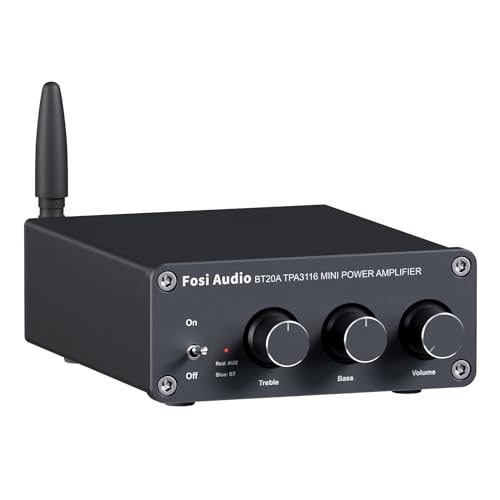
| Best Overall | Power Output: 100W x 2 max | Bluetooth: Bluetooth wireless streaming | Input Options: RCA input | VIEW LATEST PRICE | Read Our Analysis |
| Bluetooth 5.0 Stereo Amplifier Receiver for Home Speakers |

| Best for Versatility | Power Output: 50W x 2 RMS | Bluetooth: Bluetooth 5.0 | Input Options: AUX / MIC / SD / USB | VIEW LATEST PRICE | Read Our Analysis |
| Fosi Audio TB10D Stereo Amplifier with Bass/Treble Control |

| Best for Power | Power Output: 300W x 2 | Bluetooth: Bluetooth compatible | Input Options: RCA input | VIEW LATEST PRICE | Read Our Analysis |
| AMP-10 Bluetooth Stereo Audio Amplifier with FM Radio |

| Best for Karaoke | Power Output: 50W x 50W rated | Bluetooth: Bluetooth 5.0 | Input Options: AUX / RCA / USB | VIEW LATEST PRICE | Read Our Analysis |
| Pyle 200W Stereo Power Amplifier with Bluetooth (PDA29BU.5) |

| Best Feature Set | Power Output: 200W peak / 100W RMS | Bluetooth: Bluetooth streaming | Input Options: RCA / USB / SD / AUX | VIEW LATEST PRICE | Read Our Analysis |
| Bluetooth 5.0 Mini Stereo Amplifier with FM Radio |

| Best Compact Pick | Power Output: 120W RMS total | Bluetooth: Bluetooth 5.0 | Input Options: USB / line input | VIEW LATEST PRICE | Read Our Analysis |
More Details on Our Top Picks
Fosi Audio BT20A Bluetooth Stereo Amplifier
If you want a compact amp that can power passive speakers without taking up much space, the Fosi Audio BT20A is a strong fit for home setups and small venues. You get a 2-channel Class D amplifier that delivers up to 100W x 2, so it can drive bookshelf speakers with ease. Bluetooth streaming lets you play music wirelessly from your phone, and RCA inputs give you another easy connection option. You can fine-tune bass and treble, and the simple one-touch setup keeps installation quick. Its durable all-black design fits neatly on shelves, and it weighs just 1.5 pounds.
- Power Output:100W x 2 max
- Bluetooth:Bluetooth wireless streaming
- Input Options:RCA input
- Tone Control:Bass / treble knobs
- Speaker Support:Passive speakers
- Remote Control:Not included
- Additional Feature:Compact mini design
- Additional Feature:One-touch power switch
- Additional Feature:24-month manufacturer warranty
Bluetooth 5.0 Stereo Amplifier Receiver for Home Speakers
The BT-298Pro Bluetooth 5.0 stereo amplifier receiver is a smart choice if you want to turn passive speakers into a wireless 2.0 home audio setup with simple, flexible control. It delivers up to 400W + 400W peak power and 50W x 2 RMS, and it supports 4–16Ω speakers. You can stream from your phone, tablet, or MP3 player through stable Bluetooth 5.0, or use AUX, USB, SD, and MIC inputs. With bass, treble, and volume controls plus a remote, you can tune sound for rooms, parties, or karaoke.
- Power Output:50W x 2 RMS
- Bluetooth:Bluetooth 5.0
- Input Options:AUX / MIC / SD / USB
- Tone Control:Bass / treble adjustment
- Speaker Support:4–16Ω passive speakers
- Remote Control:Included
- Additional Feature:MIC input support
- Additional Feature:SD/USB playback
- Additional Feature:AC/DC power options
Fosi Audio TB10D Stereo Amplifier with Bass/Treble Control
With 300W per channel from the TPA3255 chip, the Fosi Audio TB10D is a strong fit if you want a compact stereo amplifier that can drive 2–8 ohm bookshelf speakers with clean, dynamic sound. You get 600W total output, plus bass and treble knobs to shape the sound to your room. Connect it through RCA to a turntable with a phono preamp, TV, PC, or phone, then power passive speakers. It also works for bass shakers, and built-in protection circuits help keep it stable and extend lifespan.
- Power Output:300W x 2
- Bluetooth:Bluetooth compatible
- Input Options:RCA input
- Tone Control:Bass / treble knobs
- Speaker Support:2–8Ω bookshelf speakers
- Remote Control:Not included
- Additional Feature:TPA3255 chip
- Additional Feature:Built-in protection circuits
- Additional Feature:Turntable phono compatibility
AMP-10 Bluetooth Stereo Audio Amplifier with FM Radio
AMP-10 Bluetooth Stereo Audio Amplifier with FM Radio is a strong fit for anyone who wants a versatile 2.0-channel system that can drive high-power speakers, support an active subwoofer, and still stay stable during long listening sessions. You get 50W + 50W rated power, up to 600W peak output, and a Class D stage with dual audio chips that keep distortion below 0.5%. Bluetooth 5.0 reaches 32 feet, while USB, AUX, and RCA inputs add flexibility. Two mic jacks, echo control, and FM presets make it great for karaoke, parties, and home audio.
- Power Output:50W x 50W rated
- Bluetooth:Bluetooth 5.0
- Input Options:AUX / RCA / USB
- Tone Control:Bass / treble adjustment
- Speaker Support:High-power speakers
- Remote Control:Not listed
- Additional Feature:FM radio presets
- Additional Feature:Dual MIC jacks
- Additional Feature:Echo control
Pyle 200W Stereo Power Amplifier with Bluetooth (PDA29BU.5)
If you want a compact stereo amplifier that can handle karaoke nights, home audio, or a small home theater setup, the Pyle PDA29BU.5 is a strong fit. You get 200W peak power, 100W RMS, and dual-channel output for two speakers. Stream wirelessly via Bluetooth from your phone, tablet, iPhone, or computer, or plug in through RCA, USB, SD, AUX, or FM radio. Two 1/4″ mic inputs make karaoke easy. You can fine-tune bass, treble, mic, and master volume with responsive knobs, while the LED display and remote keep control simple.
- Power Output:200W peak / 100W RMS
- Bluetooth:Bluetooth streaming
- Input Options:RCA / USB / SD / AUX
- Tone Control:Bass / treble knobs
- Speaker Support:2 stereo speakers
- Remote Control:Included
- Additional Feature:Digital LED display
- Additional Feature:FM antenna included
- Additional Feature:RCA audio input
Bluetooth 5.0 Mini Stereo Amplifier with FM Radio
The Bluetooth 5.0 Mini Stereo Amplifier with FM Radio is a strong fit if you want compact hi-fi power for home speakers, bookshelf setups, or even car audio, because it delivers 120W RMS total output with support for two passive speakers and active subwoofers. You get cleaner sound than the AK45, plus reduced noise and richer clarity from its stable audio motherboard. Bluetooth 5.0, USB, and line inputs keep your connections flexible, while bass and treble knobs let you shape the sound. Dual mic inputs, echo control, and FM radio make it great for karaoke, parties, and everyday listening.
- Power Output:120W RMS total
- Bluetooth:Bluetooth 5.0
- Input Options:USB / line input
- Tone Control:Bass / treble knobs
- Speaker Support:2 passive speakers
- Remote Control:Included
- Additional Feature:Separate echo controls
- Additional Feature:Low microphone hiss
- Additional Feature:External audio output
Factors to Consider When Choosing Audio Amplifiers
When you choose an audio amplifier, start by matching its power output to your speakers and listening space. You’ll also want to check speaker impedance, input and connectivity options, and any sound controls you need. Most importantly, pick an amp that fits your use case, whether you’re building a home stereo, a desktop setup, or a portable system.
Power Output Needs
Power output matters most when you match the amplifier’s continuous RMS rating to your speakers’ power handling, because RMS tells you far more about real listening performance than flashy peak numbers. You should treat peak watt claims as marketing, not your main guide, since they often far exceed what the amp can sustain. For a small room or bookshelf speakers, 20–100 watts per channel usually gives you plenty of volume. If you’re filling a larger room or using speakers outdoors, look for more headroom so the system doesn’t strain. Extra reserve also helps you keep sound clean at higher levels, because the amp can handle musical spikes without clipping. Choose enough power for your space, your speakers, and the loudness you actually want.
Speaker Impedance Compatibility
Speaker impedance has to match the amplifier’s supported range, or you can run into overload, distortion, protection shutoffs, or even overheating. Check the amp’s rating before you connect speakers, because some models handle 4–16Ω, while others work best with 2–8Ω or specific passive loads. If your speakers fall below the minimum rating, you’re likely to stress the amplifier and hear harsher sound. Higher-impedance speakers are usually safer and easier to drive, but they may give you less output from the same amp. In a stereo setup, keep both left and right speakers within the same compatible range so the system stays balanced and stable. If the amplifier only supports passive speakers, verify impedance first, since mismatches often cause weak sound and heat.
Input And Connectivity
What can your amplifier actually connect to? Check the input types it supports—Bluetooth, RCA, AUX, USB, SD card, FM radio, or microphone jacks—so it matches your source devices. If you want wireless convenience, confirm the Bluetooth version and range; newer versions and about 10 m/32 ft can improve stability. Also, make sure the physical connections fit your setup, whether you need 3.5 mm, RCA, 1/4″ mic, or line inputs. If you plan to use several devices, choose a model that handles phones, tablets, laptops, TVs, PCs, CD/DVD players, and MP3 players through direct playback or streaming. For home audio, pick an amplifier that switches cleanly between inputs and works with your passive speakers or active subwoofer.
Sound Controls
Once you’ve matched an amplifier to your devices, the next thing to check is how much control you get over the sound itself. You’ll want dedicated bass and treble knobs so you can shape low and high frequencies to suit your speakers and room acoustics. A master volume control matters too, because it lets you raise or lower loudness without upsetting your tone settings. If you plan to use vocals or karaoke, look for microphone volume and echo controls that improve clarity and add polish. Remote control access also makes adjustments easier when you’re across the room. In general, more adjustable tone settings give you greater flexibility, so you can fine-tune the sound for music, movies, gaming, or speech.
Use Case Match
To choose the right audio amplifier, start by matching its rated power and speaker impedance to your setup so it can drive your speakers safely and efficiently. Check that the amp fits your speakers’ range, like 50W x 2 for 4–16Ω speakers or 300W per channel for 2–8Ω models. Then make sure it has the inputs you need, whether that’s Bluetooth, RCA, AUX, USB, SD, or 3.5mm, so you can connect phones, TVs, computers, or media players easily. For casual listening, a compact 2-channel stereo amp usually works well. If you’re hosting karaoke or parties, pick one with microphone inputs, echo control, and remote volume adjustment. Also, consider tone controls, subwoofer support, FM radio, and low-latency Bluetooth for more flexible everyday use.
Frequently Asked Questions
How Do Amplifiers Affect Speaker Impedance Matching?
You match an amplifier’s output impedance to the speaker’s rated impedance so the amplifier can supply the required current without stress. If impedances differ significantly, the amplifier may clip or overheat, the speaker may receive reduced or distorted power, and prolonged mismatch can damage the amplifier or the speaker.
What Causes Amplifier Clipping at High Volumes?
Clipping occurs when the input signal demands more voltage or current than the amplifier can deliver, so the waveform peaks are flattened. Common triggers include mismatched speaker impedance, excessive preamp or amplifier gain, an underpowered or sagging power supply, and speakers that require more current or power than the amp can provide.
Can an Amplifier Improve Low-Quality Audio Files?
No. An amplifier increases volume and makes low-level sounds more audible, but it cannot repair compression artifacts, distortion, or lost detail. Amplifying poor source material typically makes those flaws more noticeable rather than improving fidelity.
How Does Amplifier Class Impact Heat and Efficiency?
You’ll notice amplifier class affects heat and efficiency: Class A produces the most heat and has low efficiency; Class B and Class AB offer a compromise between heat and efficiency; Class D runs the coolest and is the most efficient but can introduce switching noise.
Do Amplifiers Need Regular Maintenance or Servicing?
Like a car, an amplifier benefits from periodic care. Clean dust from vents, inspect and tighten input and speaker connections, and monitor for signs of overheating such as hot chassis, blown fuses, or thermal cutoff activation. Routine professional servicing is not usually required, but consult a technician if you notice buzzing, humming, intermittent channels, excessive heat, smoke, burning smells, or any other unusual behavior.
Final Thoughts
If you’re choosing the right audio amplifier, focus on the power you need, the inputs you’ll actually use, and the controls that matter most for your space. Compact models like the Fosi Audio BT20A and TB10D are great for everyday listening, while feature-rich units such as the AMP-10 or Pyle 200W model handle larger setups with ease. Even if you think bigger means better, the best amp is the one that matches your speakers and room.
