When you buy Asian clothes, knowing size conversions is important. Different areas have different sizing systems. This can cause confusion. Asian sizes are usually smaller than US sizes. This makes it easy to guess wrong about what will fit. To avoid problems, use a good Size Chart for correct conversions. This helps you choose the right size. You can enjoy your new clothes without any trouble.
Asian Size Systems
Understanding Asian size systems is crucial when you shop for clothing. Asian sizes often differ significantly from US sizes. Generally, Asian clothing sizes run smaller than their US counterparts. For instance, an Asian large may correspond to a US small or a European medium. This difference can lead to confusion when you try to convert sizes without a proper size chart.
Size Chart for Women’s Clothing
When shopping for women’s clothing, you should refer to a specific size chart. Here’s a quick overview of how Asian sizes compare to US sizes:
Asian Size | Bust (cm) | Waist (cm) | Hips (cm) | US Size |
|---|---|---|---|---|
S | 80-84 | 60-64 | 84-88 | 2-4 |
M | 84-88 | 64-68 | 88-92 | 6-8 |
L | 88-92 | 68-72 | 92-96 | 10-12 |
XL | 92-96 | 72-76 | 96-100 | 14-16 |
Using this size chart helps you find the right fit. Always measure your bust, waist, and hips before making a purchase.
Size Chart for Men’s Clothing
Men’s clothing sizes also vary across Asian countries. Here’s a size chart that outlines the differences:
Asian Size | Chest (cm) | Waist (cm) | US Size |
|---|---|---|---|
S | 86-90 | 71-75 | 34-36 |
M | 90-94 | 75-79 | 38-40 |
L | 94-98 | 79-83 | 42-44 |
XL | 98-102 | 83-87 | 46-48 |
When converting Asian sizes to US sizes, remember that the fit may differ. For example, jeans sizes in Asia often use a different measurement system. Always check the size chart before buying.
Size Chart for Children’s Clothing
Children’s clothing sizes can also vary widely. Here’s a size chart for infants and toddlers:
Asian Size | Height (cm) | US Size (Age) |
|---|---|---|
60 | 60 | 3-6 months |
70 | 70 | 6-12 months |
80 | 80 | 12-18 months |
90 | 90 | 18-24 months |
100 | 100 | 3-4 years |
Using these size charts ensures that you choose the right size for your child. Accurate fitting is essential for comfort and mobility.
Women’s Size Chart
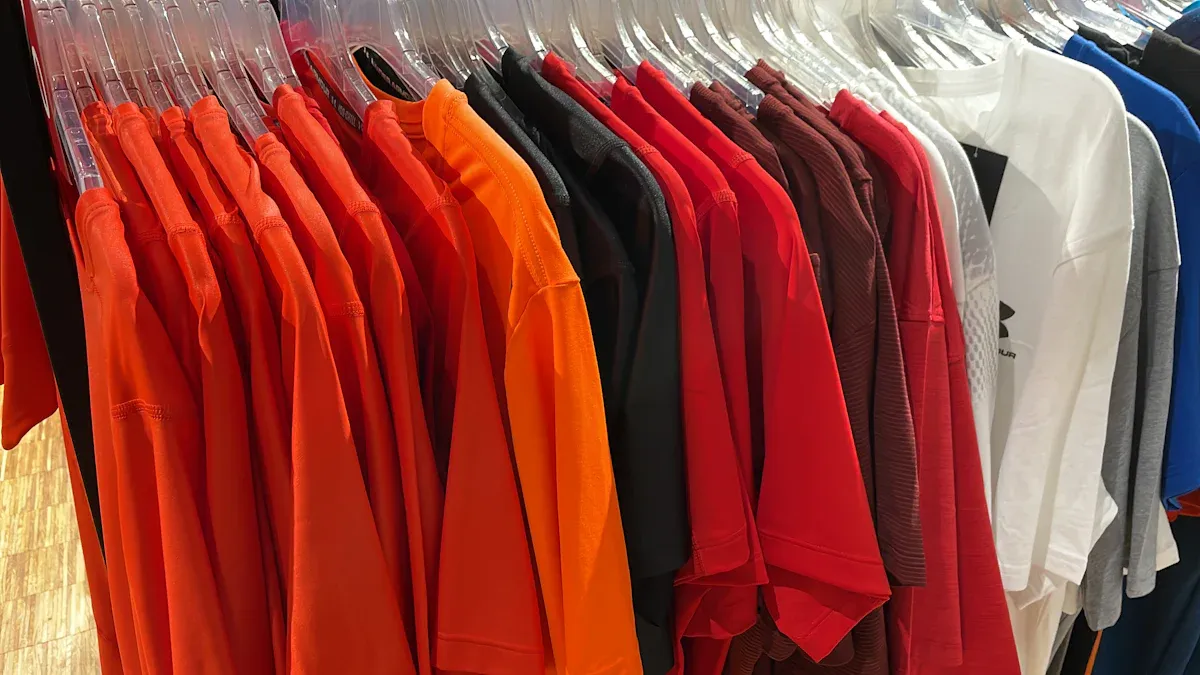
When you shop for women’s clothing, understanding the size chart is essential. Asian sizes often differ from US sizes, which can lead to confusion. Here’s a detailed size chart that compares Asian sizes to US sizes, including measurements in both centimeters and inches:
Asian Size | Bust (cm) | Bust (inches) | Waist (cm) | Waist (inches) | Hips (cm) | Hips (inches) | US Size |
|---|---|---|---|---|---|---|---|
S | 80-84 | 31.5-33.1 | 60-64 | 23.6-25.2 | 84-88 | 33.1-34.6 | 2-4 |
M | 84-88 | 33.1-34.6 | 64-68 | 25.2-26.8 | 88-92 | 34.6-36.2 | 6-8 |
L | 88-92 | 34.6-36.2 | 68-72 | 26.8-28.3 | 92-96 | 36.2-37.8 | 10-12 |
XL | 92-96 | 36.2-37.8 | 72-76 | 28.3-29.9 | 96-100 | 37.8-39.4 | 14-16 |
Using this size chart helps you find the right fit. Always measure your bust, waist, and hips before making a purchase.
Tip: If you find yourself between sizes, consider sizing up. This ensures a more comfortable fit, especially for fitted items like dresses and blouses.
Fabric types and garment styles can also affect how sizes fit. Here are some key points to remember:
Stretchy materials or loose-fitting styles may allow for more flexibility in sizing.
Non-stretchy fabrics may require you to size up to accommodate for shrinkage and a closer fit.
Natural fabrics like cotton may shrink slightly after washing, while stretchy materials like spandex offer more flexibility.
When converting Asian sizes to US sizes, remember that Asian sizes usually run smaller. If you’re unsure, sizing up is a smart choice. For fitted items like jackets and pants, this ensures better comfort.
By using the size conversion charts, you can confidently shop for Asian clothing that fits well and looks great.
Men’s Size Chart

When you shop for men’s clothing, understanding the size chart is essential. Asian sizes often differ from US sizes, which can lead to confusion. Here’s a detailed size chart that compares Asian sizes to US sizes for various types of clothing, including tops, bottoms, and suits.
Tops Size Chart
Asian Size | Chest (cm) | Chest (inches) | US Size |
|---|---|---|---|
S | 86-90 | 33.9-35.4 | 34-36 |
M | 90-94 | 35.4-37.0 | 38-40 |
L | 94-98 | 37.0-38.6 | 42-44 |
XL | 98-102 | 38.6-40.2 | 46-48 |
XXL | 102-106 | 40.2-41.7 | 50-52 |
Bottoms Size Chart
Asian Size | Waist (cm) | Waist (inches) | US Size |
|---|---|---|---|
S | 71-75 | 28.0-29.5 | 30-32 |
M | 75-79 | 29.5-31.1 | 32-34 |
L | 79-83 | 31.1-32.7 | 34-36 |
XL | 83-87 | 32.7-34.3 | 36-38 |
XXL | 87-91 | 34.3-35.8 | 40-42 |
Suits Size Chart
Asian Size | Chest (cm) | Waist (cm) | US Size |
|---|---|---|---|
S | 86-90 | 71-75 | 34-36 |
M | 90-94 | 75-79 | 38-40 |
L | 94-98 | 79-83 | 42-44 |
XL | 98-102 | 83-87 | 46-48 |
XXL | 102-106 | 87-91 | 50-52 |
Jeans Size Differences
When it comes to jeans, sizes can differ significantly. Asian jeans sizes often use a different measurement system than US sizes. For example, an Asian size large in US may correspond to a waist size of 34 inches. Here’s a quick reference for converting Asian jeans sizes to US sizes:
Asian Size | US Size (Waist) |
|---|---|
S | 30 |
M | 32 |
L | 34 |
XL | 36 |
XXL | 38 |
Tip: Always check the specific size chart for the brand you are buying. Different brands may have slight variations in their sizing.
Understanding these size charts helps you make informed decisions when shopping for men’s clothing. Accurate fitting ensures comfort and style. Remember, when converting Asian sizes to US sizes, always refer to the size conversion charts for the best fit.
Children’s Size Chart
When shopping for children’s clothing, understanding size conversions is essential. Asian sizes often differ from US sizes, which can lead to confusion. Here’s a size chart that outlines the standard measurements for boys and girls, focusing on height, chest, and waist:
Clothing Label Size | Age | Height | Chest | Waist |
|---|---|---|---|---|
2 | 1-2 yrs | 80cm | 50cm | 49cm |
4 | 2-3 yrs | 90cm | 52cm | 50cm |
6 | 3-4 yrs | 100cm | 54cm | 51cm |
8 | 4-5 yrs | 110cm | 57cm | 52cm |
10 | 6-7 yrs | 120cm | 60cm | 54cm |
12 | 8-9 yrs | 125cm | 62cm | 55cm |
14 | 9-10 yrs | 130cm | 64cm | 57cm |
16 | 10-11 yrs | 140cm | 68cm | 61cm |
18 | 11-12 | 150cm | 72cm | 64cm |
20 | 12-13 | 160cm | 76cm | 68cm |
Sizing for children in Asia primarily relies on height (in cm). This method provides a more accurate fit as children grow. After age two, sizes can vary significantly between different clothing items.
When converting Asian sizes to US sizes, you can refer to the following chart:
Recommended By Age | US/Canada Sizing | Asian Sizing |
|---|---|---|
3-6 Months | 3-6m | 66cm |
8-14 Months | 6-12m | 73cm |
18 Months | 12-18m | 80cm |
2-3 Year | 24m/2T | 90cm |
3/4 Year | 3/4T | 100cm |
5 Year | 5T | 110cm |
6-7 Year | 6/7T | 120cm |
8-9 Year | 8T | 130cm |
Tip: Always measure your child’s body to ensure the best fit. Here are some best practices for measuring:
Chest: Wrap a soft measuring tape around the fullest part of the chest, under the arms.
Waist: Measure around the natural waistline, usually the narrowest part of the torso.
Hips: Measure around the fullest part of the hips.
Inseam: Measure from the crotch down the inside of the leg to the ankle.
Height: Have your child stand straight against a wall without shoes.
By using these size charts and measurement tips, you can confidently shop for children’s clothing that fits well and looks great.
Shoe Size Conversion Chart
When you shop for shoes, understanding size conversions is essential. Asian shoe sizes often differ from US sizes, which can lead to confusion. To help you navigate this, here’s a simple chart that shows how Asian shoe sizes convert to US, UK, and European sizes:
Category | Asia | US | UK | EU |
|---|---|---|---|---|
Children’s Shoes | 5C to 13C | 5C to 13C | 4.5 to 12.5 | 20.5 to 30.5 |
Women’s Shoes | 35 to 40 | 4 to 9 | 3.5 to 8.5 | 36.5 to 42.5 |
Men’s Shoes | 39 to 45 | 6 to 12 | 5.5 to 11 | 39 to 46 |
To convert Asian shoe sizes to US sizes, you should keep a few things in mind. First, many people misunderstand size conversions. Asian sizes often base their measurements on foot length in centimeters. This may not align perfectly with US sizes, which consider both length and width.
Here are some common issues you might encounter when converting sizes:
Misunderstanding Size Conversions
Sizing Variations Between Manufacturers
Limited Information on Fit and Comfort
To ensure accurate conversions, follow these best practices for measuring your feet:
Stand on paper against a wall with your heel touching the wall.
Mark the longest toe and measure the distance from heel to toe in centimeters.
Use this measurement to find the corresponding CN (mm) / US size in the conversion chart.
Remember, shoe sizes in China are based on insole length, not foot length. Measuring the insole helps determine if the shoe will fit comfortably. Always use a reliable conversion chart to avoid sizing mistakes.
By understanding how to convert Asian shoe sizes to US sizes, you can confidently choose the right footwear for yourself or your family.
Knowing how to convert sizes is very important when buying Asian clothes. Getting the right size helps you feel comfortable and makes shopping easier. Here are some helpful tips for you:
Look at the size charts for each brand.
Measure your body carefully before you buy.
Read reviews from other customers about fit and size.
Check the return rules for shopping from other countries.
By using these tips and looking at the size charts, you can pick the right size and enjoy your new clothes without any stress.
FAQ
What is the difference between Asian sizes and US sizes?
Asian sizes are usually smaller than US sizes. For instance, an Asian large is often like a US small. Always check size conversion info for the right size.
How do I measure myself for Asian clothing?
To measure yourself, use a soft measuring tape. Measure your bust, waist, and hips. Then, compare these numbers to the size chart to find the best fit.
Where can I find accurate sizing information?
You can find accurate sizing info in the size conversion charts in this blog. These charts help you easily change Asian sizes to US sizes.
What should I do if I’m between sizes?
If you are between sizes, think about sizing up. This gives you a more comfortable fit, especially for tight clothing.
Are there specific size recommendations for children’s clothing?
Yes, children’s clothing sizes depend on height. Always check the size chart for the right age group to get the best fit for your child.