VOCs can make indoor air feel stale and trigger headaches or irritation.
Today’s best air purifiers combine high-flow fans with robust activated carbon or specialized sorbents to capture gases, not just particles.
Options range from compact room models like Austin Air and PuroAir to in-vehicle and HVAC-integrated systems for whole-home coverage.
Pick the unit that matches the specific space and pollutant sources for the most effective VOC reduction.
| Austin Air Room Air Purifier (C100CC1) |

| Best For Small Spaces | VOC Removal: Advanced VOC Wrap filter | Particle Filtration: 0.1-micron capture | Odor Control: Chemical/gas odors | VIEW LATEST PRICE | Read Our Analysis |
| PuroAir 400 HEPA Air Purifier for Large Rooms |
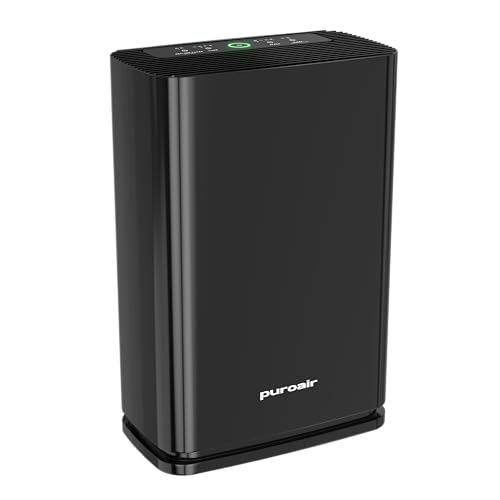
| Best For Large Rooms | VOC Removal: Up to 99.9% pollutants incl. VOCs | Particle Filtration: HEPA filtration | Odor Control: Smoke and household odors | VIEW LATEST PRICE | Read Our Analysis |
| Priestley P1240 Replacement VOC Filters 2-Pack |

| Best Replacement Filters | VOC Removal: Activated carbon VOC filter | Particle Filtration: HEPA filtration | Odor Control: Pet, smoke, cooking odors | VIEW LATEST PRICE | Read Our Analysis |
| TruSens Odor & VOC Filter for Z-1000 Purifier |

| Best For Odors | VOC Removal: Odor & VOC filter | Particle Filtration: True HEPA | Odor Control: Cooking and cleaning odors | VIEW LATEST PRICE | Read Our Analysis |
| Car Air Purifier with H13 True HEPA Filter |

| Best For Cars | VOC Removal: Removes VOCs and fumes | Particle Filtration: H13 True HEPA | Odor Control: Exhaust and smoke odors | VIEW LATEST PRICE | Read Our Analysis |
| AIRDOCTOR AD3500 Air Purifier for Large Rooms |

| Best High-End Pick | VOC Removal: Carbon VOC filter | Particle Filtration: UltraHEPA | Odor Control: Formaldehyde and VOC odors | VIEW LATEST PRICE | Read Our Analysis |
| Air Health Haven Plus HVAC Air Purifier |

| Best HVAC Option | VOC Removal: PCO reduces VOCs | Particle Filtration: Airborne reduction | Odor Control: Freshens air | VIEW LATEST PRICE | Read Our Analysis |
More Details on Our Top Picks
Austin Air Room Air Purifier (C100CC1)
If you need a purifier that handles VOCs, smells, and everyday indoor pollutants without taking over your room, the Austin Air Room Air Purifier (C100CC1) stands out as a strong fit for your space. You get an advanced VOC Wrap filter that helps remove chemicals and gases, while the high-efficiency filter catches dust, pollen, pet dander, bacteria, viruses, and other fine particles down to 0.1 microns. It works well in bedrooms, offices, and hotels, and its whisper-quiet design won’t disturb your sleep. The steel build feels sturdy, and its compact, stylish shape travels easily.
- VOC Removal:Advanced VOC Wrap filter
- Particle Filtration:0.1-micron capture
- Odor Control:Chemical/gas odors
- Coverage:Single room
- Auto Operation:Continuous use
- Quiet Use:Whisper-quiet
- Additional Feature:Advanced VOC Wrap filter
- Additional Feature:Steel construction
- Additional Feature:Travel-friendly design
PuroAir 400 HEPA Air Purifier for Large Rooms
The PuroAir 400 HEPA Air Purifier for Large Rooms stands out when you need serious help with VOCs and other stubborn indoor pollutants in a bigger space. You can clear up to 2,000 sq ft in one hour, so it works well in open living rooms and busy bedrooms. Its three-layer system uses a pre-filter, HEPA filter, and activated carbon to trap up to 99.9% of dust, smoke, pollen, pet dander, and VOCs. Then the smart sensor adjusts power, while sleep mode keeps nights quiet and easy.
- VOC Removal:Up to 99.9% pollutants incl. VOCs
- Particle Filtration:HEPA filtration
- Odor Control:Smoke and household odors
- Coverage:Up to 2,000 sq ft
- Auto Operation:Smart sensor
- Quiet Use:Sleep mode
- Additional Feature:Smart particle sensor
- Additional Feature:ISO 17025 tested
- Additional Feature:Two-year warranty
Priestley P1240 Replacement VOC Filters 2-Pack
Priestley P1240 Replacement VOC Filters, 2-Pack, is a smart pick for anyone who wants to tackle stubborn indoor air problems at the source, especially in new apartments, freshly painted spaces, or homes with composite wood materials that can release VOCs. You get multi-stage filtration with a pre-filter, HEPA layer, and 150 g activated carbon. That means it traps hair, dust, smoke, pollen, pet dander, bacteria, odors, gases, and formaldehyde. You’ll want to vacuum the pre-filter monthly and replace it every 3 to 6 months. Use genuine Priestley replacements to keep performance and warranty support strong.
- VOC Removal:Activated carbon VOC filter
- Particle Filtration:HEPA filtration
- Odor Control:Pet, smoke, cooking odors
- Coverage:Compatible purifier rooms
- Auto Operation:Manual replacement
- Quiet Use:Maintenance only
- Additional Feature:150g carbon pellets
- Additional Feature:3–6 month replacement
- Additional Feature:Vacuumable pre-filter
TruSens Odor & VOC Filter for Z-1000 Purifier
TruSens’ Odor & VOC Filter for the Z-1000 is a smart pick for anyone who wants a small purifier that tackles more than dust alone, because its three-stage design helps with stubborn smells and everyday air pollution at the same time. You get activated carbon for odors and VOCs like ammonia, acetone, and formaldehyde, plus True HEPA for common particles. Its 360-degree airflow pulls air from every side, so you don’t miss much. You’ll replace the full filter every 12 to 15 months, and the carbon part every 3 to 4. A red light tells you when it’s time.
- VOC Removal:Odor & VOC filter
- Particle Filtration:True HEPA
- Odor Control:Cooking and cleaning odors
- Coverage:Small rooms
- Auto Operation:Filter indicator
- Quiet Use:Quiet operation
- Additional Feature:360-degree filtration
- Additional Feature:Filter-change indicator
- Additional Feature:Dual replacement schedule
Car Air Purifier with H13 True HEPA Filter
If you spend a lot of time driving and worry about exhaust fumes, VOCs, smoke, or stubborn odors, this car air purifier can be a smart fit for you. Its 4-stage system uses an H13 True HEPA filter to remove 99.9% of harmful gases and tiny particles down to 0.1 microns. It also targets toluene, formaldehyde, bacteria, and smell buildup. A PM2.5 sensor tracks air quality, while the strong fan cleans the cabin in about 6 minutes. You get quiet, low-power use, auto ignition control, ozone-free safety, and easy placement.
- VOC Removal:Removes VOCs and fumes
- Particle Filtration:H13 True HEPA
- Odor Control:Exhaust and smoke odors
- Coverage:Vehicle cabin
- Auto Operation:Ignition on/off
- Quiet Use:Virtually silent
- Additional Feature:PM2.5 sensor
- Additional Feature:3M power cord
- Additional Feature:Ozone-free operation
AIRDOCTOR AD3500 Air Purifier for Large Rooms
The AIRDOCTOR AD3500 stands out for large rooms when you want strong VOC control without giving up easy daily use. Its three-stage system pairs UltraHEPA with a dual-action Carbon VOC filter and a pre-filter, so you can target fumes, formaldehyde, dust, and pet dander at the same time. It covers 630 square feet at four air changes per hour, or 1,260 at two. Auto mode reads air quality and adjusts fast, while four fan speeds, child lock, night mode, and whisper-quiet fans help you breathe easier.
- VOC Removal:Carbon VOC filter
- Particle Filtration:UltraHEPA
- Odor Control:Formaldehyde and VOC odors
- Coverage:Up to 1,260 sq ft
- Auto Operation:Auto mode sensor
- Quiet Use:Whisper-quiet fans
- Additional Feature:UltraHEPA filtration
- Additional Feature:Child lock
- Additional Feature:Optional ions
Air Health Haven Plus HVAC Air Purifier
Air Health Haven Plus HVAC Air Purifier fits best when you want your home’s air to tackle more than dust alone, especially VOCs, odors, and germs that keep hanging around after painting, cleaning, or cooking. You get 16 UVC lamps at 253.7 nm, plus Pro-Cell technology that helps cut VOCs from paint, carpet, cleaners, and exhaust. The permanent carbon filter also trims odors and stays self-cleaning. It reduces bacteria, viruses, mold, and fungi as air moves through your ducts. Installation can take 15 minutes, and it doesn’t produce ozone.
- VOC Removal:PCO reduces VOCs
- Particle Filtration:Airborne reduction
- Odor Control:Freshens air
- Coverage:HVAC duct system
- Auto Operation:Duct airflow activated
- Quiet Use:Not specified
- Additional Feature:16 UVC lamps
- Additional Feature:10-year warranty
- Additional Feature:Supply plenum mount
Factors to Consider When Choosing an Air Purifier for VOCs
When I choose an air purifier for VOCs, I look first at how strong its VOC filtration is and whether the carbon filter is built to trap gases, not just dust. I also check room coverage, noise level, sleep mode, and how often I’ll need to replace the filters, because a purifier should fit your space and your routine without adding stress. If you’ve ever tried to sleep through a loud machine, you know quiet comfort matters just as much as clean air.
VOC Filtration Strength
Start by looking at what the purifier can actually trap, not just how nice it looks on the shelf. I check the VOC media first. I want activated carbon or another high-surface-area adsorbent, and I like seeing the amount in grams, because 100 to 300+ grams usually means better VOC pickup. Then I look for multi-stage media, like impregnated carbon or chemisorption layers, since plain carbon can miss stubborn chemicals like formaldehyde. I also want real test results for common VOCs, such as toluene and acetone, plus proof that the performance lasts in real room conditions. After that, I check the replacement schedule, because VOC media often needs changing every 3 to 12 months. Finally, I make sure the airflow matches the room, so the air actually reaches the media often enough.
Carbon Filter Quality
Carbon quality can make or break VOC control, and I always treat it as the heart of the purifier, not just a bonus feature. When I shop, I look for real carbon mass, not a thin black pad pretending to work. Pelletized or extruded carbon usually adsorbs more VOCs than flimsy foam. I also check for treated carbon, since potassium iodide or metal oxides can handle formaldehyde, ammonia, and NOx better than plain carbon. Next, I want a deep bed and steady airflow, because more contact time helps the air release more gases. I also verify replacement schedules or breakthrough data, since tired carbon quits quietly. Finally, I prefer a pre-filter upstream, because dust protection keeps the carbon working longer.
Room Coverage Needs
To pick the right air purifier for VOCs, I always begin with room size, because the unit has to match the air it’s actually cleaning. I calculate volume from square footage and ceiling height, then I look for enough CADR or ACH to reach 4 to 6 air changes in living spaces, and 6 to 8 in kitchens or workshops. For bigger rooms, I trust the coverage rating at a set ACH, not a vague “up to” claim, since stronger cleaning needs shrink the effective area. If I’ll use sleep mode, I make sure that lower setting still fits the room. In open plans, I size for the whole shared space. For paint or renovation days, I go bigger for faster VOC cleanup.
Noise And Sleep Mode
Once I’ve matched the purifier to the room size, I pay close attention to noise, because a unit that sounds like a small jet won’t help much at bedtime. I look for a sleep or night mode that drops the fan and keeps sound below 30 to 40 dB. At that range, the machine usually fades into the background, and I can relax. I also check the quietest listed setting, because 20 to 35 dB is often whisper-quiet for a bedroom. Then I see whether auto or sensor mode can ease the fan when VOCs fall. Multiple speed steps and a timer help me fine-tune comfort, while I still compare low-speed VOC removal with high-speed CADR so overnight cleaning doesn’t feel like a tradeoff.
Maintenance And Filter Life
Because VOC filters do the hard work of trapping gases and odors, I always look at maintenance and filter life before I buy. I check how often the carbon stage needs replacement, because many VOC filters last about 3 to 12 months, depending on odor load and capacity. I also prefer units with larger carbon media, since more grams of activated carbon usually means longer service before breakthrough. Then I keep the pre-filter clean, vacuuming or replacing it each month so dust won’t choke the main media. In busy spaces like new builds, garages, or kitchens, I change filters sooner and watch for stronger smells. Finally, I trust filter indicators, but I still make calendar checks every 3 to 6 months.
Frequently Asked Questions
How Often Should VOC Filters Be Replaced?
Replace VOC filters every six to twelve months, following the manufacturer’s recommendations and monitoring your indoor air quality. If odors or reduced performance appear sooner, replace the filter earlier.
Do Air Purifiers Remove Formaldehyde Effectively?
Yes. Air purifiers can remove formaldehyde, but only if they include specialized activated carbon or chemisorption filters; a HEPA filter alone does not capture this gas. Consider these filters as an absorbent medium rather than a particle trap for formaldehyde.
Can Air Purifiers Eliminate Paint Fumes Quickly?
Air purifiers can significantly reduce paint fumes but not remove them immediately. Ventilate the room, place fans to direct airflow outdoors, and run an air purifier equipped with activated carbon filters; using all three together yields the best results.
Are Activated Carbon Filters Better Than HEPA for VOCS?
I would say yes. Activated carbon is more effective for volatile organic compounds because it adsorbs gases, while HEPA filters primarily capture particles. For comprehensive removal of smoke, dust, and chemicals, use an activated carbon filter together with a HEPA filter.
Do VOC Air Purifiers Produce Ozone?
Some do, particularly models that use ionizers, plasma technology, or UV-based systems. Choose a purifier with a genuine activated carbon filter and confirm it is ozone-free or CARB certified so you can reduce VOCs without introducing irritating ozone.
Final Thoughts
Choosing the right VOC purifier can feel like a small puzzle, but it doesn’t have to be. I’d start with your room size, your smell level, and how often you can change filters. Then I’d pick the unit that fits your space and your routine without fuss. When you make that match, the air starts to feel kinder, and your home does too. It’s a quiet upgrade, but you’ll likely notice the difference fast.