

The best computer cases for 2026 keep your PC cool, easy to build in, and ready for future upgrades. Good airflow matters more than flashy looks in daily use, especially for powerful parts.
This guide covers six cases that do a great job with cooling, space, cable management, and overall fit. You’ll see options from compact space-savers to bold RGB towers and stackable rack-style designs.
| ABK Design Wall Mount Gaming PC Case |
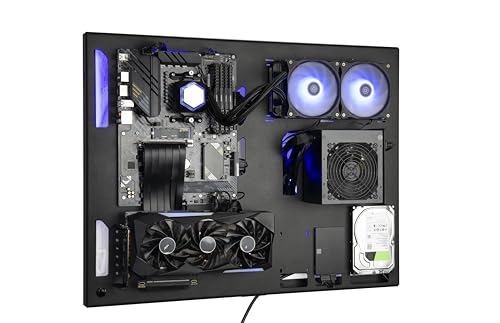
| Best Wall-Mount | Motherboard Support: ATX | Cooling Support: 240/280mm radiator, air cooling | Storage Support: 2 SSD + 1 HDD | VIEW LATEST PRICE | Read Our Analysis |
| BBNB Mid-Tower PC Gaming Case Blue |

| Best Budget Pick | Motherboard Support: Micro-ATX, Mini-ITX | Cooling Support: Up to 7×120mm fans, 240mm radiator | Storage Support: 1 HDD + 1–2 SSD | VIEW LATEST PRICE | Read Our Analysis |
| Gaming PC Case with 9 ARGB Fans |

| Best Airflow | Motherboard Support: ATX, Micro ATX, Mini-ITX | Cooling Support: 9 ARGB fans, 360mm radiator | Storage Support: 3.5″ HDD + 2.5″ SSD support | VIEW LATEST PRICE | Read Our Analysis |
| Stackable Open Air PC Case Rack |
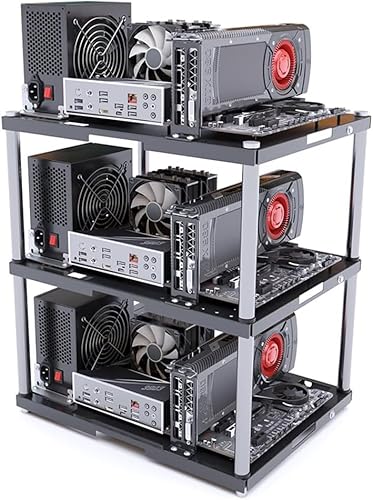
| Best Open-Frame | Motherboard Support: ATX, mATX, ITX | Cooling Support: Open-air cooling | Storage Support: 3.5″ drive support | VIEW LATEST PRICE | Read Our Analysis |
| MUSETEX ATX Gaming PC Case (NN8) |
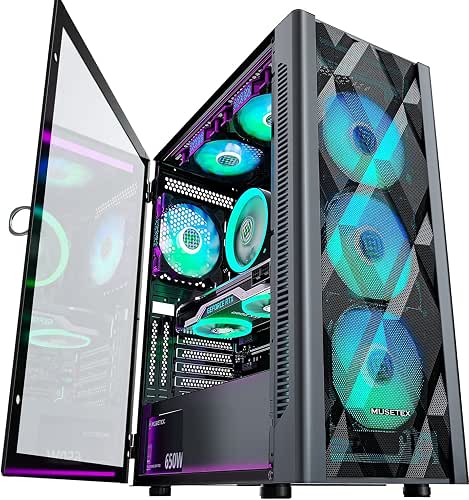
| Best Overall | Motherboard Support: ATX | Cooling Support: 6 PWM ARGB fans, 280mm radiator | Storage Support: Up to 5 SSD + 1 HDD / 4 SSD + 2 HDD | VIEW LATEST PRICE | Read Our Analysis |
| Gaming PC Case with 6 ARGB Fans |

| Best Showcase Case | Motherboard Support: E-ATX, ATX, Micro-ATX, Mini-ITX | Cooling Support: 6 PWM ARGB fans, 360mm radiator | Storage Support: 2 HDD + 2 SSD | VIEW LATEST PRICE | Read Our Analysis |
More Details on Our Top Picks
ABK Design Wall Mount Gaming PC Case
Should you want a PC case that turns your build into part of the room, the ABK Design Wall Mount Gaming PC Case stands out right away. You get a handcrafted stainless steel frame with rust resistance and a clean powder-coated finish. Because the open ATX layout puts everything on display, your parts look like modern art instead of concealed hardware.
That design also helps with cooling and fit. You can add a 240mm or 280mm radiator, use large air coolers freely, and rely on side vents for heat release. It supports GPUs up to 39 cm, includes a sag bracket, and keeps storage flexible and your desk clear.
- Motherboard Support:ATX
- Cooling Support:240/280mm radiator, air cooling
- Storage Support:2 SSD + 1 HDD
- GPU Clearance:Up to 390mm
- Materials:Stainless steel
- Form Factor:Wall-mount open ATX chassis
- Additional Feature:Wall-mount display
- Additional Feature:GPU sag bracket
- Additional Feature:Side ventilation holes
BBNB Mid-Tower PC Gaming Case Blue
In case you want a compact gaming case that still lets your build shine, the BBNB Mid-Tower PC Gaming Case Blue fits best for Micro-ATX and Mini-ITX users who care about style, airflow, and easy part visibility. You get a sturdy aluminum frame, a 4 mm tempered glass panel, and neat cable management. It supports GPUs up to 290 mm, CPU coolers up to 155 mm, and an external ATX power supply. For cooling, you can mount up to seven 120 mm fans, plus 240 mm radiators on top or front. Dust filters, RGB fans, and handy USB ports help your setup feel clean, cool, and fun.
- Motherboard Support:Micro-ATX, Mini-ITX
- Cooling Support:Up to 7×120mm fans, 240mm radiator
- Storage Support:1 HDD + 1–2 SSD
- GPU Clearance:Up to 290mm
- Materials:Aluminum alloy, tempered glass
- Form Factor:Mid tower
- Additional Feature:Tempered glass panel
- Additional Feature:Top/bottom dust filters
- Additional Feature:External ATX mount
Gaming PC Case with 9 ARGB Fans
Should you want a case that looks bold right away and keeps powerful parts cool without extra work, this SZSKYING mid-tower is a strong fit for your 2026 gaming build. You get nine ARGB fans preinstalled, so airflow feels ready from day one. The tempered glass front and side panels show off your parts, while the LED button and remote make lighting easy.
That visual style pairs with real room for upgrades. You can fit ATX, Micro ATX, or Mini-ITX boards, GPUs up to 410mm, and coolers up to 175mm. Top 360mm radiator support, bottom PSU mounting, dust filters, Type-C, and tidy rear cable routing make building less stressful.
- Motherboard Support:ATX, Micro ATX, Mini-ITX
- Cooling Support:9 ARGB fans, 360mm radiator
- Storage Support:3.5″ HDD + 2.5″ SSD support
- GPU Clearance:Up to 410mm
- Materials:Plastic, polycarbonate, SPCC
- Form Factor:Mid-tower
- Additional Feature:9 ARGB fans
- Additional Feature:ARGB remote control
- Additional Feature:LED control button
Stackable Open Air PC Case Rack
In case you build test benches, mining rigs, or swap parts often, the DALAIBUKESI Superimposed Stackable Open Air PC Case Rack stands out because it keeps everything easy to reach and easy to cool.
You get an open-frame metal chassis that fits ATX, mATX, and ITX boards, with rack-mounted PSU support and space for 3.5-inch drives. Better yet, each layer handles up to 20 kg, and you can stack up to 10 layers as your setup grows. Assembly feels straightforward since mounts, brackets, and screws come included. At 16 x 12.5 x 1.4 inches and only 2.5 pounds, it stays compact, sturdy, and workshop-friendly too.
- Motherboard Support:ATX, mATX, ITX
- Cooling Support:Open-air cooling
- Storage Support:3.5″ drive support
- GPU Clearance:Not specified
- Materials:Metal
- Form Factor:Stackable open-air rack
- Additional Feature:Stackable 10 layers
- Additional Feature:20 kg capacity
- Additional Feature:Easy assembly kit
MUSETEX ATX Gaming PC Case (NN8)
MUSETEX’s NN8 is a strong pick for you provided you want a mid-tower ATX case that looks bold, stays easy to work in, and helps keep hot parts under control without extra hassle.
You get six preinstalled PWM ARGB fans, a mesh front, and a side-opening glass door that skips screws, so upgrades feel simple. The roomy layout supports a top 280mm radiator without blocking RAM, plus vertical GPU mounting, cable space, and flexible storage up to 5 SSDs and 1 HDD. Once connected to a 3-pin header, the fans show vivid lighting and adjustable speeds. You also get two USB 3.0 ports, audio jacks, and cleaner, faster access during builds too.
- Motherboard Support:ATX
- Cooling Support:6 PWM ARGB fans, 280mm radiator
- Storage Support:Up to 5 SSD + 1 HDD / 4 SSD + 2 HDD
- GPU Clearance:Multiple GPU options, size not specified
- Materials:Tempered glass, metal
- Form Factor:Mid-tower ATX
- Additional Feature:Side-opening glass door
- Additional Feature:Magnetic pull-ring access
- Additional Feature:Vertical GPU support
Gaming PC Case with 6 ARGB Fans
Built for gamers who want strong airflow and a clean showcase look, the LINEDEPOT H2 Gaming PC Case gives you six pre-installed PWM ARGB fans, dual tempered glass panels, and room for serious hardware without making your build feel cramped.
You can pair that cooling with a 360 mm top radiator, a 165 mm CPU cooler, and a huge 420 mm GPU. Because it supports E-ATX through Mini-ITX boards, you get real flexibility for upgrades. The bottom-mounted PSU keeps the layout tidy, while four drive mounts help balance storage and space. Up top, Type-C, two USB 2.0 ports, audio, power, and reset keep your daily gaming setup easy.
- Motherboard Support:E-ATX, ATX, Micro-ATX, Mini-ITX
- Cooling Support:6 PWM ARGB fans, 360mm radiator
- Storage Support:2 HDD + 2 SSD
- GPU Clearance:Up to 420mm
- Materials:Tempered glass, metal
- Form Factor:Mid tower / full-view chassis
- Additional Feature:Dual tempered glass
- Additional Feature:Type-C front port
- Additional Feature:6 PWM ARGB fans
Factors to Consider When Choosing Computer Cases
As I move from flashy fan setups to the bigger scene, I want to help you choose a case that truly fits your build and your daily use. I look at size and form factor initially, then I check cooling, airflow, hardware fit, storage room, expansion options, and how easy the ports are to reach. Should you’ve ever bought a case that looked great but made upgrades a headache, I get it, and that’s exactly what I’ll help you avoid here.
Size And Form Factor
Size is the frame that shapes everything else in your build, so I always start with form factor before I look at style. I match the case to the motherboard initial, because Full-Tower, Mid-Tower, Micro-ATX, and Mini-ITX decide what fits and how much room I get to grow.
Next, I check the hard limits. GPU clearance matters, especially for long cards that can reach about 400 mm. CPU cooler height matters too, since many cases allow only 150 to 180 mm. Then I look at drive mounts, because smaller cases often cut 3.5-inch and 2.5-inch storage options or need adapters.
That leads straight to upgrades. Compact cases usually trim expansion slots and PCIe space. I also confirm PSU support, since some small builds need SFX power supplies or special mounting.
Cooling And Airflow
Prioritize airflow promptly, because it decides whether your parts run cool and quiet or hot and cramped. I always check fan mounts first, because placement matters as much as quantity. Front, top, rear, bottom, and even side mounts help me build a clean front-to-rear and bottom-to-top path. I also look for support for 120 mm and 140 mm fans, so I can balance airflow and noise.
If you want liquid cooling, I’d verify radiator support next. Front, top, and rear mounts might fit 120, 240, 280, or 360 mm radiators. After that, I check for mesh panels, open interiors, dust filters, and removable panels. These details keep air moving and cleanup easy. Finally, I make sure big coolers or long graphics cards won’t choke fan placement or block airflow.
Hardware Compatibility
Once airflow is sorted, I turn to hardware compatibility, because even the best-looking case won’t help should your parts don’t fit the way they should. To begin with, I confirm motherboard support, whether that’s ATX, Micro-ATX, Mini-ITX, or E-ATX, so the standoff layout matches correctly.
Next, I check clearances. GPU length matters a lot, especially with today’s oversized cards, so I look for maximum length in millimeters, plus vertical-mount or anti-sag support. Then I verify CPU cooler height and radiator support at the top or front, such as 240 mm, 280 mm, or 360 mm.
From there, I make sure the case fits my PSU, whether ATX or SFX, and offers clean cable pathways. I also confirm enough expansion slots for add-in cards, because cramped builds get frustrating fast.
Storage And Expansion
Because storage plans change faster than most people expect, I always check a case’s drive support right after I confirm the main parts will fit. I look for the exact mix of 3.5-inch bays and 2.5-inch mounts I need, especially assuming you want several SSDs plus a hard drive.
Then I check flexibility. Should a removable drive cage frees space for extra SSDs or a longer GPU, that case gives you breathing room later. I also verify expansion slot count and GPU clearance in millimeters, since extra PCIe cards can sneak into a build sooner than expected.
Just as crucial, I prefer tool-less mounts, easy-access trays, and roomy cable paths. They make upgrades less annoying and help airflow stay clear. In case a case supports extra trays or hot-swap bays, I see real long-term value there.
Ports And Accessibility
After I’ve checked drive support and expansion room, I turn to the parts I’ll actually touch every day: the case’s ports and access points. I want at least one front or top USB 3.0 port, and I strongly prefer a separate USB-C for fast drives and newer gear. I also check for easy audio jacks and power and reset buttons that I can reach without fumbling under a desk.
From there, I look at how simple the case is to live with. Front access to fan or RGB controls saves me from opening the panel just to tweak noise or lighting. Dust filters, tool-less drive bays, and quick-release side panels make cleaning and upgrades far less annoying. Finally, I confirm clean header routing, connector cutouts, and enough cable space so every front port works right.
Frequently Asked Questions
How Often Should I Clean Dust Filters in a Computer Case?
Clean dust filters every one to three months, based on how much dust is in the room, whether pets shed nearby, and how much air the case pulls in. If dust appears earlier, clean the filters right away, because blocked filters trap heat, reduce airflow, and force the fans to spin harder.
Can a Computer Case Reduce Wi-Fi or Bluetooth Signal Strength?
A computer case can reduce Wi Fi or Bluetooth signal strength, particularly when the case is metal. Metal panels and internal components can block or weaken radio signals. For better reception, place antennas outside the case, keep the system out of enclosed desks, and use front panel or external adapters when possible.
Do Computer Cases Affect Long-Term Component Resale Value?
Yes, I believe computer cases can influence long term component resale value, mostly in indirect ways. If a case keeps parts cooler, cleaner, and free from damage, it can help preserve their condition, improve how they are presented, and give buyers more confidence.
Are Replacement Side Panels Available Years After Purchase?
Yes, replacement side panels can sometimes be found years after purchase, though stock usually becomes harder to find over time. Start with the manufacturer, then check eBay, Reddit, and specialty online PC parts stores.
What Case Features Help Reduce Pet Hair Buildup?
Choose a case with fine mesh dust filters, positive air pressure, sealed front panels, raised feet, and intakes that are easy to clean. Removable filters and smooth interior surfaces make cleanup faster and help maintain strong airflow.
Final Thoughts
A great PC case does more than hold parts. It shapes airflow, controls noise, makes upgrades easier, and changes how your whole setup feels. I regard a case as the home for everything you care about inside your build. Provided that home is cramped, hot, or annoying to work in, the whole experience suffers.
For 2026, the best computer cases do three things well. To start, they move air cleanly and efficiently. Next, they give you room for modern parts like long graphics cards, large radiators, and multiple drives. Lastly, they stay easy to live with through smart cable routing, dust filters, and simple panel access.
I picked six cases that stand out for different needs. Some save desk space. Some focus on flashy lighting. Some are built for storage-heavy systems or open-air access. Together, they cover a wide range of builders, from novice gamers to experienced upgraders.
ABK Design Wall Mount Gaming PC Case
Should you want to free up desk space and show off your hardware, this case takes a very different path. The ABK Design Wall Mount Gaming PC Case uses an open-frame layout that mounts on the wall, which gives your setup a clean, almost gallery-like look.
What I like most is how practical that design is. Because the frame is open, it is easy to reach components during upgrades or routine cleaning. That means less frustration when you swap a GPU, adjust cooling, or tidy cables. The rust-resistant frame also adds peace of mind, especially in case you want something that keeps its look over time.
Airflow is a major strength here. With fewer barriers around your components, heat escapes more easily than it does in many enclosed towers. That can help high-performance parts stay cooler under load. Still, an open design does demand a little more from you. Dust can settle faster, and your parts stay more exposed than they would in a traditional case.
This case makes the most sense for builders who want a display piece and easy access in one package. Suppose your setup is part workstation, part showcase, this one feels bold without being hard to manage.
BBNB Mid-Tower PC Gaming Case Blue
Not every builder wants a huge chassis. Sometimes you need a smaller case that still looks sharp and works well. That is where the BBNB Mid-Tower PC Gaming Case Blue fits in.
This case supports Micro-ATX and Mini-ITX boards, so it is a strong pick for compact gaming builds or space-conscious desks. The blue styling gives it personality without looking overdone. I believe that matters because a case should feel like part of your room, not just a metal box under a table.
Inside, the layout focuses on clean cable management. That is crucial in a smaller build because clutter can choke airflow fast. A tidy interior also makes the system easier to work on later. Even a simple upgrade feels less stressful when cables are not fighting you at every turn.
Because it is more compact, you should double-check part clearance before you buy. That is especially true for larger air coolers and long graphics cards. But if your goal is a smaller setup with neat design and practical internals, this case gives you a smart balance of form and function.
From a bridging standpoint, this case moves us from wall-mounted minimalism to compact tower convenience. Suppose the ABK case is about visibility and open access, the BBNB model is about saving space while keeping things organized.
Gaming PC Case with 9 ARGB Fans
Some cases whisper. This one absolutely sings. The Gaming PC Case with 9 ARGB Fans is built for people who want strong airflow and a vivid light show right out of the box.
The first thing that stands out is the fan setup. Nine ARGB fans can move a lot of air through the system, which helps cool hot-running CPUs and GPUs during long gaming sessions. That much preinstalled cooling also saves you time and extra cost compared to buying fans separately.
The second major strength is interior room. Cases like this usually provide generous GPU clearance, which is a big deal in 2026 when high-end graphics cards are often large and thick. Suppose you are planning a powerful gaming rig, that extra space can save you from painful compatibility issues.
Lighting is obviously part of the appeal here, but it is not the only story. A roomy layout can make cable routing easier, and good airflow paths can reduce hotspots around key components. Just keep in mind that more fans can also mean more sound if fan curves are not tuned well.
I would recommend this type of case to builders who want a bold centerpiece. Suppose you like your PC to feel alive, bright, and high-energy, this one delivers that mood while still respecting thermal performance.
Stackable Open Air PC Case Rack
Now let’s shift from style-heavy gaming cases to something more industrial. The Stackable Open Air PC Case Rack is a very different tool, and that is exactly why it deserves a place on this list.
This open-frame design is ideal for storage-heavy systems, test benches, mining setups, or users who need fast access to hardware. Its stackable structure is the key feature. You can build upward in a modular way, which helps in case you manage multiple systems or want a setup that can grow over time.
The heavy-duty frame gives it a sturdy feel, and the open design makes component swaps quick and simple. Suppose you often add drives, test parts, or rebuild systems, that ease of access is a huge advantage. You are not removing panels, squeezing hands into tight corners, or tracing hidden screws.
Airflow is naturally strong in an open-air rack, but the tradeoff is similar to other exposed designs. Dust, room debris, and accidental contact become bigger concerns. This is not the best choice for every home desk, especially in case you want quiet operation or a polished living-room look.
Still, for the right user, this case is a workhorse. It values function over flash, and sometimes that is exactly what a serious builder needs.
MUSETEX ATX Gaming PC Case (NN8)
Should you want a case that blends cooling, style, and convenience, the MUSETEX NN8 hits a very attractive middle ground. It feels designed for builders who want modern features without turning the build process into a headache.
One of its biggest strengths is quiet PWM ARGB cooling. That matters because good airflow is only half the battle. If your system sounds like a leaf blower during a game, the experience loses some charm. PWM fan control helps the system respond to heat more intelligently, which can keep noise lower when full cooling power is not needed.
The tool-free access is another win. Side panels that come off easily make upgrades and cleaning much less annoying. I always appreciate that because small frustrations add up over the life of a PC. A case should work with you, not test your patience.
This model also supports vertical GPU mounting, which is a nice option for builders who want to display their graphics card more prominently. On top of that, the layout is usually roomy enough for modern gaming hardware and cable routing.
Compared with the open-frame cases above, the NN8 feels more protective and polished. It gives you strong cooling and visual appeal inside a more traditional enclosed shell. That makes it easier to recommend to a wide range of users.
Gaming PC Case with 6 ARGB Fans
The Gaming PC Case with 6 ARGB Fans, often associated with models like the LINEDEPOT H2 style, offers a balanced path. It does not lean as far into excess as a 9-fan case, but it still gives you strong cooling, broad compatibility, and modern front-panel features.
One feature I value here is wide motherboard support. A case that handles different board sizes gives you more freedom both now and later. Suppose you upgrade platforms down the line, that flexibility can help the case stay useful for years.
Top-panel Type-C is another meaningful benefit. It sounds simple, but it makes daily use easier. Faster, more convenient front access for modern devices is one of those details you miss once it is gone. Cases in 2026 should not feel stuck in the past, and Type-C helps this one feel current.
Radiator support is also significant. If you want liquid cooling, you need enough room and good mounting positions. A case with solid radiator support opens the door to better thermal control and more upgrade options. Add six ARGB fans, and you get a strong base for airflow without going quite as far as the 9-fan model.
This is the kind of case I suggest to builders who want a little of everything. It gives you style, cooling, compatibility, and practical daily features in one clean package.
Factors to Keep in Mind When Choosing Computer Cases
Once you see how different these six cases are, the real lesson becomes clear. There is no single best case for everyone. The right choice depends on how you build, where your PC lives, and what matters most to you each day.
Airflow and Cooling Layout
Start with airflow. Good ventilation helps every component perform better and last longer. Look for mesh panels, smart fan placement, and enough room for intake and exhaust paths. Should a case includes several fans, check whether they are placed in positions that actually move air well through the system.
You should also reflect on your cooling style. Suppose you plan to use a large air cooler, check CPU cooler height clearance. Should you want liquid cooling, confirm radiator support for the front, top, or side mounts you need.
Hardware Compatibility
Next, focus on fit. This is where many buyers make mistakes. Always confirm support for your motherboard size, graphics card length, power supply size, radiator length, and storage needs. A case can look perfect online and still fail your build in case one key part does not fit.
GPU clearance matters more than ever with larger modern cards. So does cable space behind the motherboard tray. Tight cable routing can make installation harder and hurt airflow.
Ease of Building
A case should not fight you. Features like tool-free side panels, good cable channels, SSD brackets, removable dust filters, and clear mounting points all make a real difference. Should you plan to upgrade over time, easy access becomes even more important.
I always tell readers to regard beyond day one. Building the PC is only the start. You will likely clean it, upgrade it, replace a fan, add storage, or swap a GPU later. A case that stays easy to work with earns its value over time.
Dust Control and Maintenance
Dust is the quiet troublemaker in every PC. It can clog fans, trap heat, and make a clean build look neglected. Cases with removable dust filters are much easier to maintain. Closed cases usually do better here than open-frame ones, though open designs can be easier to wipe down quickly.
Should your room gets dusty or you have pets, dust control should move higher on your list.
Noise Levels
Not all cooling setups sound the same. More fans can improve temperatures, but fan quality and tuning matter just as much. Cases built with quieter airflow paths, controlled fan curves, and better panel design can keep your system from becoming distracting.
Should your PC sits close to where you work or sleep, this matters a lot. A quieter case often feels better to reside with every day.
Desk Space and Placement
Consider where the case will go. A wall-mounted frame solves one problem. A compact mid-tower solves another. A stackable rack may fit a workshop or lab but not a shared bedroom. The right case should suit your room just as much as your hardware.
This is one reason I like having different styles on this list. Good design is not only about looks. It is about matching your life.
Style and Lighting
Aesthetics matter because your PC is part of your space. Some builders want a clean, quiet presence. Others want bright ARGB lighting and a system that grabs attention the second it powers on. Neither choice is wrong.
Just make sure style does not come at the cost of function. A beautiful case that runs hot or feels cramped gets old very quickly.
Which Type of Case Fits You Best?
Should you want maximum display value and easy hardware access, the ABK Design Wall Mount case is a standout.
Should you want a compact build with neat cable management, the BBNB Mid-Tower Blue is a smart choice.
Should you want strong airflow and dramatic lighting, the 9 ARGB fan case gives you that big visual energy.
Should you need modular access for multiple systems, storage-heavy layouts, or testing work, the Stackable Open Air PC Case Rack makes more sense than a standard tower.
Should you want a well-rounded gaming case with quieter PWM ARGB cooling and easier upgrades, the MUSETEX NN8 is one of the best balanced options.
Should you want broad compatibility, Type-C access, radiator support, and a solid amount of included lighting, the 6 ARGB fan case is a dependable all-around pick.
Very Short Wrap-Up
When I choose a case, I’m really choosing the shell for a dream. It’s the lighthouse around my parts, guiding cool air, order, and future upgrades safely home. Each case here holds a different kind of promise, whether it’s freedom, power, or peace. Should you pick the one that fits your life, your build won’t just sit on a desk. It’ll stand there like a quiet flag, reminding you that you built something that’s truly yours.
