

A good cycling GPS unit keeps your rides on track and your stats in view.
The best one for you depends on how you ride and what data you want.
Some riders want simple directions, while others want training tools and long battery life.
Here are six cycling GPS units riders trust for every mile.
| COOSPO Wireless GPS Bike Computer with Bluetooth/ANT |
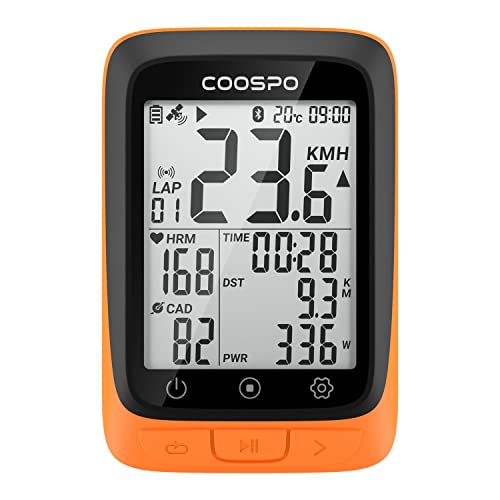
| Budget-Friendly Pick | Navigation: GPS routes | Connectivity: Bluetooth/ANT+ | Display: 2.4-inch LCD | VIEW LATEST PRICE | Read Our Analysis |
| Beeline Bike GPS Computer Velo 2 Navigation |

| Best Navigation | Navigation: Turn-by-turn | Connectivity: App sync | Display: Handlebar display | VIEW LATEST PRICE | Read Our Analysis |
| Garmin Edge Explore 2 GPS Cycling Navigator |

| Best Overall | Navigation: Turn-by-turn | Connectivity: Bluetooth/Wi‑Fi | Display: 3-inch touchscreen | VIEW LATEST PRICE | Read Our Analysis |
| Garmin Edge 820 GPS Cycling/Bike Computer for Performance and Racing |

| Performance Pick | Navigation: Turn-by-turn | Connectivity: Bluetooth/ANT+/Wi‑Fi | Display: 2.3-inch touchscreen | VIEW LATEST PRICE | Read Our Analysis |
| Gen2 Anti-Theft Bike Tracker with GPS and Bluetooth |

| Best Anti-Theft | Navigation: Live tracking | Connectivity: GPS/Bluetooth | Display: Minimal display | VIEW LATEST PRICE | Read Our Analysis |
| Garmin Edge 540 GPS Cycling Computer with Button Controls |

| Best Advanced Training | Navigation: Advanced navigation | Connectivity: Bluetooth/Wi‑Fi/USB | Display: 2.6-inch LCD | VIEW LATEST PRICE | Read Our Analysis |
More Details on Our Top Picks
COOSPO Wireless GPS Bike Computer with Bluetooth/ANT
The COOSPO BC107 is a smart pick should you want a compact, budget-friendly cycling GPS unit that’s easy to set up and simple to use. You get a 2.4-inch LCD, button controls, and a lightweight, IP67-rated body that handles rain and rough rides. It captures satellites quickly with GPS or GPS+Beidou, and you can switch GPS off indoors. Pair it in the CoospoRide app to load routes, update firmware, and sync rides. ANT+ support lets you use heart rate, speed/cadence, and power sensors. The battery lasts well, and the mount, cable, and manual come included.
- Navigation:GPS routes
- Connectivity:Bluetooth/ANT+
- Display:2.4-inch LCD
- Battery:Rechargeable
- Mounting:Standard mount
- Water Resistance:IP67
- Additional Feature:GPS+Beidou positioning
- Additional Feature:ANT+ sensor support
- Additional Feature:Strava .fit sync
Beeline Bike GPS Computer Velo 2 Navigation
Beeline’s Velo 2 is a great pick should you want a compact, no-fuss GPS computer that keeps route guidance simple on the road. You get turn-by-turn directions, fast rerouting, and a compass mode that points you toward your destination whenever you ride freeform. It imports routes through the companion app, monitors stats, logs rides, and shares to Strava. Sensor fusion enhances location accuracy, while weatherproofing and a glove-friendly interface keep it practical. You also get a secure strap mount, USB charging, and 11+ hours of battery life for long rides.
- Navigation:Turn-by-turn
- Connectivity:App sync
- Display:Handlebar display
- Battery:11+ hours
- Mounting:Strap mount
- Water Resistance:Weatherproof
- Additional Feature:Turn-by-turn routing
- Additional Feature:Compass mode
- Additional Feature:Fast rerouting
Garmin Edge Explore 2 GPS Cycling Navigator
Garmin’s Edge Explore 2 GPS cycling navigator is a smart pick provided you want an easy-to-use bike computer that handles turn-by-turn guidance without overwhelming you. You get a bright 3-inch touchscreen that works with gloves and rain, plus maps that spotlight popular roads, trails, and points of interest. It tracks distance, speed, elevation, and route, and it pairs with your phone for LiveTrack, GroupTrack, and alerts. Should you ride an eBike, it adjusts routing to your battery and assist levels. The Edge Power Mount can keep it charged, too.
- Navigation:Turn-by-turn
- Connectivity:Bluetooth/Wi‑Fi
- Display:3-inch touchscreen
- Battery:16 hours
- Mounting:Standard + power mount
- Water Resistance:Weather-resistant
- Additional Feature:eBike routing
- Additional Feature:Incident detection
- Additional Feature:Searchable POIs
Garmin Edge 820 GPS Cycling/Bike Computer for Performance and Racing
Compact, race-ready, and packed with training tools, the Garmin Edge 820 is a strong pick should you want a cycling GPS that can do more than just guide you. You get a 2.3-inch touchscreen that works with gloves and wet hands, plus turn-by-turn routing, an altimeter, and incident detection. It tracks VO2 max, FTP, watts/kg, recovery, and stress, so you can train smarter. Bluetooth, ANT+, and Wi‑Fi keep it connected, while Strava live segments and GroupTrack add competitive edge. It’s light, mounts easily, and lasts up to 15 hours.
- Navigation:Turn-by-turn
- Connectivity:Bluetooth/ANT+/Wi‑Fi
- Display:2.3-inch touchscreen
- Battery:15 hours
- Mounting:Standard + out-front
- Water Resistance:Wet-friendly
- Additional Feature:VO2 Max tracking
- Additional Feature:Live Strava segments
- Additional Feature:Connect IQ apps
Gen2 Anti-Theft Bike Tracker with GPS and Bluetooth
Should your top priority is keeping a bike from disappearing, the BikeFinder Gen2 Anti-Theft Bike Tracker with GPS and Bluetooth is a smart pick. You hide it inside your handlebar, and it locks in place with the included special tool, so thieves can’t remove it easily. It fits 15 mm to 27 mm bars, works on e-bikes and standard bikes, and weighs just 52 g. You get instant movement alerts, an audible alarm, and real-time tracking through the BikeFinder app. GPS, Wi‑Fi, LTE‑M, NB‑IoT, and Bluetooth help pinpoint your ride worldwide, and the battery lasts about three weeks.
- Navigation:Live tracking
- Connectivity:GPS/Bluetooth
- Display:Minimal display
- Battery:3 weeks
- Mounting:Handlebar hidden
- Water Resistance:IP67
- Additional Feature:Theft motion alerts
- Additional Feature:Hidden handlebar install
- Additional Feature:Worldwide coverage
Garmin Edge 540 GPS Cycling Computer with Button Controls
The Garmin Edge 540 is the best cycling GPS unit should you want a compact, button-controlled computer that stays reliable in any weather and under any riding conditions. You get multi-band GNSS for sharper positioning, even under trees or in city streets. Pair it with a power meter and heart rate monitor, and it can coach you with adaptive workouts, power targets, stamina feedback, and ClimbPro ascent data on every ride. Its 2.6-inch display, 16 GB storage, and up to 26-hour battery life make it a smart, durable companion.
- Navigation:Advanced navigation
- Connectivity:Bluetooth/Wi‑Fi/USB
- Display:2.6-inch LCD
- Battery:26 hours
- Mounting:Out-front + standard
- Water Resistance:Not specified
- Additional Feature:Multi-band GNSS
- Additional Feature:Adaptive coaching
- Additional Feature:ClimbPro ascent planner
Factors to Consider When Choosing Cycling GPS Units
Whenever you choose a cycling GPS unit, focus on route-finding accuracy and a display you can read easily at a glance. You’ll also want strong battery life so it lasts your rides, plus sensor compatibility and connectivity options that match your setup.
Navigation Accuracy
Route-finding accuracy matters because your GPS unit has to keep up with real-world riding conditions, not just open-road tests. You’ll get better results from multi-band GNSS, which taps more satellite signals and cuts drift while you’re riding between tall buildings or under trees. Sensor fusion also helps: whenever the unit blends satellite data with a barometric altimeter, accelerometers, and a magnetometer, your track stays steadier and elevation looks more believable. Fast satellite lock matters too, since quick reacquisition reduces snap-to-road mistakes after dropouts. Check antenna design and mounting, because a blocked sky view can turn a small error into a big one. Finally, a shorter recording interval gives you cleaner tracks and sharper guidance, though it can use more battery.
Display Visibility
How clearly can you read your GPS mid-ride? You should pick a screen size and resolution that fit your riding style: bigger, sharper displays let you see more data fields at once, while smaller units keep your handlebars cleaner. Look for transflective or high-brightness LCDs with anti-glare coatings, since they stay readable in direct sun better than low-contrast screens. Make sure you can adjust data fields and font sizes so key metrics stay legible whenever you’re riding fast or wearing gloves. Features like automatic backlight, contrast controls, and night mode help you see the screen from dawn to dark. Also, confirm the touch screen or buttons respond reliably in wet conditions, because easy input supports clear viewing and safer use.
Battery Life
Once you can read the screen clearly, the next question is whether the unit will last as long as your ride. Battery life varies a lot, so check the normal runtime and any low-power mode; some units run more than 24 hours, and extended settings can stretch that even further. Your biggest drains are GPS features, multi-band GNSS, sensor links, live tracking, and map guidance, so using fewer active functions can help. Screen size and brightness matter too: a big color touchscreen usually uses more power than a small monochrome or button-controlled display. Also, favor USB-rechargeable lithium-ion batteries for easier top-ups with a power bank. Match capacity to your longest outing and aim for 25–50% extra.
Sensor Compatibility
Before you buy, make sure the cycling GPS unit can talk to the sensors you already use, because ANT+ and Bluetooth aren’t universal and not every head unit supports both. Check whether it pairs with your power meter, cadence or speed sensor, heart rate strap, and smart trainer, since some devices only accept certain sensor classes. You should also confirm how many sensors it can handle at once, so your power, cadence, and trainer data stay stable. In case you care about richer metrics, look for support for power zones, cadence averaging, dual-leg balance, HRV, and cycling dynamics. Finally, see whether setup happens on the head unit or in an app, and make sure exported .fit files include sensor data for smoother analysis.
Connectivity Options
Beyond sensor support, connectivity can make or break how easy a cycling GPS unit is to use day to day. You should look for ANT+ and Bluetooth, so you can pair heart-rate monitors, power meters, speed and cadence sensors, and your phone without hassle. Some units only handle one protocol, which can leave accessories unusable. Check the app connections too: Bluetooth or Wi‑Fi should let you sync routes, install firmware updates, and export rides in .fit or GPX. Make sure you can transfer files via Bluetooth, Wi‑Fi, or USB, since computer uploads aren’t universal. Extra features like live tracking, incident alerts, and bike-light or radar pairing depend on solid wireless support, so you’ll want reliable connections, not just basic pairing.
Durability Rating
Whenever you’re choosing a cycling GPS unit, durability matters as much as features. Check the IP rating initially; IP67 or higher means it’s dust-tight and can survive brief immersion, which helps in rain or in case you splash through puddles. Next, look for impact-resistant housings, such as reinforced plastics or TPU bumpers, plus any shock or drop ratings. You’ll also want a wide operating temperature range, like –20°C to 60°C, so the device keeps working in freezing starts or hot climbs. Don’t ignore corrosion resistance either: sealed ports and gasketed covers protect against sweat, salt spray, and mud. Lastly, verify button or touchscreen durability, including glove and wet-weather use, so controls stay responsive after countless rides and rough handling.
Frequently Asked Questions
How Accurate Are Cycling GPS Units in Dense Urban Areas?
They are usually precise, but skyscrapers can obstruct satellite signals and shift the recorded path. In downtown areas, expect minor route deviations. Using map data together with sensor inputs improves tracking and makes navigation more stable.
Can Cycling GPS Units Sync With Third-Party Fitness Apps?
Yes, most cycling GPS units can sync with third party fitness apps. You connect through Bluetooth, Wi Fi, or cloud services, and your ride data transfers to platforms like Strava or TrainingPeaks.
Do Cycling GPS Units Work Without Cellular Coverage?
Yes, most cycling GPS units work without cellular coverage because they use satellite signals instead of mobile data. You can still track routes, speed, and elevation, while live syncing waits until you reconnect.
How Often Should I Update My Cycling GPS Maps?
Update your cycling GPS maps every few months, and always before long rides. New maps can reflect road changes, trail closures, and reroutes, helping you stay accurate and ride with fewer surprises.
What Battery-Saving Settings Extend GPS Ride Time?
You can make GPS rides last longer by dimming the screen, shortening the backlight timeout, lowering GPS update frequency, turning off Bluetooth and Wi Fi, disabling any unneeded sensors, and using battery saver mode on longer rides.
Conclusion
Whether you’re commuting, training, or heading off on a weekend escape, the right cycling GPS unit should fit your ride style and keep you moving with confidence. Choose the display, battery life, and sensor support that match your needs, and you’ll spend less time fiddling and more time riding. Don’t let your next trip feel like dial-up wayfinding—pick a unit that keeps pace with you and enjoy every mile with reliable guidance.
