

If you want your black-and-white negatives to look consistent, detailed, and ready to print, the developer you choose matters more than you might think. Some formulas favor fine grain and balanced contrast, while others help you push film, save time, or handle high-speed stocks with more control. The right match can change how your frames respond in the tank, and a few options stand out for very different reasons.
| Ultrafine MONOBATH Black and White Liquid Film Developer – 1 Liter Bottle |

| Best for Experimentation | Product Type: Monobath liquid developer | Film Format: 35mm roll film | Color Type: Black and white | VIEW LATEST PRICE | Read Our Analysis |
| Kodak T-Max Black & White Film Developer Liquid |

| Best for Push Processing | Product Type: Liquid concentrate developer | Film Format: 35mm roll film | Color Type: Black and white | VIEW LATEST PRICE | Read Our Analysis |
| Ilford ID-11 Fine Grain Developer for Black and White Film 1 Liter |
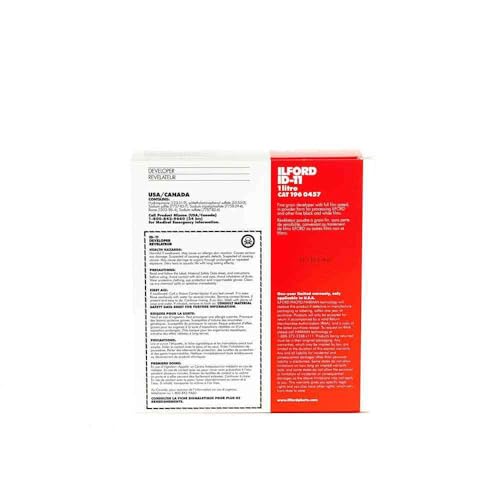
| Best for Bulk Processing | Product Type: Powder developer | Film Format: Black-and-white film | Color Type: Black and white | VIEW LATEST PRICE | Read Our Analysis |
| Kodak D-76 Developer Powder B and W Film 1 Gallon |

| Best All-Purpose | Product Type: Powder developer | Film Format: Black-and-white film | Color Type: Black and white | VIEW LATEST PRICE | Read Our Analysis |
| Ilford Ilfotec DD-X Black and White Film Developer 1 Litre |

| Best for Fine Grain | Product Type: Liquid concentrate developer | Film Format: Black-and-white film | Color Type: Black and white | VIEW LATEST PRICE | Read Our Analysis |
| Darkroom Compact Developing Tank with 4×5 Spiral Reel |

| Best for Sheet Film | Product Type: Developing tank | Film Format: 4×5 sheet film | Color Type: Color/B&W | VIEW LATEST PRICE | Read Our Analysis |
More Details on Our Top Picks
Ultrafine MONOBATH Black and White Liquid Film Developer – 1 Liter Bottle
If you want a simple, all-in-one black-and-white developer that lets you get started fast, Ultrafine MONOBATH is a strong pick. You get a ready-to-use, 1-liter liquid that develops, stops, and fixes in one bath, so you can keep your workflow lean. You can process about 15 to 16 rolls of 35mm film per bottle, with 3.5 minutes at 75°F or 5.5 minutes at 68°F. Agitate every 8 to 10 seconds, don’t dilute it, and add about 15 seconds for each reuse. Wash your negatives 20 to 25 minutes for archival results.
- Product Type:Monobath liquid developer
- Film Format:35mm roll film
- Color Type:Black and white
- Solution Form:Ready-to-use
- Process Style:Single-step
- Capacity:15–16 rolls
- Additional Feature:Single-step processing
- Additional Feature:Reusable solution
- Additional Feature:Archival wash compatible
Kodak T-Max Black & White Film Developer Liquid
Kodak Professional T‑Max Black & White Film Developer is a strong pick for 35mm black-and-white photographers who want richer shadow detail and a reliable liquid concentrate for normal or push processing. You can dilute this one-part concentrate 1+4 to make 5 liters of working solution, then use it with roll films, including Kodak T‑MAX films. It’s designed for non-replenished systems and isn’t meant for sheet film. You’ll get consistent results with continuous-tone black-and-white rolls, whether you’re shooting ISO 100 or 400 daylight scenes. For clear, flexible processing, this developer keeps your negatives finely balanced.
- Product Type:Liquid concentrate developer
- Film Format:35mm roll film
- Color Type:Black and white
- Solution Form:Concentrate
- Process Style:Normal/push
- Capacity:5 liters
- Additional Feature:Enhanced shadow detail
- Additional Feature:Push-processing capable
- Additional Feature:Roll-films only
Ilford ID-11 Fine Grain Developer for Black and White Film 1 Liter
Ilford ID-11 Fine Grain Developer is a smart pick for photographers who process black-and-white film in larger volumes and want dependable results. You get it in a 1-liter powder kit with two packs, so it stores well and stays economical. Mix it for general-purpose black-and-white film, and you’ll keep emulsion speed while building fine grain, sharpness, and rich tonal rendition. That balance lets you make high-degree enlargements without sacrificing detail. If you need a versatile developer and replenisher system for bulk processing, ID-11 helps you protect image quality while handling heavy workloads efficiently.
- Product Type:Powder developer
- Film Format:Black-and-white film
- Color Type:Black and white
- Solution Form:Powder
- Process Style:Replenisher-capable
- Capacity:1 liter
- Additional Feature:Fine grain negatives
- Additional Feature:Replenisher system compatible
- Additional Feature:High enlargement potential
Kodak D-76 Developer Powder B and W Film 1 Gallon
D-76 powder is a smart pick for photographers who want a dependable, all-purpose black-and-white developer that handles both normal and push processing with ease. You mix the powder with water to make one gallon of working solution, so it’s easy to prepare for regular darkroom sessions. You can trust it for broad film use, from everyday negatives to more demanding projects. Follow Kodak’s mixing ratios and temperatures closely for best results. Store the sealed powder in a cool, dry place, and you’ll help preserve its shelf life for future rolls.
- Product Type:Powder developer
- Film Format:Black-and-white film
- Color Type:Black and white
- Solution Form:Powder
- Process Style:General-purpose
- Capacity:1 gallon
- Additional Feature:Broad film compatibility
- Additional Feature:Reliable general-purpose use
- Additional Feature:Store sealed dry
Ilford Ilfotec DD-X Black and White Film Developer 1 Litre
If you want a black-and-white developer that delivers fine grain, full film speed, and easy-to-print negatives, Ilford Ilfotec DD-X is a strong pick. You’ll get a liquid concentrate that works as a one-shot developer, so you mix what you need and move straight to processing. It suits Ilford Delta films especially well, and it’s recommended for Delta 3200 at EI 3200/36. You’ll see deep shadows, smooth midtones, and bright highlights with detail. It also handles quality B&W films from other brands, giving you clean negatives with strong tonal range and fine grain.
- Product Type:Liquid concentrate developer
- Film Format:Black-and-white film
- Color Type:Black and white
- Solution Form:Concentrate
- Process Style:One-shot
- Capacity:2.5 liters
- Additional Feature:Full film speed
- Additional Feature:Delta 3200 optimized
- Additional Feature:One-shot concentrate
Darkroom Compact Developing Tank with 4×5 Spiral Reel
The Darkroom Compact Developing Tank with 4×5 spiral reel is a smart pick if you process 4×5 sheet film at home, especially when you want a simple tank that handles both color and black-and-white work. You can load up to two sheets at once, and the included spiral reel helps keep chemistry flowing evenly with rotating and undulating motion. Its unbreakable plastic shell stays opaque, heat resistant, and watertight, so you can work confidently. With 450 ml capacity, it’s compact, light, and practical for regular darkroom use.
- Product Type:Developing tank
- Film Format:4×5 sheet film
- Color Type:Color/B&W
- Solution Form:Tank system
- Process Style:Rotary agitation
- Capacity:2 sheets
- Additional Feature:4×5 sheet processing
- Additional Feature:Opaque lightproof tank
- Additional Feature:450 ml capacity
Factors to Consider When Choosing Film Developers
When you choose a film developer, make sure it matches your film type and fits the look you want. You’ll also want to compare the developer’s formulation, processing time, and how tightly it controls temperature. If you care about image texture, pay close attention to grain characteristics, since they can change the final result.
Film Type Compatibility
Film developers aren’t interchangeable, so you’ll want to match the chemistry to both your film format and your workflow. If you shoot roll film, sheet film, or paper, pick a developer made for that medium so you avoid weak agitation, uneven coverage, or incomplete development. Then think about the look you want: some developers give you fine grain and crisp edges, while others protect shadow detail or support push-processing. Your choice should fit the tonal balance and grain you expect from each roll or sheet. Also check whether you process often or in batches, because liquid concentrates, one-shot mixes, and powder or replenisher systems age differently and need different storage. Finally, confirm the dilution, temperature, and reuse rules so your times stay consistent.
Developer Formulation
Choose a developer formulation that matches how you process, because liquid concentrates, ready-to-use liquids, and powders each behave differently in storage, mixing, and day-to-day use. Powders usually keep longest, concentrates need dilution, and ready-to-use liquids save time but may lose usefulness sooner. You should also look at the chemistry inside the bottle: metol/hydroquinone blends, hydroquinone-free options, and fine-grain or formaldehyde-free formulas all shift contrast, shadow separation, grain, and midtone smoothness. Dilution matters too, since 1+4 and 1+9 mixes change working volume and the way you balance temperature and strength. If you use reusable or single-bath formulations, expect different agitation habits and cumulative changes. Pick a buffered, stable formula that suits your emulsions and workflow.
Processing Time
Processing time matters because development changes with temperature: a few minutes at 75°F can yield a very different result than the same recipe at 68°F, so you need to follow time-temperature reciprocity closely. You’ll also need to respect how agitation and chemistry affect your clock. Rapid or single-bath developers demand tight timing and frequent agitation, often every 8–10 seconds, because their working window’s short. If you reuse developer, expect longer development and watch film clearing so you don’t underdevelop. When you push film, extend time; when you pull, shorten it to match your contrast and effective speed goals. Keep your timing notes consistent, because total time plus agitation pattern shapes highlight and shadow separation, and that record helps you repeat results accurately later.
Temperature Control
Because development is highly temperature-sensitive, you need to keep your chemistry, film, and room conditions tightly controlled if you want repeatable results. Use a calibrated thermometer and hold your solution, film, and workspace within about ±1–2°F of your target, since even small shifts can change time, density, and grain. Record every reading, because 68°F and 75°F can demand different development times. If you reuse working solutions, add a little time each reuse, since exhaustion and drift both reduce activity. Cooler temperatures slow development and usually need longer times, while warmer ones speed it up and can raise contrast. Before you mix or start the timer, let everything equilibrate to the same temperature so you avoid thermal shock and uneven development across the roll.
Grain Characteristics
Grain is one of the quickest ways a developer changes the look of your negatives, and you’ll usually want to match it to the job at hand. If you want clean enlargements or high-resolution prints, choose a fine-grain developer because it suppresses visible grain while keeping detail crisp. For everyday use, a normal-processing formula helps preserve film speed and keeps grain and sharpness in balance. If you prefer a more textured look, high-acutance developers can make grain seem stronger. You can also steer grain with your process: longer or warmer development usually builds more grain, while shorter or cooler runs keep it finer. Gentle agitation softens grain, and one-shot or replenished systems help you keep results consistent batch after batch.
Tonal Range
Tonal balance is another key way a film developer shapes the final negative, and you’ll want to choose one that matches the kind of rendering you need. If you want rich shadow detail and smooth mid-tones, look for developers that preserve a wide tonal range while still keeping highlights distinct. Fine-grain or low-contrast formulas can compress highlights and stretch mid-tone gradation, which helps when you need subtle enlargements and refined tonal nuance. If your negatives need more depth in dark areas, choose a developer built to boost shadow density and reveal texture in underexposed regions. You can also steer contrast with time, temperature, and agitation: longer or warmer development raises contrast, while gentler, shorter, or cooler processing softens it and smooths gradation.
Reusability
Reusability matters when you’re choosing a film developer, especially if you process film often and want to stretch each bottle further. You can get multiple batches from some developers, but you’ll usually need to add about 10–20 seconds each time you reuse them to offset the drop in activity. Keep track of how much film you’ve processed and how many times you’ve reused the solution, because exhaustion builds and can flatten contrast and shadow detail if you don’t compensate. Check whether you’re using a one-shot concentrate, ready-to-use formula, or replenisher system, since each handles reuse differently. With careful agitation, steady temperature, and proper washing after development, you can keep results consistent and protect image permanence as the developer weakens.
Mixing Requirements
Once you’ve considered how often you can reuse a developer, look at how it’s mixed before you buy. Check whether it comes ready to use, as a liquid concentrate, or as powder, because each form changes storage, prep, and working volume. Read the dilution ratio carefully; a mix like 1+4 tells you how much solution you’ll make and shapes activity, contrast, and grain. Follow the stated mixing temperature and use fresh water at that exact temperature so you get consistent results. Add powder to water, or concentrate to water, in the exact order the label gives. Mix only what you need, or confirm reuse rules, since one-shot and non-replenished solutions fade while reused chemistry may need shorter or adjusted development times.
Frequently Asked Questions
Which Developer Is Best for Pushing Black-And-White Film?
HC-110 is the best all around developer for pushing black and white film. It preserves strong shadow detail, maintains good sharpness, and offers flexible development options. For the least visible grain, use Rodinal, though it produces a harsher look.
Can Film Developer Affect Contrast and Tonal Range?
Yes. Different developers and development conditions change highlight and shadow rendering and the relationship between dense and thin areas of the negative. Adjusting dilution, development time, and temperature lets you control overall contrast and midtone separation.
How Long Does Mixed Developer Remain Usable?
You can typically use mixed developer from a few hours up to several days depending on the specific formula, how it is stored, and whether it becomes contaminated. Discard it if it shows color changes, develops an unusual odor, or its activity visibly slows.
Do Different Developers Work Better With Various Film Brands?
Yes. Different emulsions respond differently, so pairing a developer with a specific film brand can improve contrast, grain, and tonal rendition. Test various developer and film combinations and adjust development times to dial in the results.
Is Temperature Control Important During Development?
Yes. Precise temperature control during development ensures consistent results. Small temperature fluctuations can cause uneven contrast, increased grain, and color shifts, particularly with temperature-sensitive film and processes with strict timing.
Final Thoughts
So, when you choose a film developer, you’re basically casting a tiny chemical director to conduct your negatives’ grand opera. Want speed? MONOBATH saunters in like a one-stop magician. Need classic reliability? D-76 and ID-11 quietly do the honorable work in lab coats. Shooting high-speed drama? DD-X brings the spotlight. Pick wisely, mix carefully, and keep the temp steady, or your frames’ll look like they were processed by a caffeinated raccoon in a darkroom.
