Home generators are one of the best ways to keep lights, fridges, and key appliances running during an outage.
The best generator for your home depends on how much power you need, what fuel you want to use, and how much noise you can tolerate. Some models can support a few essentials, while others can back up large parts of a house for days.
Here’s a look at the top home generators for 2026 and the one feature many buyers miss.
| Westinghouse 12500W Dual Fuel Portable Generator |

| Best Dual-Fuel | Running Watts: 9500W gas / 8500W propane | Fuel Type: Gasoline, propane | Engine Size: 457cc | VIEW LATEST PRICE | Read Our Analysis |
| WEN 4,750-Watt Dual Fuel Portable Generator (DF475T) |

| Best Value | Running Watts: 3800W gas / 3500W propane | Fuel Type: Gasoline, propane | Engine Size: 224cc | VIEW LATEST PRICE | Read Our Analysis |
| Westinghouse Tri-Fuel Portable Home Backup Generator |
| Best Tri-Fuel | Running Watts: 11500W gas / 10500W propane / 9500W NG | Fuel Type: Gasoline, propane, natural gas | Engine Size: 550cc | VIEW LATEST PRICE | Read Our Analysis |
| Power Equipment 4400W Portable Inverter Generator RV Ready |

| Best Lightweight | Running Watts: 3400W | Fuel Type: Gasoline | Engine Size: Not specified | VIEW LATEST PRICE | Read Our Analysis |
| 4400-Watt Gas Powered Inverter Generator RV Ready |
| Budget-Friendly Pick | Running Watts: 3400W | Fuel Type: Gasoline | Engine Size: Not specified | VIEW LATEST PRICE | Read Our Analysis |
| WEN 5600-Watt Portable Generator (GN5602X) |
| Best RV Ready | Running Watts: 4500W | Fuel Type: Gasoline | Engine Size: 224cc | VIEW LATEST PRICE | Read Our Analysis |
| Westinghouse 6500W Dual Fuel Portable Generator |
| Best Mid-Size | Running Watts: 5300W gas / 4800W propane | Fuel Type: Gasoline, propane | Engine Size: 274cc | VIEW LATEST PRICE | Read Our Analysis |
| PowerSmart 4400-Watt Portable Inverter Generator with CO Sensor |

| Best Inverter Option | Running Watts: 3600W | Fuel Type: Gasoline | Engine Size: 223cc | VIEW LATEST PRICE | Read Our Analysis |
| Westinghouse 12500W Tri-Fuel Portable Generator |

| Best for Backup | Running Watts: 9500W gas / 8500W propane / 7500W NG | Fuel Type: Gasoline, propane, natural gas | Engine Size: 457cc | VIEW LATEST PRICE | Read Our Analysis |
| WEN 14500-Watt Tri-Fuel Generator (TF1450) |

| Heavy-Duty Pick | Running Watts: 11500W gas / 10300W propane / 8750W NG | Fuel Type: Gasoline, propane, natural gas | Engine Size: 500cc | VIEW LATEST PRICE | Read Our Analysis |
| Generac Guardian 22kW Standby Generator with Transfer Switch |
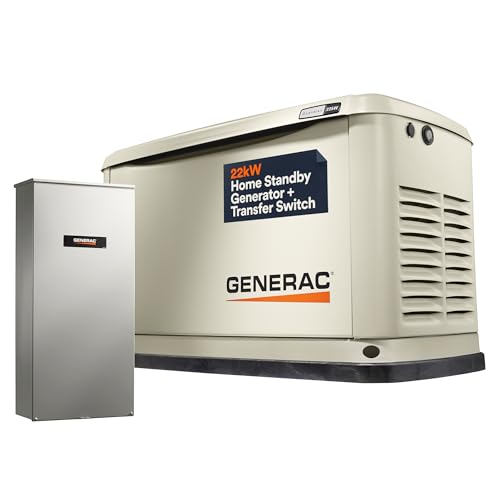
| Best Standby Power | Running Watts: 22000W | Fuel Type: Standby home fuel source not specified | Engine Size: G-Force engine, displacement not specified | VIEW LATEST PRICE | Read Our Analysis |
More Details on Our Top Picks
Westinghouse 12500W Dual Fuel Portable Generator
Should you want a home generator that can handle major backup loads without locking you into a single fuel type, the Westinghouse 12500W Dual Fuel Portable Generator stands out right away.
You get 9,500 running watts and 12,500 peak watts on gasoline, or 8,500 running watts and 11,200 peak watts on propane. Its 457cc OHV engine uses a cast iron sleeve for durability, while low oil shutdown protects it. A VFT display tracks voltage, frequency, and hours. You can run it up to 12 hours on the 6.6-gallon tank. Remote start, RV and transfer-switch-ready outlets, rubber covers, EPA compliance, and a 3-year warranty add confidence.
- Running Watts:9500W gas / 8500W propane
- Fuel Type:Gasoline, propane
- Engine Size:457cc
- Runtime:Up to 12 hrs
- Starting Method:Remote electric + recoil
- Warranty:3-year limited
- Additional Feature:Remote key fob start
- Additional Feature:Digital VFT display
- Additional Feature:50A RV outlet
WEN 4,750-Watt Dual Fuel Portable Generator (DF475T)
Should you want a flexible home backup generator that can run on either gasoline or propane, the WEN DF475T stands out as a practical fit. You get 4,750 surge watts and 3,800 running watts on gasoline, or 4,350 surge and 3,500 running on propane. Its selectable 120V/240V output works with transfer switches and backup setups.
A 224cc 4-stroke OHV engine and key-turn electric start keep operation simple. The 4-gallon tank runs up to 11 hours at half load. You also get two 120V GFCI outlets, one L14-30R outlet, a 12V plug, wheels, handles, an LPG hose, oil, and a two-year warranty.
- Running Watts:3800W gas / 3500W propane
- Fuel Type:Gasoline, propane
- Engine Size:224cc
- Runtime:Up to 11 hrs
- Starting Method:Electric start
- Warranty:2-year
- Additional Feature:Voltage selector switch
- Additional Feature:12V DC outlet
- Additional Feature:LPG hose included
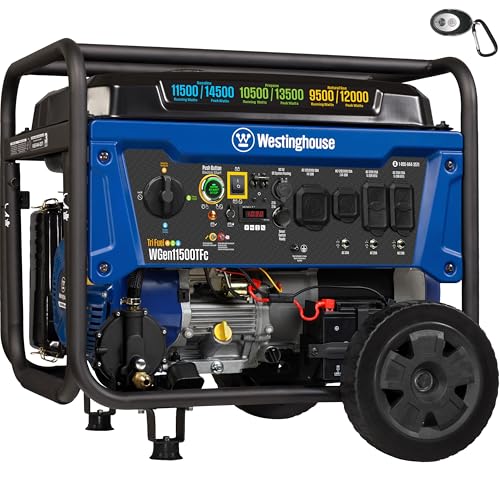
Westinghouse Tri-Fuel Portable Home Backup Generator
Should you need one generator that can adapt to whatever fuel source is available, the Westinghouse Tri-Fuel Portable Home Backup Generator stands out with tri-fuel capability and strong output throughout all three options. You get up to 14,500 peak watts on gasoline, 13,500 on propane, and 12,000 on natural gas.
Its 550cc 4-stroke OHV engine, cast iron sleeve, and copper windings deliver durable, cleaner power with low THD, so you can safely run phones, computers, and TVs. You’ll also appreciate remote electric start, transfer-switch readiness, and long runtime: up to 19 hours on gasoline. It’s EPA compliant and backed with a three-year coverage plan.
- Running Watts:11500W gas / 10500W propane / 9500W NG
- Fuel Type:Gasoline, propane, natural gas
- Engine Size:550cc
- Runtime:Up to 19 hrs gas / 7 hrs on 20 lb propane
- Starting Method:Remote electric start
- Warranty:3-year limited
- Additional Feature:Low THD output
- Additional Feature:Copper windings
- Additional Feature:Natural gas capable
Power Equipment 4400W Portable Inverter Generator RV Ready
Should you want one generator that can handle both RV trips and basic home backup, the Power Equipment 4400W Portable Inverter Generator stands out as a practical fit. You get 4400 peak watts and 3400 running watts, enough for essentials during outages or camping.
It gives you two 120V AC outlets, one 12V DC port, and a dedicated RV outlet for flexible hookups. With ECO mode, it runs up to 14 hours at 25% load from a 2-gallon tank, and the fuel gauge helps you track usage. At 56 pounds and under 72 dBA at 23 feet, you can move and use it easily anywhere.
- Running Watts:3400W
- Fuel Type:Gasoline
- Engine Size:Not specified
- Runtime:Up to 14 hrs
- Starting Method:Not specified
- Warranty:Not specified
- Additional Feature:Under 72 dBA
- Additional Feature:56 lb weight
- Additional Feature:ECO mode
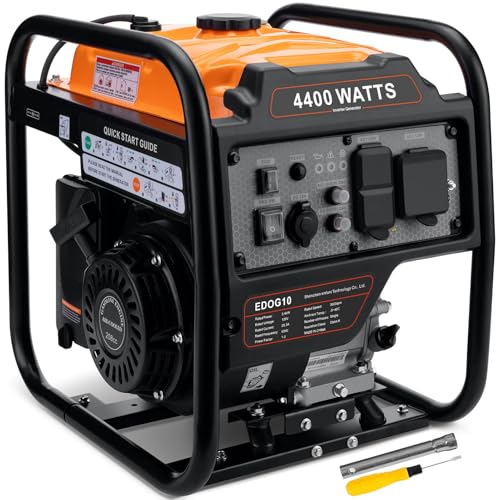
4400-Watt Gas Powered Inverter Generator RV Ready
Should you want a lightweight home backup generator that can also pull double duty for RV trips, the Oxseryn OXOG10 fits the bill with 4,400 peak watts, 3,400 running watts, and a built-in 30A RV outlet. You get two 120V AC outlets, one 12V DC port, and up to 14 hours of runtime under 25% load from a 2-gallon tank.
Its 4-stroke gasoline engine uses electronic ignition, cold start tech, and ECO mode to save fuel. You’re protected through overload protection and low-oil shutdown, while EPA compliance adds peace of mind. At about 56 pounds, it’s easy to move for camping, emergencies, or jobsites anywhere.
- Running Watts:3400W
- Fuel Type:Gasoline
- Engine Size:Not specified
- Runtime:Up to 14 hrs
- Starting Method:Electronic ignition
- Warranty:1-year manufacturer
- Additional Feature:Cold start technology
- Additional Feature:Overload protection
- Additional Feature:30A RV outlet
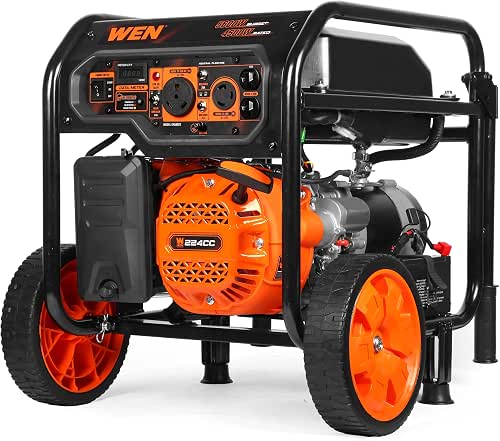
WEN 5600-Watt Portable Generator (GN5602X)
Should you want a home generator that balances solid output with practical backup features, the WEN 5600-Watt Portable Generator (GN5602X) is a strong fit. You get 5600 starting watts, 4500 running watts, and a 224cc 4-stroke gasoline engine. Its 4.3-gallon tank delivers up to 12.5 hours at half load.
You can start it easily with the electric starter or use the backup recoil. The digital meter shows voltage, frequency, and runtime data. For safety, the WEN Watchdog CO sensor shuts the unit down once carbon monoxide gets dangerous. Two 120V household outlets, an RV-ready TT-30R, and a transfer-switch-ready L5-30R add flexibility.
- Running Watts:4500W
- Fuel Type:Gasoline
- Engine Size:224cc
- Runtime:Up to 12.5 hrs
- Starting Method:Electric + recoil
- Warranty:3-year limited
- Additional Feature:CO shutdown sensor
- Additional Feature:Digital data meter
- Additional Feature:TT-30R RV outlet
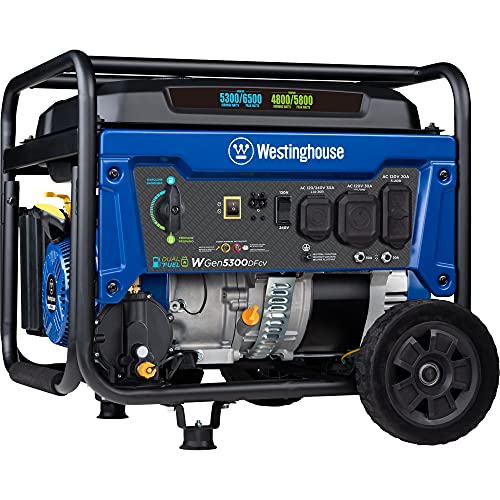
Westinghouse 6500W Dual Fuel Portable Generator
In case you want one generator that can cover home backup, RV trips, and fuel flexibility, the Westinghouse 6500W Dual Fuel Portable Generator stands out as a practical fit. You get 5300 running watts on gas or 4800 on propane, plus up to 14.5 hours from the 4.7-gallon tank.
Its 274cc OHV engine uses a cast iron sleeve, low-oil shutdown, and automatic voltage regulation for dependable performance. You can connect a transfer switch, plug in an RV through the TT-30R outlet, and use the 120/240V selector as needed. CO shutdown, overload protection, never-flat wheels, included accessories, and a 3-year warranty add confidence.
- Running Watts:5300W gas / 4800W propane
- Fuel Type:Gasoline, propane
- Engine Size:274cc
- Runtime:Up to 14.5 hrs
- Starting Method:Magneto ignition
- Warranty:3-year limited
- Additional Feature:CO sensor shutdown
- Additional Feature:Voltage selector switch
- Additional Feature:Never-flat wheels
PowerSmart 4400-Watt Portable Inverter Generator with CO Sensor
PowerSmart’s 4400-Watt Portable Inverter Generator with CO Sensor fits homeowners who want a compact backup option that’s easy to move, simple to use, and safer for emergency power. You get 4400 starting watts and 3600 running watts from a 223cc EPA-compliant gas engine, enough for essentials during outages. It runs up to 11 hours at 25% load and includes three outlets.
You’ll also appreciate built-in carbon monoxide detection, low-oil shutdown, and overload protection. At about 61 to 68 pounds, it stays portable. Noise reaches 76 dB at 23 feet, and a 2-year warranty adds peace of mind for buyers.
- Running Watts:3600W
- Fuel Type:Gasoline
- Engine Size:223cc
- Runtime:Up to 11 hrs
- Starting Method:Electronic ignition
- Warranty:2-year manufacturer
- Additional Feature:Carbon monoxide sensor
- Additional Feature:Overload protection
- Additional Feature:Compact lightweight design
Westinghouse 12500W Tri-Fuel Portable Generator
Homeowners who want one generator that works with gasoline, propane, or natural gas will find the Westinghouse 12500W Tri-Fuel Portable Generator especially appealing. You get up to 12,500 peak watts on gasoline, plus a 6.6-gallon tank that runs up to 12 hours at half load.
Its 457cc OHV engine uses a cast iron sleeve for durability, while low-oil and CO shutdown add safety. You can start it with the remote key fob, push button, or recoil backup. The VFT display helps you track voltage and hours. Despite its 215-pound frame, never-flat wheels and a handle keep it manageable. Transfer-switch and RV-ready outlets increase versatility.
- Running Watts:9500W gas / 8500W propane / 7500W NG
- Fuel Type:Gasoline, propane, natural gas
- Engine Size:457cc
- Runtime:Up to 12 hrs
- Starting Method:Remote electric + push-button + recoil
- Warranty:3-year limited
- Additional Feature:CO sensor shutdown
- Additional Feature:Remote key fob
- Additional Feature:14-50R RV outlet
WEN 14500-Watt Tri-Fuel Generator (TF1450)
WEN’s TF1450 fits best in case you want one portable generator that can run on gasoline, propane, or natural gas without giving up serious output. You’ll get up to 14,500 starting watts on gasoline, 12,500 on propane, or 10,500 on natural gas, plus 120V/240V capability for home backup or jobsite use. Its 8.2-gallon tank runs up to 12 hours at half load, and electric start keeps operation simple.
You also get four household outlets, 30A and 50A transfer-switch-ready receptacles, and a 12V DC port. Despite its 249-pound build, the wheel kit, digital meter, and three-year warranty make ownership easier.
- Running Watts:11500W gas / 10300W propane / 8750W NG
- Fuel Type:Gasoline, propane, natural gas
- Engine Size:500cc
- Runtime:Up to 12 hrs
- Starting Method:Electric key start + recoil
- Warranty:3-year limited
- Additional Feature:Natural gas adapter
- Additional Feature:Digital data meter
- Additional Feature:12V automotive outlet
Generac Guardian 22kW Standby Generator with Transfer Switch
Should you want automatic whole-house backup instead of juggling extension cords amid an outage, the Generac Guardian 22kW Standby Generator with Transfer Switch stands out as a top pick. You get 22,000 watts from Generac’s low-maintenance G-Force engine, plus True Power Technology for clean electricity with under 5% harmonic distortion. It runs quieter and uses fuel efficiently.
Its 200 Amp NEMA 3R smart transfer switch gives you automatic protection during storms and outages. With Mobile Link Wi-Fi, you can track performance and receive maintenance alerts anywhere. Engineered and assembled in the USA, it’s durable, warranty-backed for five years, and best installed through a licensed electrician.
- Running Watts:22000W
- Fuel Type:Standby home fuel source not specified
- Engine Size:G-Force engine, displacement not specified
- Runtime:Not specified
- Starting Method:Automatic standby start
- Warranty:5-year limited
- Additional Feature:200 Amp switch
- Additional Feature:Wi-Fi monitoring
- Additional Feature:Under 5% THD
Factors to Consider When Choosing Generators for Home
At the time I compare generators for home use, I start with the essentials that matter most to you: power output, fuel type, and runtime. I also check tank size, outlet and transfer switch compatibility, so the generator fits your setup without extra hassle. Finally, I look at safety and starting features because I want you to have reliable backup power that’s easy to use.
Power Output Needs
Before I compare specific models, I look at power output initially because it determines what a generator can actually keep running during an outage. I add up the running watts of every essential appliance and device I want to power, from the refrigerator to lights, sump pump, or medical equipment.
I also check surge wattage, because some appliances need a higher burst of power once they start. In case I ignore that, I risk tripping the generator even when the normal load seems fine. I always choose a generator whose running wattage exceeds my calculated needs for safer, more reliable performance. Portable units range from about 3,000 to over 12,000 running watts, so matching output to expected load matters. For larger homes or several heavy-duty appliances, I look for more than 10,000 running watts.
Fuel Type Options
After I determine the right power output, I look at fuel type because it affects runtime, convenience, storage, and how easily I can keep the generator running during an outage. I compare gasoline, propane, natural gas, and flexible dual-fuel or tri-fuel models before I decide.
Gasoline generators usually deliver strong power, but I must store fuel on-site, and gasoline doesn’t last forever. Propane appeals to me because it burns cleaner, stores well for long periods, and often uses simple hose connections that make setup easier. Natural gas works well whenever I want a direct connection to an existing gas line, though I’d plan for professional installation and possibly lower peak wattage. In case I want the most flexibility, I choose dual-fuel or tri-fuel generators so I can switch fuels during emergencies.
Runtime And Tank Size
Because I don’t want to refuel constantly during an outage, I pay close attention to runtime and tank size before I choose a generator. Longer runtime usually comes from a bigger fuel tank and better fuel efficiency, so I compare both instead of focusing on wattage alone. In my experience, models with tanks around 6 gallons or more often deliver 10 to 12 hours at half load.
I also recall that runtime changes a lot with demand. In case I push a generator near full capacity, it will burn fuel faster and shut down sooner. That’s why I match the generator to realistic household needs. Smaller tanks can work, but they require more frequent refueling, which I’d rather avoid during emergencies. Dual- or tri-fuel models add flexibility, though each fuel option can change runtime considerably.
Outlet And Transfer Compatibility
Runtime doesn’t help much in case a generator can’t connect cleanly to the equipment I need to run, so I always check outlet and transfer compatibility next. I make sure the panel includes the receptacles my setup needs, whether that’s standard 120V household outlets, a 240V connection for larger loads, or an RV port.
I also look for transfer-switch-ready outlets, especially NEMA L14-30R or NEMA 14-50R, because they make it easier to tie into home circuits or support bigger appliances. Just as crucial, I count how many outlets I’ll need at once for essentials, including common plugs and any dedicated transfer switch input. Finally, I prefer outlets with GFCI protection and rubber covers, since those built-in details help reduce electrical hazards whenever I’m powering equipment outdoors or in bad weather.
Safety And Starting Features
At the moment I compare home generators, I pay close attention to safety and starting features, since they affect both day-to-day convenience and the risk of equipment damage. I look for automatic low oil shutdown initially, because it protects the engine through stopping operation prior to low oil causing expensive wear or failure.
I also prefer remote electric start or a key ignition, since both let me start the unit safely without yanking a recoil cord. Built-in carbon monoxide sensors matter too, because they can shut the generator down before dangerous CO levels build up. I recommend overload protection, which cuts power when demand exceeds capacity and helps prevent electrical damage. Finally, I value transfer switch readiness, because it supports safer changeover from utility power and reduces dangerous backfeed risks during outages.
Frequently Asked Questions
Can I Power Sensitive Electronics Without a Separate Surge Protector?
Yes, you can, if your generator delivers stable inverter power with low total harmonic distortion and integrated voltage protection. Check the power specifications for your electronics first, since connecting costly equipment without confirming compatibility can be a bad idea.
How Often Should I Exercise a Home Generator When Unused?
Exercise a home generator once a month. Units that sit unused are much more likely to fail when an outage hits. Run it for 20 to 30 minutes with a load attached, and check the fuel, oil, battery, and how quickly it starts.
What Permits Are Required Before Installing a Standby Generator?
Before installing a standby generator, you typically need a building permit, an electrical permit, and in many areas a plumbing or mechanical permit. You may also need zoning clearance, HOA approval, and utility authorization for the transfer switch or gas line connection, since permit requirements differ by city and county.
How Should Fuel Be Stored Safely for Long-Term Generator Use?
Store fuel in approved, clearly labeled containers made for gasoline or diesel, place them in a shaded, dry, well ventilated area away from pilot lights, heaters, and direct sunlight, add fuel stabilizer for long storage periods, rotate older fuel first, leave expansion space in each container, check regularly for rust, swelling, or leaks, and comply with local fire and storage regulations to lower the chance of ignition or fuel damage.
Will a Generator Increase My Home Insurance Premiums?
Yes, premiums may rise a little. Insurers often look more closely at a generator when it is permanently installed or not maintained properly. To help limit added cost, choose professional installation, place it in a safe location, and keep clear maintenance records for your policy.
Final Thoughts
Choosing the right home generator gives me priceless peace of mind, and I hope this guide helps you find the perfect fit for your needs. Whether you want portable power, fuel flexibility, or steadfast standby protection, today’s best models deliver comfort and confidence at the moment outages strike. I’d focus on safety, size, and simplicity, then invest in a generator that keeps your home humming. Smart selection today means steady, stress-free security in the event of tomorrow.