A great heat pump thermostat can cut energy bills by using smart scheduling, adaptive learning, and safety features that protect the compressor. This guide presents seven top options that balance comfort, efficiency, and ease of use.
Each model’s power needs, battery reliability, and compatibility with Alexa, Google, or HomeKit are covered. Read on for clear comparisons and practical notes to help pick the right thermostat for your system.
| Breez Max Smart AC Controller Wi‑Fi Thermostat |

| Best for Mini‑Splits | Compatibility Type: Works with mini‑splits and IR‑controlled room units (multi‑zone mini‑split support) | Power / Voltage: Uses 2.4 GHz Wi‑Fi (device powered by household wiring/adapter implied for smart controller) | Controls / Connectivity: Wi‑Fi with mobile app, touch buttons, voice platform integrations (Alexa, Google, Siri) | VIEW LATEST PRICE | Read Our Analysis |
| Honeywell TH8321WF1001 Wi‑Fi 8000 Thermostat (3H/2C) |
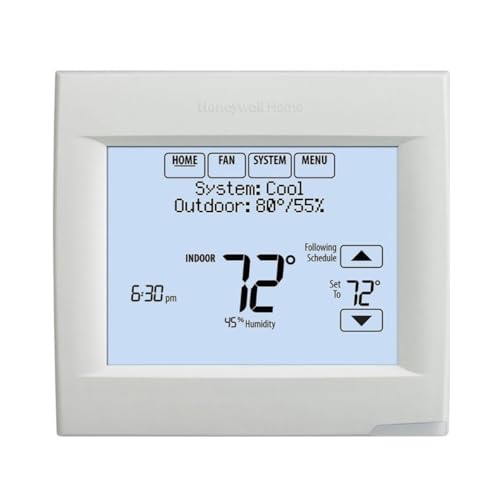
| Reliable Multi‑Stage | Compatibility Type: Supports multi‑stage HVAC (up to 3 heat / 2 cool) | Power / Voltage: 24 VAC system compatibility | Controls / Connectivity: Wi‑Fi remote control via computer/tablet/smartphone | VIEW LATEST PRICE | Read Our Analysis |
| ecobee Smart Thermostat Premium with Air Quality Monitor |

| Premium Smart Control | Compatibility Type: Compatible with most 24 VAC HVAC systems (furnaces, heat pumps, ACs) | Power / Voltage: 24 VAC HVAC power (includes Power Extender Kit for C‑wire‑less homes) | Controls / Connectivity: Wi‑Fi, Bluetooth, app control, voice assistants (Alexa, Siri, Google, HomeKit, SmartThings) | VIEW LATEST PRICE | Read Our Analysis |
| Heat Pump Non-Programmable Thermostat — Single-Stage |

| Simple No‑Frills | Compatibility Type: Compatible with heat pumps and many conventional systems (single‑stage/heat pump) | Power / Voltage: 24 VAC or 2 × AAA batteries (dual power) | Controls / Connectivity: Push‑button / touch control (no Wi‑Fi) | VIEW LATEST PRICE | Read Our Analysis |
| Sensi Touch Smart Thermostat by Emerson (ST75S) |

| User‑Friendly Smart | Compatibility Type: Compatible with most home HVAC equipment (requires common wire) | Power / Voltage: Requires common wire (C‑wire) / mains HVAC 24 VAC | Controls / Connectivity: Wi‑Fi with Sensi mobile app, voice (Alexa) | VIEW LATEST PRICE | Read Our Analysis |
| 2 Heat/1 Cool Non-Programmable Thermostat with Humidity |

| Best for Basics | Compatibility Type: Compatible with heat pumps (2H/1C) and many 24 VAC conventional systems | Power / Voltage: 24 VAC or 2 × AAA batteries (dual power) | Controls / Connectivity: Button controls, local display (non‑programmable, no Wi‑Fi noted) | VIEW LATEST PRICE | Read Our Analysis |
| Emerson 1F83H-21PR Heat Pump (2H/1C) Programmable Thermostat |

| Programmable Pro | Compatibility Type: Heat pump compatible (2H/1C) and dual‑fuel capable | Power / Voltage: Designed for 24 VAC heat pump systems | Controls / Connectivity: Programmable keypad with physical buttons and backlight (no Wi‑Fi specified) | VIEW LATEST PRICE | Read Our Analysis |
More Details on Our Top Picks
Breez Max Smart AC Controller Wi‑Fi Thermostat
If you want simple, room‑by‑room control of a heat pump or window AC and don’t want to fuss with complex wiring, the Breez Max is a great pick because it turns any IR‑controlled mini‑split or window unit into a smart thermostat without drilling or rewiring. You’ll plug it in, connect to 2.4 GHz Wi‑Fi, and let its auto detection find your model. Place it 6 to 12 feet from the unit. You can use app scheduling, geofencing, Comfy Max to avoid overcooling, local schedules if internet drops, voice assistants, and grouped zones. Support is quick and human.
- Compatibility Type:Works with mini‑splits and IR‑controlled room units (multi‑zone mini‑split support)
- Power / Voltage:Uses 2.4 GHz Wi‑Fi (device powered by household wiring/adapter implied for smart controller)
- Controls / Connectivity:Wi‑Fi with mobile app, touch buttons, voice platform integrations (Alexa, Google, Siri)
- Programmability / Modes:Schedules, presets (Home/Away/Sleep), geofencing, AI Comfy mode
- Display / Sensors:Built‑in temperature and humidity sensors; app‑adjustable
- Maintenance / Alerts:Usage history, air filter status monitoring, local schedules when offline
- Additional Feature:Auto‑detects IR models
- Additional Feature:Local schedules run offline
- Additional Feature:Air‑filter status monitoring
Honeywell TH8321WF1001 Wi‑Fi 8000 Thermostat (3H/2C)
You’ll like the Honeywell TH8321WF1001 Wi‑Fi 8000 if you want a smart, reliable thermostat that works well with multi stage heat pump systems and is easy to manage from anywhere. You can connect it to Wi‑Fi and control your heating and cooling from a phone, tablet, or computer. It supports up to three heat stages and two cool stages, so it fits many setups. The programming is simple, so you’ll set schedules that lower bills. You’ll get reminders for equipment checks and changes, helping avoid surprises. It suits homes and small businesses needing steady comfort and savings.
- Compatibility Type:Supports multi‑stage HVAC (up to 3 heat / 2 cool)
- Power / Voltage:24 VAC system compatibility
- Controls / Connectivity:Wi‑Fi remote control via computer/tablet/smartphone
- Programmability / Modes:Programmable for energy savings (intuitive programming)
- Display / Sensors:Displayed status and programming (equipment reminders) — thermostat display implied
- Maintenance / Alerts:Equipment check and change reminders
- Additional Feature:Equipment check reminders
- Additional Feature:Universal system application
- Additional Feature:Commercial/residential suitable
ecobee Smart Thermostat Premium with Air Quality Monitor
Choose the ecobee Smart Thermostat Premium with Air Quality Monitor when you want smarter comfort and cleaner air without fuss. You’ll get a programmable Wi‑Fi thermostat that talks to Siri, Alexa, Google Assistant, HomeKit, and SmartThings. It senses occupancy with built‑in radar, uses the included SmartSensor to fix hot and cold spots, and pauses when windows or doors are open. The air quality monitor alerts you and suggests fixes, and the speaker streams music or two‑way talk. Installation is friendly with a power extender kit and clear guides. Energy Star certification and savings up to 26% make it feel worth it.
- Compatibility Type:Compatible with most 24 VAC HVAC systems (furnaces, heat pumps, ACs)
- Power / Voltage:24 VAC HVAC power (includes Power Extender Kit for C‑wire‑less homes)
- Controls / Connectivity:Wi‑Fi, Bluetooth, app control, voice assistants (Alexa, Siri, Google, HomeKit, SmartThings)
- Programmability / Modes:Programmable schedules, occupancy sensing, geofencing, SmartSensor
- Display / Sensors:Large vibrant display plus built‑in radar occupancy and included SmartSensor
- Maintenance / Alerts:Air quality alerts, filter change reminders, smoke alarm detection (with integrations)
- Additional Feature:Built‑in air quality monitor
- Additional Feature:Included SmartSensor occupancy
- Additional Feature:Built‑in speaker/two‑way talk
Heat Pump Non-Programmable Thermostat — Single-Stage
Handy for homeowners who want simple, reliable control of a single-stage heat pump, this nonprogrammable thermostat keeps things straightforward and dependable. You’ll like its clear backlit LCD and push button controls, so you can set temperature without fuss. It fits many 24V systems, but you should check compatibility with your setup before buying. Installation is easy with a universal sub base and large terminal blocks, and most installs take under 30 minutes. It runs on 24 VAC or two AAA batteries, and has an adjustable swing to save energy and protect your system.
- Compatibility Type:Compatible with heat pumps and many conventional systems (single‑stage/heat pump)
- Power / Voltage:24 VAC or 2 × AAA batteries (dual power)
- Controls / Connectivity:Push‑button / touch control (no Wi‑Fi)
- Programmability / Modes:Non‑programmable (single setpoint control)
- Display / Sensors:Backlit LCD display (temperature readout)
- Maintenance / Alerts:Low‑battery reminder; simple maintenance info in manual
- Additional Feature:No C‑wire usually needed
- Additional Feature:Universal sub‑base included
- Additional Feature:Adjustable temperature differential
Sensi Touch Smart Thermostat by Emerson (ST75S)
If you want a smart thermostat that’s friendly for DIYers and homeowners who care about privacy, the Sensi Touch ST75S fits the bill. You’ll like its easy DIY install with a built-in level, lit easy-click terminals, and step-by-step app guidance. It needs a common wire and works with most HVAC systems. The large color touchscreen shows temps clearly and menus feel simple. It connects via Wi-Fi, works with Alexa, and offers remote control on Android and iOS. ENERGY STAR certification and usage reports can lower HVAC costs. Sensi protects your personal data and sends maintenance alerts.
- Compatibility Type:Compatible with most home HVAC equipment (requires common wire)
- Power / Voltage:Requires common wire (C‑wire) / mains HVAC 24 VAC
- Controls / Connectivity:Wi‑Fi with Sensi mobile app, voice (Alexa)
- Programmability / Modes:Flexible scheduling via app (programmable)
- Display / Sensors:Large touchscreen color display (temperature and usage info)
- Maintenance / Alerts:Equipment alerts, usage reports, filter replacement reminders
- Additional Feature:Data privacy emphasis
- Additional Feature:Illuminated easy‑click terminals
- Additional Feature:ENERGY STAR certified
2 Heat/1 Cool Non-Programmable Thermostat with Humidity
You’ll appreciate this 2 Heat 1 Cool non-programmable thermostat if you want simple, reliable climate control with humidity readout for a small home or apartment. You get clear, large backlit numbers that are easy to read, and the humidity display helps you feel comfortable without guessing. It works with most 24VAC systems and heat pumps up to two heat stages. Installation is straightforward and it runs on 24VAC or two AAA batteries. It protects your compressor with a three minute delay and lets you tweak cycle rate for tighter comfort. It also warns when batteries run low and includes two year support.
- Compatibility Type:Compatible with heat pumps (2H/1C) and many 24 VAC conventional systems
- Power / Voltage:24 VAC or 2 × AAA batteries (dual power)
- Controls / Connectivity:Button controls, local display (non‑programmable, no Wi‑Fi noted)
- Programmability / Modes:Non‑programmable (manual control; selectable compressor delay and swing)
- Display / Sensors:Large white backlit display showing temperature and humidity
- Maintenance / Alerts:Low‑battery replacement reminder, 3‑minute compressor delay protection
- Additional Feature:Displays indoor humidity
- Additional Feature:3‑minute compressor delay
- Additional Feature:Ambient temp correction
Emerson 1F83H-21PR Heat Pump (2H/1C) Programmable Thermostat
For homeowners who want a reliable, no-nonsense thermostat that makes managing a heat pump simple, the Emerson 1F83H-21PR is a solid pick. You’ll appreciate the big, clear display that stays readable even in low light and the handy backlight button when you need it. Programming is flexible with 7-day, 5-1-1, or no schedule options and a streamlined menu that keeps setup fast. Installation is simple thanks to a built-in level and pluggable terminals. Safety features include keypad lock and temperature limits. It supports dual fuel systems and works without extra sensors, so you’ll feel confident and in control.
- Compatibility Type:Heat pump compatible (2H/1C) and dual‑fuel capable
- Power / Voltage:Designed for 24 VAC heat pump systems
- Controls / Connectivity:Programmable keypad with physical buttons and backlight (no Wi‑Fi specified)
- Programmability / Modes:Selectable programming (7‑day, 5‑1‑1, or off)
- Display / Sensors:Big clear display with backlight
- Maintenance / Alerts:Temperature limits and keypad lock (prevention/alerts for misuse)
- Additional Feature:Selectable 7/5‑1‑1 programming
- Additional Feature:Keypad lock security
- Additional Feature:Pluggable terminal design
Factors to Consider When Choosing a Heat Pump Thermostat
When I pick a thermostat for a heat pump, I first check system compatibility and power requirements so I know it will work reliably with my unit. I also look for programmability options and sensor and zoning support to make comfort simple and energy use lower. Finally, I consider connectivity and integrations so the thermostat fits into my home and makes control easy from anywhere.
System Compatibility
Because your heat pump’s wiring and backup systems vary, I like to start by matching the thermostat to the exact configuration you have. First, check whether your system is single stage, multi stage, or mixed 2 heat 1 cool. A mismatch can stop stages or auxiliary heat from working, and that will frustrate you fast. Next, confirm auxiliary or emergency heat control if you use backup heat strips or a furnace, since wiring differs for backup modes. Also make sure the thermostat is for 24 VAC control systems, not line voltage or baseboard electric systems. Ask whether it needs a common C wire or offers a power extender, and verify support for dual transformer setups if you have separate heating and cooling transformers.
Power Requirements
If your thermostat loses power or can’t control stages properly, you’ll notice comfort problems fast, so I always start by checking how the thermostat gets its power. I look for a dedicated C terminal since most heat pump thermostats need 24 VAC to run Wi Fi, big screens, and sensors. If you don’t have a C wire, battery backup can keep basic control alive, but batteries drain fast when networks or displays run. For systems with auxiliary or emergency heat, continuous power is critical so stage switching and lockouts work reliably. I also check for line voltage circuits because baseboard heaters need thermostats rated for 110 to 240 V. Some devices use power extenders or power stealing, yet those can clash with older control boards.
Programmability Options
As you pick a thermostat, I like to start by thinking about how much hands-on control you want versus how much you want the device to handle for you. You can choose a simple nonprogrammable unit if you prefer manual control and few features. Or pick a programmable model with 7-day, 5-1-1, or single-schedule options to automate temperature changes and save energy. Look for multi-period daily scheduling like wake, leave, return, sleep and whether days are independent or grouped as weekdays and weekends to match your routine. If you want automation, check geofencing, occupancy sensing, or adaptive comfort modes that learn patterns. Make sure schedules run locally during internet outages and that heating and cooling setpoints plus adjustable swing are available for finer control.
Sensor And Zoning Support
I like to start by saying that good sensor and zoning support can make a heat pump feel like it really knows your home, not just a single spot on the wall. I want you to choose a thermostat that accepts external room and remote temperature sensors so it can average or prioritize rooms and cut hot and cold spots. Also look for multi zone coordination so each indoor unit pairs to a zone, avoids mode conflicts, and keeps independent schedules. Check that the unit reads temperature and humidity inputs and uses occupancy or sensor weighted logic to favor occupied rooms. Confirm wired and wireless sensor options and recommended placement. If you have a multi unit system, pick one with per zone scheduling and local fallback.
Connectivity And Integrations
Because your thermostat is the bridge between your heat pump and the rest of your home, I want you to pick one that reliably connects and plays well with other devices. Start by confirming it supports your network type, since many smart thermostats only use 2.4 GHz Wi‑Fi. Next, check compatibility with voice assistants and smart ecosystems like Alexa, Google Assistant, Apple HomeKit, and IFTTT if you want hands free control and automations. Also verify it can run schedules and core control logic locally so basic heating and cooling keeps working during internet outages. Look for integrations with occupancy sensing, geofencing, and external room sensors to improve zone comfort. Finally, review privacy options like local data storage and clear opt out choices to protect your data.
Energy Saving Features
Now that you’ve checked how well a thermostat will connect with your heat pump and the rest of your home, let’s look at the features that actually save energy day to day. I look for programmable or smart schedules that cut runtime when nobody’s home, since weekly options can trim energy use about 20 to 26 percent. I value adaptive learning and geofencing that adjust setpoints automatically to avoid wasted heating or cooling. I want controls that prevent short cycling, like adjustable deadband and a compressor delay, because that boosts efficiency and protects equipment. Remote access and multi zone coordination keep temperatures from fighting each other. Built in sensors and timely alerts help me keep settings and maintenance right so the system runs efficiently all year.
Installation And Maintenance
When you pick a thermostat for a heat pump, think about installation and maintenance as part of the decision, because proper setup and ongoing care keep the system efficient and prevent costly problems. I always verify compatibility first, checking heat pump staging and auxiliary or emergency heat so wiring and controls match. I also confirm power needs, whether a common C wire is required or if the unit can run on 24VAC or batteries. I recommend placing the thermostat away from drafts, direct sun, and heat sources, mounted at eye level for accurate sensing and easy access. During installation I follow the manufacturer wiring diagram and use labeled pluggable terminals. Then I schedule routine checks for batteries, firmware, sensor recalibration, and HVAC reminders to keep things running.
Frequently Asked Questions
Will These Thermostats Work With Multi-Stage Heat Pumps?
Yes. Many modern thermostats support multi-stage heat pumps. Check each model’s specifications for the number of stages and heat pump compatibility. I can help verify your specific heat pump model and wiring to ensure proper operation.
Can a Heat Pump Thermostat Control a Separate Furnace?
Yes. I will wire and configure the heat pump thermostat to control the separate furnace, set it to heat pump prioritized or fossil fuel backup as required, and ensure correct staging, control logic, and safety interlocks.
Do Smart Thermostats Protect Compressor Warranty?
Yes. Smart thermostats can help protect a compressor warranty when they are installed and configured according to the manufacturer’s requirements. I will review your specific warranty terms because some warranties require professional installation or the use of particular controls.
How Do Thermostats Handle Emergency Heat Activation?
Thermostats trigger emergency heat when outdoor temperatures or compressor failure make the heat pump ineffective. They bypass normal heating stages, activate the auxiliary resistance heating, and issue a warning while preventing short cycling.
Can Zoning Systems Be Integrated With These Thermostats?
Yes. I integrate zoning systems with compatible heat pump thermostats by installing motorized zone dampers, a dedicated zoning controller, and smart thermostats in each zone. Each thermostat uses its room sensor and individual schedule to balance comfort and efficiency, and the controller coordinates electric or fossil-fuel emergency heat as required.
Final Thoughts
I’ve evaluated and researched these options so you don’t have to. Pick any of the seven thermostats I recommend and you’ll likely see lower energy bills and fewer system headaches. I promise one of them will fit your home like a glove and feel like an instant upgrade. You’ll get smarter scheduling, built-in protection for your compressor, and easy voice controls that actually work. Trust me, your heating and cooling will feel brand new.
7 best heat pump thermostat options that cut your energy bills
Intro
I know picking the right thermostat feels overwhelming. You want lower bills, fewer breakdowns, and control from your phone. You also need a device that protects your heat pump and keeps comfort steady. I’m going to walk you through seven top choices that balance smart features, safety for the compressor, and easy setup. I’ll also explain the key factors to weigh so you can choose the best fit for your home.
Breez Max Smart AC Controller Wi‑Fi Thermostat
The Breez Max is great if you want simple smart control for a single-stage heat pump or ductless mini-split. It uses 2.4 GHz Wi‑Fi and a reliable app to schedule cooling and heating remotely. It supports geofencing and occupancy sensing when paired with your phone. It has compressor protection through built-in delays between cycles, which prevents short cycling. Installation is easy for homes without a C wire; it runs well on battery power or a power adapter. It’s ideal for renters or small homes where basic smart control and energy savings matter.
Honeywell TH8321WF1001 Wi‑Fi 8000 Thermostat (3H/2C)
This Honeywell model gives strong multi-stage support for heat pumps with up to 3 heat and 2 cool stages. It offers straightforward programming, remote control via 2.4 GHz Wi‑Fi, and daily scheduling. It includes compressor delay settings and deadband features that keep the system from running unnecessarily. The display is clear and the controls are tactile. It supports a C wire for steady power but can run on batteries if needed. Choose it when you want solid multi-stage compatibility and dependable on-device controls.
ecobee Smart Thermostat Premium with Air Quality Monitor
The ecobee Premium combines advanced smart features with air quality sensing. It includes adaptive learning that optimizes schedules based on your routine, occupancy sensing with remote room sensors, and geofencing. It uses 2.4 GHz Wi‑Fi and supports Apple HomeKit, Alexa, and Google Assistant. The unit protects the compressor with configurable cycle minimums and delays. It needs a C wire for best performance, though it can sometimes work with alternate power setups. If you want energy reports, remote sensors that improve comfort, and air quality data, this is a strong premium pick.
Heat Pump Non-Programmable Thermostat — Single-Stage
Not every home needs a complex smart unit. A non-programmable single-stage heat pump thermostat works well when you want simplicity and reliability. These models focus on precise control, compressor protection through deadband and delay settings, and robust switching for 1 heat/1 cool systems. They often run on batteries and are easy to install. Pick this if you prefer manual control, have a basic system, or need a dependable backup thermostat that won’t confuse guests or house sitters.
Sensi Touch Smart Thermostat by Emerson (ST75S)
The Sensi Touch offers an easy touch display and strong compatibility with heat pumps. It supports multi-stage systems, dual fuel setups, and has compressor protection features like minimum run time and delay. The app provides geofencing, scheduling, and energy usage insights over 2.4 GHz Wi‑Fi. It’s designed for homes with a C wire, but it can run on batteries with some limitations. If you want clear local controls, helpful remote features, and reliable integration with Alexa and Google, this strikes a good balance between price and capability.
2 Heat/1 Cool Non-Programmable Thermostat with Humidity
This type of thermostat is focused and practical. It supports 2 heat/1 cool heat pump systems and adds humidity display or control, which is useful in humid climates. Non-programmable units like this often include compressor protection and simple, straightforward controls. They’re reliable when you want a basic thermostat that prevents short cycles and gives you humidity feedback. Go for this when humidity matters and you want a straightforward installation without smart features.
Emerson 1F83H-21PR Heat Pump (2H/1C) Programmable Thermostat
The Emerson 1F83H-21PR is a programmable model for heat pumps with two heat stages and one cool stage. It gives flexible scheduling, compressor protection with configurable delays and minimum run times, and good multi-stage support. It accepts a C wire for consistent power and can run on batteries if needed. The programming is user-friendly, and the thermostat works well with standard heating and cooling wiring. Choose this if you want reliable programming, clear compressor safeguards, and good compatibility with common heat pump setups.
Factors to Consider When Choosing a Heat Pump Thermostat
Comfort needs and system protection
- Match stages: Make sure the thermostat supports the exact number of heat and cool stages your system uses. If it doesn’t match, you can get poor performance or wasted runtime.
- Dual fuel: If you have a backup furnace or dual fuel setup, pick a thermostat that explicitly supports dual fuel control and staging.
- Compressor protection: Look for deadband, minimum cycle time, and short cycle delay. These keep your compressor safe and cut repair bills.
Power and wiring
- C wire: For smart features and stable operation, a C wire is best. It avoids battery swaps and power issues.
- Battery options: If you don’t have a C wire, choose thermostats that reliably run on batteries, or consider a power kit or adapter. Some models include adapters to simulate a C wire.
Connectivity and reliability
- 2.4 GHz Wi‑Fi: Most smart thermostats depend on 2.4 GHz Wi‑Fi. Confirm your router supports it and the thermostat is within range.
- Local fallback scheduling: Pick models that keep a local schedule when the cloud is down. That prevents lost programming and maintains comfort.
Smart features that save energy
- Adaptive learning: Thermostats that learn your routine adjust setpoints to save energy without sacrificing comfort.
- Geofencing: This reduces runtime when you leave and returns comfort when you come back.
- Occupancy sensing: Motion sensors or optional room sensors reduce unnecessary heating or cooling when rooms are empty.
- Energy reports and alerts: Weekly or monthly energy summaries help you see savings. Maintenance alerts warn you about filter changes or odd run times.
Compatibility and integrations
- Voice and home systems: Choose thermostats that work with Alexa, Google Assistant, or HomeKit if you want voice control.
- HVAC brand compatibility: Check documentation for compatibility with your specific heat pump brand and control board. Some systems need adapter modules.
Installation and user experience
- Easy mounting and wiring: Look for clear instructions and color-coded terminals that match common heat pump wires.
- App usability: A clean, simple app helps you set schedules and view energy use without frustration.
- Local controls: Big, readable displays and tactile buttons still matter, especially for guests or older family members.
Maintenance and long-term value
- Firmware updates: Regular updates add features and improve safety.
- Replaceable batteries: If the unit uses batteries, make sure they’re easy to change and last a long time.
- Reports and diagnostics: Thermostats that log runtime and offer diagnostic tools help technicians find issues faster.
Putting it all together
Start by matching thermostat capability to your heat pump’s wiring and stages. If you want the most savings with minimal hassle, prioritize C wire support, reliable 2.4 GHz Wi‑Fi, occupancy sensing or remote sensors, and compressor protection features. For simplicity, pick a focused non-programmable model that prevents short cycling. For premium control and air quality insight, choose the ecobee Premium. If you want strong multi-stage support without too many bells, look at Honeywell or Emerson models. The Sensi Touch balances ease of use and smart features. The Breez Max is perfect for small systems or renters who need smart control without a full HVAC retrofit.
Final tip
If you’re unsure, take pictures of your current thermostat wiring and note how many heat and cool stages your system uses. That makes matching much easier and avoids returns or compatibility headaches. If you want, send me your wiring details and I’ll recommend the best one for your setup.