

The best home theater systems for 2026 give you bigger, richer sound without turning your room into a mess of wires. Some are simple soundbars, while others bring full surround sound for a true movie-night feel.
The right pick comes down to your space, budget, and how much setup you want. This guide covers five great options and helps you avoid expensive buying mistakes.
| Bobtot 1200W Home Theater Surround Sound System |
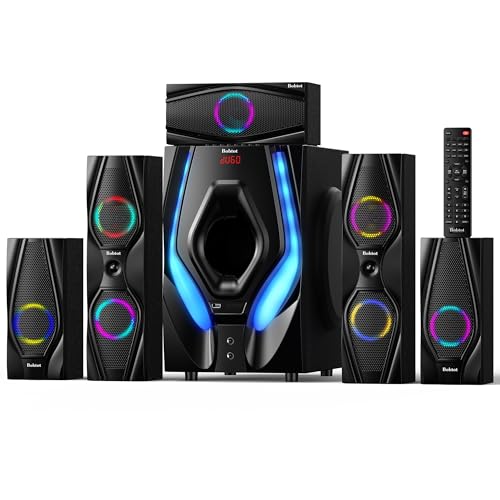
| Budget-Friendly Pick | Channel Setup: 5.1 / 2.1 switchable | Speaker Configuration: 4 satellites + center + subwoofer | Max Power: 1200W peak | VIEW LATEST PRICE | Read Our Analysis |
| Energy 5.1 Take Classic Home Theater System (Set of Six Black) |
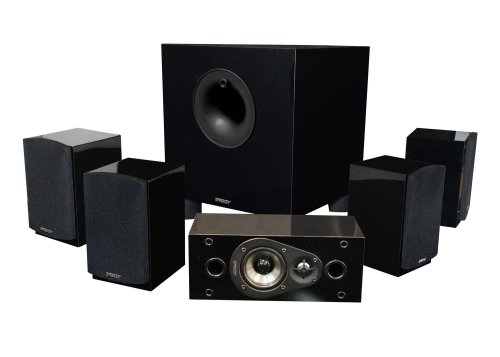
| Best Compact Speakers | Channel Setup: 5.1 channel | Speaker Configuration: 4 satellites + center + subwoofer | Max Power: 200W sub / 100W speakers | VIEW LATEST PRICE | Read Our Analysis |
| Klipsch Reference 5.2 Home Theater System Bundle |

| Premium Upgrade Pick | Channel Setup: 5.2 channel | Speaker Configuration: 2 floorstanding + 2 bookshelf + center + 2 subwoofers + receiver | Max Power: 800W | VIEW LATEST PRICE | Read Our Analysis |
| Bobtot Home Theater Surround Sound Speaker System |

| Best for Karaoke | Channel Setup: 5.1 / 2.1 switchable | Speaker Configuration: Surround speakers + subwoofer + karaoke unit | Max Power: 1200W peak | VIEW LATEST PRICE | Read Our Analysis |
| Sony BRAVIA Theater System 6 Soundbar (HT-S60) |

| Best Soundbar System | Channel Setup: 5.1 channel | Speaker Configuration: Soundbar + subwoofer + 2 rear speakers | Max Power: 1000W | VIEW LATEST PRICE | Read Our Analysis |
More Details on Our Top Picks
Bobtot 1200W Home Theater Surround Sound System
Should you want a budget-friendly system that feels big, the Bobtot 1200W Home Theater Surround Sound System is a strong fit for movie nights, gaming, and even casual karaoke. You get switchable 5.1 or 2.1 sound, a 10-inch subwoofer, and five speakers that spread audio across your room. Because the receiver sits inside the subwoofer, setup stays simple. Next, connectivity keeps things easy: Bluetooth 5.3, ARC, optical, coaxial, AUX, USB, SD, and FM radio all give you flexible playback. You can fine-tune each speaker, increase bass, add LED light modes, and plug in two microphones with echo whenever you desire fun without spending a fortune.
- Channel Setup:5.1 / 2.1 switchable
- Speaker Configuration:4 satellites + center + subwoofer
- Max Power:1200W peak
- Connectivity:Bluetooth, ARC, optical, coaxial, AUX, USB/SD, FM
- Mounting:Wall mount compatible
- Warranty:12 months
- Additional Feature:LED ambient lighting
- Additional Feature:Individual speaker volume
- Additional Feature:Dual mic karaoke
Energy 5.1 Take Classic Home Theater System (Set of Six Black)
Should you want a compact surround sound system that’s easy to place in a residential room, apartment, or initial dedicated media setup, the Energy 5.1 Take Classic stands out because it gives you a full six-piece package with four satellite speakers, a center channel, and a 200-watt powered subwoofer in one clean, high-gloss black design.
You get MDF cabinets, wall-mountable satellites, and smart hardware for flexible placement. Better yet, the Convergent Source Module pairs a 3-inch woofer with a 0.75-inch aluminum tweeter for wide dispersion and clear dialogue. The 8-inch sub uses Energy’s Ribbed Elliptical Surround to push deeper bass with very low distortion. Keep fronts 6 to 8 feet apart for best imaging.
- Channel Setup:5.1 channel
- Speaker Configuration:4 satellites + center + subwoofer
- Max Power:200W sub / 100W speakers
- Connectivity:Wired speaker connections
- Mounting:Wall mountable satellites
- Warranty:Not specified
- Additional Feature:Convergent Source Module
- Additional Feature:Ribbed Elliptical Surround
- Additional Feature:Wide dispersion tuning
Klipsch Reference 5.2 Home Theater System Bundle
Should you want a big, theater-like sound without piecing a system together on your own, the Klipsch Reference 5.2 Home Theater System Bundle fits you especially well. You get two R-625FA floorstanders with Dolby Atmos, a clear R-52C center, two R-41M surrounds, dual 12-inch R-12SW subwoofers, and the Yamaha RX-V6A receiver.
That setup gives your room bold 5.2 surround sound with up to 800 watts of power. As a result, movies feel larger, dialogue stays crisp, and music gains real weight. Because the twin subs dig deep, explosions and bass lines hit with satisfying force. It isn’t wireless, but its wired design keeps performance stable and dependable for home cinema.
- Channel Setup:5.2 channel
- Speaker Configuration:2 floorstanding + 2 bookshelf + center + 2 subwoofers + receiver
- Max Power:800W
- Connectivity:Ethernet wired
- Mounting:Floor standing
- Warranty:Limited warranty
- Additional Feature:Dolby Atmos towers
- Additional Feature:Dual 12-inch subwoofers
- Additional Feature:Yamaha AV receiver
Bobtot Home Theater Surround Sound Speaker System
Built for families who want movie-night impact and party-ready fun in one setup, the Bobtot Home Theater Surround Sound Speaker System fits best should you require strong bass, flexible sound modes, and easy karaoke extras without making things complicated.
You get 1200 watts peak power, a 10-inch subwoofer with receiver, and dual passive radiators that hit hard without muddy sound. As your night changes, you can switch between 5.1 surround and 2.1 stereo from the remote or front panel. For parties, the 40W karaoke module, mic input, and two 3.5-inch speakers keep vocals clear. LED and RGB lights add energy, while the IPX6 waterproof karaoke unit lets you sing outside confidently.
- Channel Setup:5.1 / 2.1 switchable
- Speaker Configuration:Surround speakers + subwoofer + karaoke unit
- Max Power:1200W peak
- Connectivity:Microphone input
- Mounting:Not specified
- Warranty:Seller warranty info available
- Additional Feature:IPX6 waterproof karaoke
- Additional Feature:Dual passive radiators
- Additional Feature:RGB music lights
Sony BRAVIA Theater System 6 Soundbar (HT-S60)
Sony’s BRAVIA Theater System 6, also called the HT-S60, fits you best provided you want a true surround setup without turning your residential room into a wiring project. You get a 5.1-channel package with a soundbar, subwoofer, two rear speakers, and a wireless rear amp box, so placement feels easier. Better yet, its 10-speaker design includes a dedicated center channel, which helps voices stay clear.
That clarity pairs nicely with Dolby Atmos, DTS:X, Voice Zoom 3, DSEE, and Multi Stereo mode. You can stream over Bluetooth, control settings in the BRAVIA Connect app, and, with compatible BRAVIA TVs, use the TV menu too.
- Channel Setup:5.1 channel
- Speaker Configuration:Soundbar + subwoofer + 2 rear speakers
- Max Power:1000W
- Connectivity:Bluetooth, HDMI
- Mounting:Tabletop or wall mount
- Warranty:1-year limited warranty
- Additional Feature:Voice Zoom 3
- Additional Feature:BRAVIA Connect app
- Additional Feature:Dolby Atmos support
Factors to Consider When Choosing Home Theater Systems
Whenever I choose a home theater system, I start from looking at my room size and layout because they shape everything from sound spread to speaker placement. Next, I compare channel configuration, connectivity and inputs, and altogether power and sound quality so I know the system will fit both my space and the way you watch. As I move through these factors, I’ll keep it simple and practical so you can feel confident picking a setup that truly works for your home.
Room Size And Layout
Because your room shapes every part of the sound, I always start matching the system to the space prior to looking at brand names or extra features. In small rooms under about 150 square feet, I lean toward compact bookshelf speakers or a soundbar with a smaller subwoofer, since big bass can turn muddy fast.
As the room grows, placement matters more. In medium spaces, about 150 to 400 square feet, I look for balanced speaker size and a modest 8 to 10 inch subwoofer. I also measure seating distance carefully, because your main seat should sit inside a smooth, curved soundstage. Front speakers should spread about 60 to 90 degrees apart, while side or rear speakers sit just beside or slightly behind you. High ceilings, hard floors, and open layouts usually need more power too.
Channel Configuration
One choice shapes the whole theater faster than almost anything else: channel configuration. I always tell you to read numbers like 2.1, 5.1, or 7.1 as a map of your sound. They show how many speakers play separate channels and how many subwoofers handle bass.
From there, your experience changes quickly. A 2.1 or 3.1 system gives you fuller bass and clearer dialogue, which matters should voices often get lost. Step up to 5.1 or 7.1, and I can place effects beside and behind you for stronger immersion. In case you want overhead detail, Atmos or DTS:X adds height channels like 5.1.2. Also, I always match the speaker plan to the receiver’s channel count. And because rooms matter, I usually favor 2.1 or 3.1 in small spaces, but larger rooms reward 5.1, 7.1, or Atmos.
Connectivity And Inputs
After you choose your channel layout, I look at the connections next, since even a great speaker plan falls flat provided your gear can’t talk to each other the right way.
First, I make sure the system matches my sources, so I check for HDMI, optical, coaxial digital, and AUX. Should you use a TV or streamer for Dolby Atmos or uncompressed multichannel audio, I strongly recommend HDMI eARC. Then I look at flexibility. I like having Ethernet and optical for stable wired links, plus Bluetooth and Wi-Fi for easy streaming. Bluetooth is handy, but it usually tops out around 10 meters and might not handle lossless files. After that, I confirm USB or SD playback support, including file limits. Finally, I verify enough labeled inputs, speaker terminals, and powered subwoofer outputs.
Power And Sound Quality
Once I know the system has the right inputs, I turn to power and sound quality, since this is where a theater either feels effortless or starts to sound harsh whenever I push the volume.
I always check RMS power before peak watts, because RMS tells me what the system can truly sustain. Then I match the receiver’s RMS output and impedance to the speakers’ ratings, which helps prevent clipping, distortion, overheating, and expensive mistakes. Next, I look at speaker sensitivity. Should a speaker sit around 88 to 92 dB, it can play louder with less power, which really helps in bigger rooms. From there, I check frequency response and subwoofer reach. I want bass that digs below 40 Hz for real impact. Finally, I compare SNR and THD, because cleaner specs usually mean cleaner sound.
Speaker Placement Options
Just as power tells me how hard a system can play, speaker placement decides whether that sound feels clear, balanced, and real in the room. I place front left and right speakers at ear height and roughly as far apart as I sit from them, often 6 to 8 feet, so stereo effects lock in naturally.
From there, I set the center channel right above or below the screen, lined up with the fronts and aimed at ear level, because dialogue should feel anchored to faces. Next, I mount surround or rear speakers 1 to 2 feet above ear height, beside or slightly behind you, angled inward for enveloping detail. For bass, I test corners and the front wall, then use the subwoofer crawl. I also keep paths open and speakers away from walls.
Budget And System Type
Because price shapes almost every other choice, I set my budget before I compare systems, and I like to weigh in clear ranges such as under $300, $300 to $1,000, $1,000 to $3,000, and above $3,000. Those bands usually line up with simple 2.0 or 2.1 setups, solid 5.1 packages, and premium surround or Atmos systems.
Next, I choose the system type sooner because cost and space move together. A soundbar saves room and setup time. Bookshelf speakers often give me better stereo music. Full 5.x or 7.x systems feel more cinematic, but they usually need an AV receiver, which adds expense and features. I also reserve 5 to 15 percent for cables, stands, mounts, and setup. Should I be able to upgrade later, I spend more now on a capable receiver or modular speakers.
Frequently Asked Questions
Can Home Theater Systems Work Well in Open-Concept Living Spaces?
Yes, home theater systems can perform well in open concept living spaces when the setup is planned for the room. Use speakers with enough output to fill the area, place them to preserve clear front and surround imaging, and rely on room correction to balance the sound. A well matched subwoofer helps restore impact, and controlling reflections from hard surfaces improves clarity and dialogue.
How Much Electricity Does a Typical Home Theater System Consume?
A typical home theater system uses about 200 to 600 watts while running, depending on your TV, receiver, speakers, and subwoofer. Your electricity cost will rise if you use it at high volume often.
Are Home Theater Systems Compatible With Smart Home Voice Assistants?
Many home theater systems connect with voice assistants such as Alexa, Google Assistant, and Siri. Compatibility depends on the specific receiver, TV, and streaming device, so check the brand, model, and supported features before buying.
What Maintenance Is Required to Keep Speakers Performing Their Best?
To keep speakers performing at their best, I dust the drivers and cabinets, inspect cables for corrosion, tighten all connections, keep them away from moisture and heat, update firmware on powered models, and pay close attention to any distortion so I can fix issues early.
How Long Do Home Theater Systems Typically Last Before Needing Replacement?
Most home theater systems stay practical for 7 to 15 years before major components need replacement. AV receivers often remain reliable for around 10 years, while speakers can perform well for more than 20, so electronics usually need upgrading before the speakers do.
Final Thoughts
Choosing a home theater system is funny, because the goal is to leave home without moving an inch. I’d pick the one that fits your room, your budget, and the way you actually watch. A huge setup won’t help whether voices still sound muddy. On the other hand, the right system can make an ordinary night feel big. So yes, you’re just buying speakers, and somehow you’re also buying goosebumps, laughter, and better movie nights.
