
These four organic hair dyes are the best picks for 2026, using henna, indigo, amla and calming herbs instead of ammonia, peroxide or harsh synthetics. They build color, condition strands and soothe scalp irritation.
Below I cover textures, certifications, shade results and what to expect across 24–48 hours. I also note who should avoid each formula so choosing the right match for your hair is straightforward.
| Cultivator’s Herbal Ammonia-Free Brown Hair Color Powder |
| Best for Scalp Health | Formulation type: Organic herbal powder (ammonia-free) | Gray coverage: Suitable for gray coverage (herbal dye) | Chemical exclusions: No ammonia (ammonia-free) | VIEW LATEST PRICE | Read Our Analysis |
| Pure Organic Herbal Hair Colour Mahogany (Natural Dye) |

| Eco-Friendly Choice | Formulation type: 100% natural organic herbal powder (no ammonia/peroxide) | Gray coverage: Provides grey coverage (gradual, not permanent) | Chemical exclusions: No ammonia, peroxide, PPD, parabens, heavy metals, resorcinol | VIEW LATEST PRICE | Read Our Analysis |
| Henna Ash Brown Organic Plant-Based Hair Dye (100g) | Gentle Gray Coverage | Formulation type: Organic plant-based/henna powder (chemical-free) | Gray coverage: Designed for gray coverage (binds to shaft) | Chemical exclusions: Free from ammonia, peroxide, PPD, parabens, synthetic dyes | VIEW LATEST PRICE | Read Our Analysis | |
| Indus Valley Organic Henna Blonde Hair Color 100g |
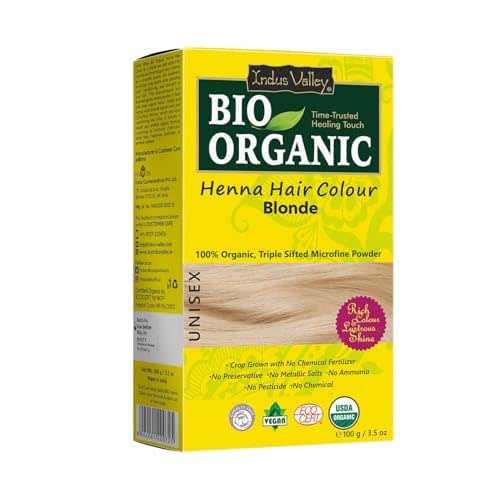
| Smooth Application Pick | Formulation type: 100% organic henna powder (chemical-free) | Gray coverage: Gentle gray coverage | Chemical exclusions: Free from ammonia, synthetic chemicals/fillers | VIEW LATEST PRICE | Read Our Analysis |
More Details on Our Top Picks
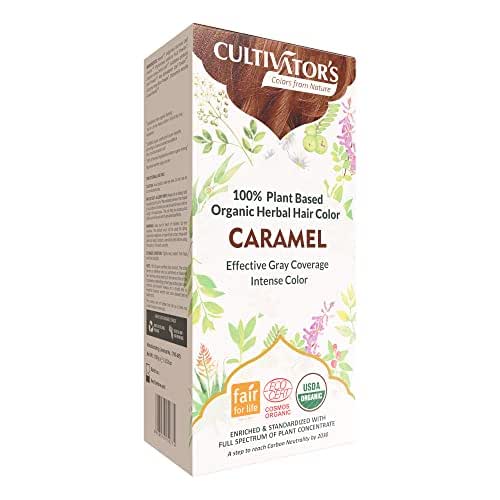
Cultivator’s Herbal Ammonia-Free Brown Hair Color Powder
If you want a genuinely natural alternative to chemical dyes, Cultivator’s Herbal Ammonia-Free Brown Hair Color Powder is built for you—especially if you’re sensitive to ammonia or prioritize vegan, fair-trade formulations. You mix a certified-organic herbal blend—henna, indigo, beetroot, chamomile, eucalyptus, aloe vera, ziziphus, manjistha—to color hair without chemical damage. It’s dermatologically evaluated, ECOCERT-, GMP-, ISO-, KOSHER-, HALAL- and Fair for Life–accredited, and cruelty-free. The kit includes four sachets, gloves, a shower cap, and an FAQ; it’s designed for quick, easy application. You’ll likely see reduced dryness, scalp irritation, and hair fall versus ammonia-based dyes; patch testing is still advised.
- Formulation type:Organic herbal powder (ammonia-free)
- Gray coverage:Suitable for gray coverage (herbal dye)
- Chemical exclusions:No ammonia (ammonia-free)
- Conditioning/benefit to hair:Aims to minimize dryness, hair fall; preserves active herbs to nourish
- Certifications / ethical claims:ECOCERT, ISO, KOSHER, HALAL, GMP; Fair for Life; vegan; cruelty-free
- Kit / packaging contents:Complete kit — four sachets, shower cap, gloves, FAQ leaflet
- Additional Feature:Aloe vera inclusion
- Additional Feature:Fair for Life certified
- Additional Feature:Includes shower cap
Pure Organic Herbal Hair Colour Mahogany (Natural Dye)
For anyone wanting a truly chemical-free mahogany tint that also conditions hair, Pure Organic Herbal Hair Colour Mahogany is a smart choice, because it uses 100% certified organic herbs and skips ammonia, peroxide, PPD and other harsh additives. You get four 25 g packs of Manas Pure Naturelle dye, gloves, a plastic cap and clear instructions. The formula’s natural pigment precursors offer gradual grey coverage without staining, while nourishing herbs boost shine, softness and elasticity—ideal for root touch-ups. Dermatologically evaluated in Europe, cruelty-free and produced with recycling, water–soil conservation and solar energy, it’s a genuinely green option.
- Formulation type:100% natural organic herbal powder (no ammonia/peroxide)
- Gray coverage:Provides grey coverage (gradual, not permanent)
- Chemical exclusions:No ammonia, peroxide, PPD, parabens, heavy metals, resorcinol
- Conditioning/benefit to hair:Conditions hair; increases shine, luster, softness, elasticity
- Certifications / ethical claims:Dermatologically tested (Europe); no animal testing; sustainable production (green)
- Kit / packaging contents:Four 25 g packs, disposable gloves, plastic cap, instruction insert
- Additional Feature:Root touch-up suitable
- Additional Feature:European dermatology tested
- Additional Feature:Solar-powered production practices
Henna Ash Brown Organic Plant-Based Hair Dye (100g)
Gentle Gray Coverage
View Latest PriceYou’ll appreciate the Henna Ash Brown Organic Plant-Based Hair Dye if you want a chemical-free way to cover gray while conditioning your hair; its 100 g herbal powder blends henna, indigo, amla, and bhringraj to deposit a soft ash-brown tone that deepens over 24–48 hours and won’t lighten your base color. You’ll get gradual, dependable gray blending as the botanicals bind to the shaft, adding shine and a stronger-looking texture. Vegan and free from ammonia, peroxide, PPD, parabens, and synthetic dyes, it’s a gentler alternative to permanent color. Note results vary with your starting color; it deposits, it doesn’t lift.
- Formulation type:Organic plant-based/henna powder (chemical-free)
- Gray coverage:Designed for gray coverage (binds to shaft)
- Chemical exclusions:Free from ammonia, peroxide, PPD, parabens, synthetic dyes
- Conditioning/benefit to hair:Conditions hair; improves shine and strengthens-looking strands
- Certifications / ethical claims:Vegan; organic/plant-based (chemical-free) — implied ethical positioning
- Kit / packaging contents:100 g henna powder (single pack) — product-only (no accessory kit listed)
- Additional Feature:Color deepens over time
- Additional Feature:Contains bhringraj
- Additional Feature:100 g single pack
Indus Valley Organic Henna Blonde Hair Color 100g
Indus Valley’s Organic Henna Blonde suits anyone wanting a genuinely chemical-free, vegan dye that also conditions hair; it’s ideal if you prioritize clean ingredients and gentle gray coverage. You’ll get a 100g pack of microfine henna made from handpicked, pesticide-free herbs that mix lump-free for easy application. It’s ECOCERT, USDA Organic and India Organic certified, dermatologically evaluated, and totally free of ammonia, synthetics and animal ingredients. Expect natural, vibrant blonde tones with lasting gray coverage while hair feels conditioned and strengthened. It’s suitable for all hair types and delivers reliable, herbal-based color without compromising scalp or strand health.
- Formulation type:100% organic henna powder (chemical-free)
- Gray coverage:Gentle gray coverage
- Chemical exclusions:Free from ammonia, synthetic chemicals/fillers
- Conditioning/benefit to hair:Conditions and strengthens hair; promotes hair health
- Certifications / ethical claims:ECOCERT, USDA Organic, India Organic; vegan; cruelty-free
- Kit / packaging contents:100 g microfine henna powder — product-only (no accessory kit listed)
- Additional Feature:Microfine lump-free powder
- Additional Feature:USDA Organic certified
- Additional Feature:Fresh handpicked herbs
Factors to Consider When Choosing Organic Hair Dyes
When I choose an organic hair dye I look first at ingredient transparency so I know what’s actually in the formula. I also weigh color longevity and gray coverage effectiveness against hair and scalp safety to make sure the result lasts without irritation. Finally, I check environmental certifications to confirm the product aligns with my values.
Ingredient Transparency
Although ingredient lists can look overwhelming, I always start by reading every listed component — botanical names and concentrations when given — because terms like “natural” or “herbal” can mask fillers or undisclosed synthetics. I check labels for explicit exclusions (no ammonia, peroxide, PPD, resorcinol, parabens, heavy metals) rather than trusting marketing copy. Certifications like ECOCERT, USDA Organic, COSMOS or ISO and third‑party dermatological notes give me added confidence in sourcing and safety. I favor formulas that name single botanicals or clear blends—henna, indigo, amla, bhringraj—over vague “proprietary herbal complex” claims so I can assess allergens and likely performance. If I’m sensitive, I cross‑reference known allergens and do a patch test, watching for disclosed residual processing agents.
Color Longevity
Having checked labels and ingredients, I next look at how long a shade will actually last on my hair—color longevity matters as much as safety. I know plant-based dyes like henna and indigo deposit pigment rather than lift it, so color often deepens over 24–48 hours and stays until the hair grows out or is cut. Organic formulas without peroxide or ammonia fade gradually; expect touch-ups every 4–8 weeks depending on washing and porosity. Porous, chemically treated, or lighter hair absorbs and loses dye faster than low-porosity, darker hair. Environmental factors—sun, chlorine, saltwater—and clarifying shampoos speed fading, while sulfate-free products, cool rinses, and less heat styling preserve color. Including indigo or layering applications also extends perceived longevity.
Gray Coverage Effectiveness
Evaluating gray coverage is one of the first things I check when picking an organic dye, because not all plant-based formulas mask silver strands equally. I look for blends with indigo and henna (or similar color-depositing botanicals) since they deposit pigment on the shaft rather than lifting color, giving better coverage. Coverage varies with starting color and gray percentage: very light or chiefly silver hair often needs longer processing or repeat applications. I account for development time—many botanicals deepen over 24–48 hours—so the rinse shade can be misleading. I favor microground powders and well-formulated mixes for even coating and adhesion. Finally, consistent root-to-tip coverage hinges on correct ratios, saturating gray areas, and following recommended contact times.
Hair And Scalp Safety
Because even natural dyes can irritate, I always check a product’s safety credentials before buying and expect clear dermatological testing or hypoallergenic claims on the label. I prefer formulas free of ammonia, peroxide, PPD and parabens because those ingredients can damage the cuticle, irritate the scalp and sensitize skin. I also look for pH-balanced, conditioning blends with soothing botanicals like aloe vera or chamomile to help preserve the scalp barrier and reduce post-color dryness or flaking. Even so, I perform a 48-hour patch test every time—henna, indigo or essential oils can still trigger contact dermatitis. If you have psoriasis, eczema or chronic dermatitis, consult your dermatologist first and never leave dye on longer than recommended to avoid worsening inflammation.
Environmental Certifications
While I care about ingredients, I also look for independent environmental certifications that prove a brand’s organic and ethical claims—logos like ECOCERT, USDA Organic, COSMOS or ISO 14001 tell me there’s third‑party oversight of sourcing and manufacturing, and labels such as Leaping Bunny or Fair Trade show commitments to no animal testing and fair labor. I recommend checking for recognized seals—ECOCERT, USDA Organic, COSMOS, Fair Trade or Fair for Life—and confirming scope and current validity so the certification covers ingredients and the finished product. ISO 14001 indicates audited environmental management systems. Don’t trust vague terms like “natural” or “green”; rely on registered logos and certification numbers. When brands document certifications clearly, I feel confident their environmental and social claims are substantiated.
Frequently Asked Questions
Can Organic Hair Dyes Be Used on Chemically Treated Hair?
Yes. Many organic hair dyes are compatible with chemically treated hair, but always patch-test first and accept that results can vary. Choose products labeled for processed hair, use low-volume developers or dye formulations that do not require strong oxidizers, and follow a strict aftercare routine to protect color and keep hair conditioned.
Do Organic Dyes Cover Gray Hair Completely?
Yes. Many organic hair dyes can fully cover gray hair, but coverage depends on the specific product and your hair’s texture. Some formulas need longer processing times or multiple applications to produce consistent, even color on resistant gray strands.
How Long Do Organic Hair Dye Results Typically Last?
Permanent organic dyes generally retain color for about four to six weeks. Semi permanent formulas typically last about two to four weeks. Using sulfate free shampoo and scheduling regular touch ups helps maintain vibrancy and delays visible fading.
Are Organic Hair Dyes Safe During Pregnancy?
Short answer: I do not recommend using organic hair dyes during pregnancy. I avoid both salon and at-home chemical treatments. I discuss hair color options with my doctor, evaluate the specific risks and potential benefits, and either select the mildest products with known safety profiles or postpone coloring until after pregnancy.
Can Organic Dyes Be Mixed to Create Custom Shades?
Yes. I mix organic dyes to create custom shades. I always patch-test first, record exact proportions, and work in small batches to prevent uneven coloring. Because natural pigments vary, expect more subtle shifts than with synthetic dyes.