A good portable camping stove makes outdoor meals faster, warmer, and far less frustrating. The best one for you depends on how you camp, how much food you cook, and how much gear you want to carry.
Some stoves are tiny and great for backpacking, while others bring the power of a full camp kitchen. Here are seven portable stoves that can make camp cooking a whole lot easier.
| Hisencn 2-Burner Propane Camping Stove with Cookware Set |

| Best All-In-One | Burner Count: 2 burners | Heat Output: 30,000 BTU | Fuel Type: Propane/butane/isobutane/LPG | VIEW LATEST PRICE | Read Our Analysis |
| Portable 2-Burner Foldable Propane Camping Stove |

| Budget-Friendly Pick | Burner Count: 2 burners | Heat Output: 16,000 BTU | Fuel Type: Propane | VIEW LATEST PRICE | Read Our Analysis |
| Fire-Maple Fixed Star 1 Camping Stove System |

| Best for Backpacking | Burner Count: 1 burner | Heat Output: 7,500 BTU | Fuel Type: Propane/butane/isobutane | VIEW LATEST PRICE | Read Our Analysis |
| AOTU Portable Camping Stove with Piezo Ignition |

| Ultralight Choice | Burner Count: 1 burner | Heat Output: 3000W | Fuel Type: Butane or butane-propane mix | VIEW LATEST PRICE | Read Our Analysis |
| Grill Boss Dual Fuel Camp Stove (90057) |
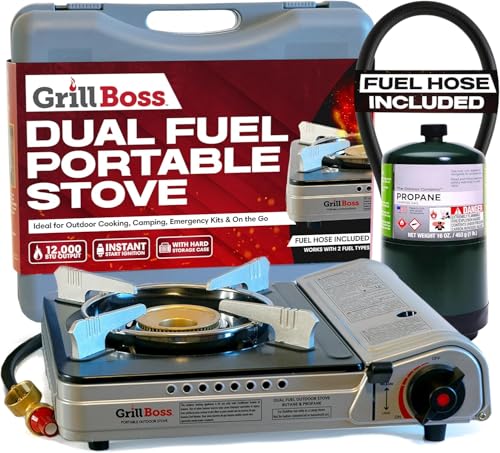
| Most Versatile Fuel | Burner Count: 1 burner | Heat Output: Not specified | Fuel Type: Butane or propane | VIEW LATEST PRICE | Read Our Analysis |
| Coleman Triton 2-Burner Propane Camping Stove |
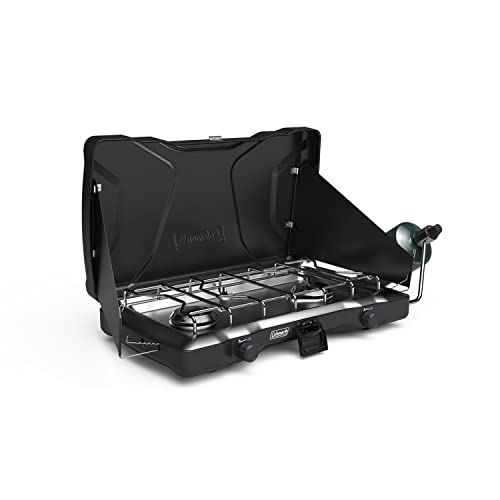
| Best Overall | Burner Count: 2 burners | Heat Output: 22,000 BTU | Fuel Type: Propane | VIEW LATEST PRICE | Read Our Analysis |
| Coleman BottleTop Propane Camping Stove |
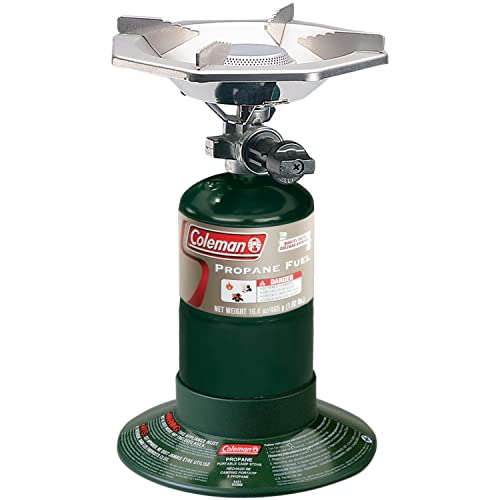
| Best Solo Stove | Burner Count: 1 burner | Heat Output: 10,000 BTU | Fuel Type: Propane | VIEW LATEST PRICE | Read Our Analysis |
More Details on Our Top Picks
Hisencn 2-Burner Propane Camping Stove with Cookware Set
Should you want a camping stove that feels easy from the moment you unpack it, the Hisencn 2-Burner Propane Camping Stove with Cookware Set is a smart fit for families, novice campers, and anyone who doesn’t want to chase down extra gear before dinner.
You get two burners with 30,000 BTU total power, so you can boil water while frying breakfast. Independent knobs give you better control, and the stove works with propane, butane, isobutane, and liquefied petroleum gas. Just as helpful, the kit includes a griddle, pot, kettle, frying pan, cutting board, regulator hose, and carry bag. It folds, locks, and stores neatly at just 8.6 pounds.
- Burner Count:2 burners
- Heat Output:30,000 BTU
- Fuel Type:Propane/butane/isobutane/LPG
- Ignition Type:Not specified
- Portability:Foldable with carry bag
- Best Use:Camping/RV/emergency cooking
- Additional Feature:Complete cookware bundle
- Additional Feature:Foldable lockable design
- Additional Feature:Includes cutting board
Portable 2-Burner Foldable Propane Camping Stove
Should you want a camping stove that’s easy to carry but still strong enough to cook real meals, this portable 2-burner foldable propane camping stove fits that job well. At 5.7 pounds, it folds slim, slips into its carry bag, and stores easily in tight spaces.
Once you set it up, the two burners deliver 16,000 BTUs, so you can boil water and cook dinner at the same time. Separate knobs give you better heat control, while piezo ignition starts fast without matches. Durable alloy steel, sturdy feet, and corrosion-resistant burners help it handle wind and light rain. You also get removable grates, a gas hose, and easy cleanup.
- Burner Count:2 burners
- Heat Output:16,000 BTU
- Fuel Type:Propane
- Ignition Type:Piezo ignition
- Portability:Foldable with carry bag
- Best Use:Camping/picnics/tailgating
- Additional Feature:Fits two 10-inch pans
- Additional Feature:Removable grates
- Additional Feature:Heat-resistant coating
Fire-Maple Fixed Star 1 Camping Stove System
Should you want a camping stove that saves space and gets hot fast, the Fire-Maple Fixed Star 1 is a smart pick for solo campers, hikers, and anyone who wants an easy meal following a long day outside. You get a compact stove system with a 1-liter pot, burner, bowl, and room to nest everything inside. Its heat exchange design cuts boil time up to 30%, and the 7,500 BTU output helps you cook fast. You can light it instantly with the built-in ignitor. The hard anodized pot feels tough, the neoprene sleeve adds comfort, and it works with propane, butane, and isobutane canisters.
- Burner Count:1 burner
- Heat Output:7,500 BTU
- Fuel Type:Propane/butane/isobutane
- Ignition Type:Piezoelectric ignitor
- Portability:Compact integrated system
- Best Use:Backpacking/hiking/trekking
- Additional Feature:Heat exchange technology
- Additional Feature:1-liter integrated pot
- Additional Feature:Neoprene insulated cover
AOTU Portable Camping Stove with Piezo Ignition
In case you want a stove that won’t weigh your pack down but still gives you strong cooking power, the AOTU Portable Camping Stove with Piezo Ignition is a smart pick for solo campers, backpackers, and small groups of up to three people. At just 110 grams, it packs small yet delivers 3000 watts of heat. You can light it fast with Piezo ignition, then adjust the flame from a hard boil to a gentle simmer. Its aluminum alloy body resists heat, rust, wind, and rain. The stable four-point support fits pots up to 20 cm, and it works with EN 417 butane or butane-propane canisters.
- Burner Count:1 burner
- Heat Output:3000W
- Fuel Type:Butane or butane-propane mix
- Ignition Type:Piezo ignition
- Portability:Ultralight with storage box
- Best Use:Camping/hiking/fishing
- Additional Feature:Four-dimensional pot support
- Additional Feature:Windproof honeycomb net
- Additional Feature:Plastic storage box
Grill Boss Dual Fuel Camp Stove (90057)
Campers who want one stove that can handle almost anything will like the Grill Boss Dual Fuel Camp Stove (90057), especially whenever you switch between short trips and longer stays outdoors. You can run it with 8 oz. butane or 16.4 oz. propane cylinders, and the included adapter makes changing fuels quick and simple. That flexibility helps you pack light or cook longer, depending on your plans.
Just as crucial, you get easy operation and strong safety support. The Piezo ignition lights with a click, while the automatic gas shutoff responds to irregular flow. Its compact body and hard-shell case make travel easy, and steady heat keeps meals coming.
- Burner Count:1 burner
- Heat Output:Not specified
- Fuel Type:Butane or propane
- Ignition Type:Automatic Piezo ignition
- Portability:Compact with hard-shell case
- Best Use:Camping/tailgating/emergency use
- Additional Feature:Automatic gas shutoff
- Additional Feature:Fuel adapter included
- Additional Feature:Hard-shell carrying case
Coleman Triton 2-Burner Propane Camping Stove
Families, tailgaters, and weekend campers who want dependable cooking power without a fussy setup will feel right at home with the Coleman Triton 2-Burner Propane Camping Stove. You can carry it to campgrounds, picnics, roadside stops, or backyard BBQs, then secure it with the heavy-duty latch between meals. Once it’s time to cook, the two adjustable burners give you precise heat and simmer control with 22,000 BTUs total. The stove fits 10-inch and 12-inch pans, while two wind guards help keep flames steady. After dinner, the removable chrome-plated grate makes cleanup easier. One 16-ounce propane cylinder runs about an hour on high.
- Burner Count:2 burners
- Heat Output:22,000 BTU
- Fuel Type:Propane
- Ignition Type:Manual ignition
- Portability:Latching portable stove
- Best Use:Campsite/picnic/tailgating
- Additional Feature:Built-in wind guards
- Additional Feature:Heavy-duty latch
- Additional Feature:Removable chrome grate
Coleman BottleTop Propane Camping Stove
Built for solo campers, hikers, and anyone who wants a fast, no-fuss meal outdoors, the Coleman BottleTop Propane Camping Stove stands out because it packs 10,000 BTUs of cooking power into a small, easy-to-carry design. You get one adjustable burner, so you can simmer soup or boil a quart of water in about four minutes. Wind baffles help protect the flame, while the PerfectFlow regulator keeps heat steady in cold weather or at higher elevations. It fits an 8-inch pan, runs up to 2.5 hours on a 16.4-ounce propane cylinder, and stores compactly. Its alloy steel build adds durability, and Coleman backs it with a solid warranty.
- Burner Count:1 burner
- Heat Output:10,000 BTU
- Fuel Type:Propane
- Ignition Type:Manual ignition
- Portability:Bottletop compact design
- Best Use:Camping/backpacking/hiking
- Additional Feature:PerfectFlow regulator
- Additional Feature:Wind baffle protection
- Additional Feature:Boils water quickly
Factors to Consider When Choosing a Portable Stove for Camping
At the time I choose a portable stove for camping, I look past the brand name and focus on what will actually make your trip easier. I want you to consider fuel type compatibility, heat output range, size and weight, burner control precision, and wind resistance design, because each one affects how well your stove works outdoors. As I walk you through these factors, I’ll help you spot the small details that can save you frustration at camp.
Fuel Type Compatibility
Fuel matters more than most campers expect, and I always tell readers to check it before they fall in love with a stove. I look initially at what the stove can actually burn: propane, butane, isobutane, or LPG. That choice shapes how easy refueling feels whenever you’re far from home.
Next, I consider flexibility. A multi-fuel stove gives me more freedom provided I camp in different seasons or travel to places with limited supplies. Just as crucial, I check the connector type, because some stoves only fit brand-specific canisters. That’s a hassle you don’t want at camp. I also compare canister size, weight, and burn time, since those affect how much I carry and how long I can cook. In case you want fewer surprises, match the stove to fuel you can find easily nearby.
Heat Output Range
Once I know a stove uses the right fuel, I look at its heat output range, because that tells me how fast it can really cook at camp. Heat output is usually measured in BTUs, and it affects how quickly I can boil water or get dinner on the table.
From there, I compare power with control. A stove in the 20,000 to 30,000 BTU range heats fast, which helps whenever I’m cooking bigger meals or using larger pots. Lower output models, around 7,000 to 10,000 BTUs, heat more slowly, but they often stretch fuel longer. That balance matters to me. I also want adjustable flame control, so I can simmer soup gently or crank up the heat for a quick boil. At the time output and fuel efficiency work together, camp cooking feels easier.
Size And Weight
Because I could have to carry my stove from the car to camp or deep down a trail, size and weight quickly become just as vital as heat output. In case I’m backpacking, I look for a stove under 2 pounds, because every extra ounce adds up and wears me down faster.
Just as significant, I want a compact shape that slides easily into a backpack or gear box. Foldable parts or nesting pieces save space and make packing less frustrating. I also appreciate an integrated carry bag, since it keeps small components together and protected instead of rattling around loose. Then I consider footprint. A small one-burner stove packs easier, though it gives me less room to cook multiple items at once. For me, the smartest choice balances low bulk with solid durability outdoors.
Burner Control Precision
How easily can I dial the flame up or down once the pan starts to sizzle too fast? That question matters because burner control precision shapes every meal I make at camp. I want a stove that lets me shift from a strong boil to a gentle simmer without guessing. Whenever I cook eggs beside pasta, independent knobs on a two burner stove help me control each pan separately, so nothing gets rushed.
Just as crucial, piezo ignition pairs nicely with fine controls. I can light the burner fast, then trim the flame right away. That saves fuel, protects dinner from scorching or staying raw, and gives me a safer setup too. Provided conditions change, I can quickly lower heat or shut the flame off without fumbling under pressure or wasting precious fuel.
Wind Resistance Design
Once a breeze starts pushing across camp, I want a stove that keeps its flame steady instead of fluttering and wasting heat. That starts with built-in wind guards around the burner. They block gusts, hold heat closer to the pot, and help me cook without constantly adjusting the flame.
Just as crucial, I look for windproof mesh or net designs that let oxygen move well around the burner. Better airflow supports cleaner combustion, so the stove burns stronger and uses less fuel in rough weather. I also trust durable, heat-resistant alloys and protective coatings because wind often comes with cold, damp conditions. Those materials help the stove stay reliable over time. Finally, I love a piezo ignition system with wind protection, since quick, match-free lighting feels like a small camping victory every single time.
Cooking Capacity Needs
A stove can handle wind well and still leave me frustrated in case it can’t keep up once it’s time to feed everyone. Whenever I choose cooking capacity, I initially consider how many people I’ll serve. A single burner works for solo trips, but families and groups usually need two or more burners so I can cook eggs on one side and heat soup on the other.
From there, I check total BTU output. Higher BTUs help me cook faster and more evenly, which matters whenever hungry campers hover nearby. I also look at the cooking surface, because cramped spacing can make larger pans awkward. In case you use different cookware, make sure the stove fits it. And should you want a simple all-in-one setup, some stoves include pots, pans, or a griddle too.
Cleaning And Maintenance
While cooking power matters at mealtime, cleanup matters just as much as soon as I’m tired and ready to relax beside the fire. I look for a stove with removable grates or cooking surfaces because they make scrubbing fast and far less annoying after dinner.
That also leads me to materials. I trust stainless steel or coated alloy steel since they handle rain, grease, and repeated washing without corroding. To keep performance steady, I clean burner ports and the ignition system often, so clogs don’t ruin breakfast. For safe care, I use mild soap and water or the cleaner the maker recommends, never harsh chemicals. I also like compact, foldable stoves because they pack away neatly and shield essential parts from dirt, bumps, and damage during travel between campsites.
Frequently Asked Questions
Can I Bring a Portable Camping Stove on an Airplane?
You may bring a portable camping stove on an airplane only if it is completely empty, free of fuel vapors, and allowed by both the TSA and your airline. Check their rules before you travel.
How Do I Safely Store Fuel Between Camping Trips?
I keep fuel upright in its original container with the cap fully tightened, in a cool, dry, well ventilated place away from direct sun, ignition sources, and vehicles. Before every trip, I inspect each container for leaks, cracks, or swelling.
Are Portable Camping Stoves Allowed During Fire Bans?
Portable camping stoves are sometimes allowed during fire bans if they have an on and off valve, but the rules depend on the exact ban order. Check the current fire restriction from the agency managing the area before your trip, because some bans block every flame producing device.
What Accessories Make Cooking Easier on a Camping Stove?
A windscreen, griddle, coffee pot, lighter, fuel gauge, and nesting cookware make cooking easier. Without them, camp meals can turn into a smoky mess. I would also pack tongs, a spatula, and a sturdy stove stand.
How Should I Clean a Camping Stove After Use?
Wait until the stove is fully cool, then disconnect the fuel source. Wipe the exterior with warm water and dish soap. Clean the burners with a soft brush, open blocked ports with care, dry every part completely, and inspect for cracks, rust, or loose fittings before storing it.
Final Thoughts
Portable stoves can turn a patch of dirt into a warm, working kitchen. I’d choose based on how you camp, how many people you feed, and how much weight you can carry. A big two-burner feels like bringing a small home into the wild, while a tiny burner is like carrying a spark in your pocket. Pick the stove that fits your trip, and every meal outside will feel easier, warmer, and a little more joyful.