

Ever wonder how a wall inches away can become a theater screen? I look at these six short throw projectors as practical ways to turn cramped rooms into clean, immersive viewing spaces. From 4K laser models to simpler 1080p options, each one solves a different layout problem with less clutter and easier setup. The real question is which one fits your room best, and that’s where things get interesting.
| LG DLP UHD 4K (3840 x 2160) CineBeam® Ultra Short Throw Laser Projector |

| Best Overall | Resolution: 4K UHD 3840 x 2160 | Throw Type: Ultra short throw | Brightness: 2,700 ANSI lumens | VIEW LATEST PRICE | Read Our Analysis |
| Sony VPLVZ1000ES Ultra-Short Throw 4K HDR Home Theatre Projector |
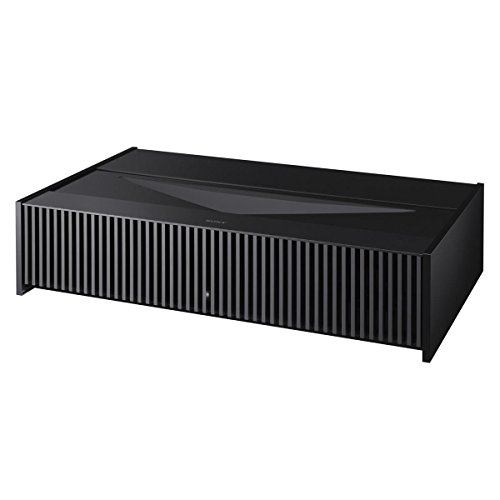
| Premium Pick | Resolution: Native 4K 4096 x 2016 | Throw Type: Ultra-short throw | Brightness: 2,500 lumens | VIEW LATEST PRICE | Read Our Analysis |
| Samsung The Premiere 4K Ultra Short Throw Projector (SP-LSP7TFAXZA) |

| Best Smart | Resolution: 4K UHD 3840 x 2160 | Throw Type: Ultra short throw | Brightness: 2,200 lumens | VIEW LATEST PRICE | Read Our Analysis |
| Samsung The Premiere 4K Ultra Short Throw Projector |
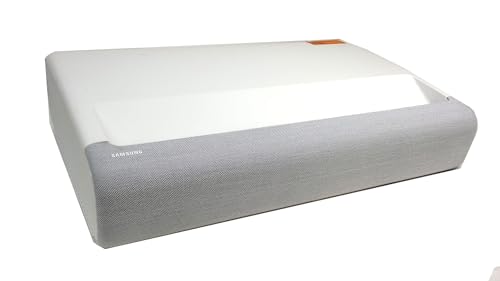
| Best Big Screen | Resolution: 4K UHD 3840 x 2160 | Throw Type: Ultra short throw | Brightness: 2,800 lumens | VIEW LATEST PRICE | Read Our Analysis |
| ViewSonic X1000-4K True 4K UHD Projector |

| Best Portability | Resolution: True 4K UHD 3840 x 2160 | Throw Type: Ultra-short throw | Brightness: 1,000 ANSI lumens | VIEW LATEST PRICE | Read Our Analysis |
| Optoma GT5600 Ultra Short Throw Projector |
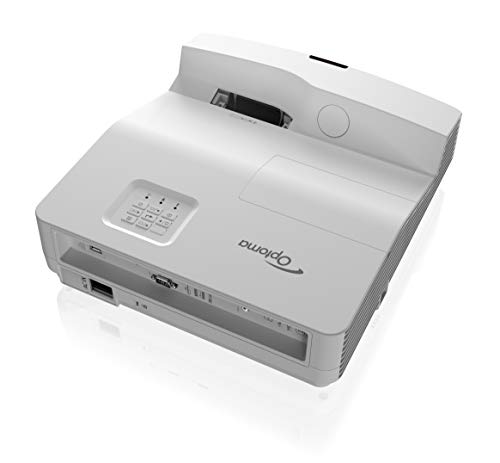
| Best Budget | Resolution: 1080p 1920 x 1080 | Throw Type: Ultra-short throw | Brightness: 3,600 lumens | VIEW LATEST PRICE | Read Our Analysis |
More Details on Our Top Picks
LG DLP UHD 4K (3840 x 2160) CineBeam® Ultra Short Throw Laser Projector
Should you want a premium projector that can fill a wall from just a few feet away, the LG CineBeam HU85LS is a strong fit. You get 4K UHD detail, 8.3 million pixels, and HDR10 with Adaptive Tone Mapping for sharp, rich images. Its 3-channel laser delivers 2,700 ANSI lumens, so you can watch or present in bright rooms. You can place it only inches from the wall and still reach up to 120 inches. With HDMI, USB, AI ThinQ, Google Assist, and Alexa support, it blends smart control with business-ready performance and 20,000-hour light source life.
- Resolution:4K UHD 3840 x 2160
- Throw Type:Ultra short throw
- Brightness:2,700 ANSI lumens
- Light Source:3-channel laser
- Mounting:Wall mount / portable
- Smart Features:AI ThinQ, Google Assistant, Alexa
- Additional Feature:HDR10 dynamic tone mapping
- Additional Feature:AI ThinQ voice assistants
- Additional Feature:20,000-hour laser life
Sony VPLVZ1000ES Ultra-Short Throw 4K HDR Home Theatre Projector
The Sony VPLVZ1000ES is a strong pick whenever you want a premium ultra-short throw projector for a clean home theater setup, since it can produce an 80-inch image from just 2 inches away and a 100-inch screen from only 6 inches. You get native 4K detail, 2,500 lumens of brightness, and a 3,000:1 contrast ratio for sharp, vivid movies. Sony’s TRILUMINOS Display and Reality Creation upscaling help your SD and HD sources look better too. With four HDMI 2.2 inputs, USB, LAN, and wall-mount installation, it fits gaming, streaming, and serious cinema.
- Resolution:Native 4K 4096 x 2016
- Throw Type:Ultra-short throw
- Brightness:2,500 lumens
- Light Source:Laser
- Mounting:Wall mount
- Smart Features:Compatible with gaming/laptop/smartphone
- Additional Feature:Reality Creation upscaling
- Additional Feature:TRILUMINOS display
- Additional Feature:RS-232C remote control
Samsung The Premiere 4K Ultra Short Throw Projector (SP-LSP7TFAXZA)
When you want a true home-theater upgrade without hanging a projector from the ceiling, Samsung’s Premiere Ultra Short Throw 4K UHD Smart Single Laser Projector (SP-LSP7TFAXZA) is a strong fit, because it can sit just inches from the wall and still deliver a 120-inch 4K image. You get 2,200 lumens, HDR, PurColor, and a UHD processor for sharp, vivid detail. Tizen brings Wi‑Fi streaming, Alexa, Bixby, and One Remote control. Its 2.2-channel, 30W audio system with a built-in subwoofer fills the room, and Game Mode keeps play responsive.
- Resolution:4K UHD 3840 x 2160
- Throw Type:Ultra short throw
- Brightness:2,200 lumens
- Light Source:Single laser
- Mounting:Wall mount
- Smart Features:Tizen smart TV, Alexa, Bixby
- Additional Feature:Built-in subwoofer
- Additional Feature:Auto Game Mode
- Additional Feature:One Remote control
Samsung The Premiere 4K Ultra Short Throw Projector
Need a premium home theater setup that can sit just inches from the wall? You can use Samsung The Premiere Ultra Short Throw 4K UHD Smart Triple Laser Projector to fill tiny rooms with a huge 130-inch display. Its 4K resolution, 2,800 lumens, HDR, and PurColor help you get sharp, vivid images even in brighter spaces. You also get Tizen smart TV features, built-in Alexa and Bixby, and voice control. The 4.2-channel, 40W audio system with a built-in subwoofer adds punch, while HDMI and DVI connectivity keep setup simple and flexible.
- Resolution:4K UHD 3840 x 2160
- Throw Type:Ultra short throw
- Brightness:2,800 lumens
- Light Source:Triple laser
- Mounting:Desktop/tabletop
- Smart Features:Tizen smart TV, Alexa, Bixby
- Additional Feature:2.2.2 channel audio
- Additional Feature:40W speakers
- Additional Feature:130-inch max image
ViewSonic X1000-4K True 4K UHD Projector
ViewSonic’s X1000-4K is a strong pick for you provided you want a true 4K ultra-short throw projector that can sit close to the wall and still deliver a huge 60- to 150-inch image, making it ideal for compact home theater setups. Its 0.25 throw ratio and 3,000,000:1 contrast help you get a sharp, punchy image, while Cinema SuperColor, HDR/HLG, and 125% Rec. 709 keep colors vivid. You also get dual Harman Kardon speakers, a 40W soundbar, Wi‑Fi, Bluetooth, and broad port support.
- Resolution:True 4K UHD 3840 x 2160
- Throw Type:Ultra-short throw
- Brightness:1,000 ANSI lumens
- Light Source:LED
- Mounting:Ceiling mount
- Smart Features:Bluetooth, Wi‑Fi, HDR/HLG
- Additional Feature:Harman Kardon speakers
- Additional Feature:30,000-hour light source
- Additional Feature:3-year warranty
Optoma GT5600 Ultra Short Throw Projector
The Optoma GT5600 Ultra Short Throw Projector is a strong pick for anyone who wants a big 100-inch image from just inches away, especially in spaces where people, furniture, or foot traffic would normally get in the way. You get 1080p sharpness, 3,600 lumens, and a 20,000:1 contrast ratio for bright, detailed viewing. Auto keystone and four-corner correction help you set it up fast on a tabletop. It also supports USB display, screen mirroring, HDMI, and a built-in 16-watt speaker. With up to 15,000 hours of lamp life, it’ll last.
- Resolution:1080p 1920 x 1080
- Throw Type:Ultra-short throw
- Brightness:3,600 lumens
- Light Source:Lamp
- Mounting:Tabletop
- Smart Features:Screen mirroring, PC-free media player
- Additional Feature:144Hz refresh rate
- Additional Feature:Four-corner correction
- Additional Feature:Full 3D support
Factors to Consider When Choosing Short Throw Projectors
When I help you choose a short throw projector, I always start with throw distance and screen size so the image fits your space. I also look at resolution quality, brightness levels, and contrast ratio because they shape how sharp, vivid, and usable the image feels. Provided you balance these factors well, you’ll end up with a projector that matches both your room and your viewing needs.
Throw Distance
Throw distance tells me how close a projector needs to sit to the wall or screen to create the image size I want, and ultra-short throw models can deliver a large image from just inches away. I check this first because placement can make or break a tiny room setup. Some projectors need roughly 2 inches for an 80-inch image, while others might need about 10 inches for a 120-inch image, so I match the spacing to my target setup. A shorter throw also helps me avoid shadows and keep the projector out of the way. I like comparing throw ratios, too; a 0.25 ratio quickly shows how much image I’ll get from a given distance. I always confirm both minimum and maximum throw distances before I buy.
Screen Size
Screen size is the next thing I check after throw distance, because a short throw projector has to fit both my room and my viewing goals. I look at the projector’s supported range initially, since short throw models can span roughly 40 to 150 inches. Some are built for big home-theater setups, while others work better for smaller rooms with 60- to 80-inch images. I also keep in mind that ultra-short throw units can make 80- to 120-inch displays from just inches away from the wall. To avoid surprises, I check both the minimum and maximum image specs, because performance can shift at the edges. Should I already own a fixed screen, I choose a projector that naturally matches that size instead of depending on placement tweaks.
Resolution Quality
Resolution quality is the next spec I check, because a short throw projector can only look as sharp as its native resolution allows. I compare true 4K models, which output 3840 × 2160 or 4096 × 2160 pixels, with 1080p units at 1920 × 1080. On bigger screens, that extra pixel density keeps text, textures, and edges crisp, especially around 120 to 150 inches. I also look past marketing labels: a projector might accept a 4K signal without rendering full 4K internally. DLP, laser, LED, and XPR upscaling can influence perceived sharpness, but native resolution still matters most for real detail. For mixed content, HDR, tone mapping, and color improvement can help, yet they don’t replace higher native resolution.
Brightness Levels
Brightness is the next spec I check, because even a sharp short throw projector can look weak when it can’t put out enough light for the room. I look at lumens or ANSI lumens initially, since higher numbers usually keep the image readable in a lit space. When I’m setting up in a dark den, about 1,000 ANSI lumens can work. For brighter rooms, or whenever I want a larger screen, I aim for 2,000 to 3,600 lumens. I also consider image size, because a bigger image needs more light to stay clear. Laser models appeal to me whenever I want brightness that holds up over time, and long-rated light sources help too. HDR can improve the image, but it can’t make up for too little brightness.
Contrast Ratio
Contrast is one of the specs I pay closest attention to, because it shapes how rich and dimensional a short throw projector looks in real use. I look for a strong contrast ratio because it tells me how well the projector separates bright whites from deep blacks. Whenever that gap is wide, movies feel more cinematic, text stands out, and graphics look cleaner. Provided that the ratio is too low, dark scenes can seem flat and washed out. Numbers can range from about 1,000:1 to millions-to-one, so I compare them to judge image punch. I also treat adaptive claims carefully, since processing can inflate them. For dark-room viewing, I care even more, because contrast directly affects black level performance and shadow detail.
Mounting Options
When I’m choosing a short throw projector, I always match the mounting option to the space I actually have, since some models are built for wall mounting while others work best on a tabletop or from the ceiling. I look at whether the unit needs a flat surface, a fixed distance, or open space in front of the wall to throw a clean image. If I want a setup that stays put, I favor wall or ceiling mounting because it usually gives me steadier alignment and makes repeatable placement easier. For rooms with limited depth, I like ultra-short throw models because they can create a large image from inches away. If I need flexibility, I choose a portable design I can move between rooms without much hassle.
Connectivity Features
For connectivity, I check the inputs I actually need, like HDMI, USB, USB-C, VGA, Ethernet, LAN, or audio outputs, because short throw projectors vary a lot in wired support. I also look for wireless options such as Wi‑Fi, Wi‑Fi Direct, Bluetooth, and screen mirroring when I want to stream from my phone, tablet, or laptop without clutter. Should I expect flexible operation, I verify multiple connection modes and control choices like IR, RS-232C, remotes, or mobile-device integration. I don’t assume every model handles media playback well, so I confirm USB playback and support for common video formats should I want PC-free use. That way, I know the projector fits my devices, setup habits, and room without surprises.
Smart Capabilities
Smart capabilities can turn a short throw projector from a simple display into a more self-sufficient hub, so I look for built-in operating systems, app support, and voice assistants that let me stream, search, and control settings without extra gear. I also check Wi-Fi and Wi-Fi Direct, since they make casting, screen mirroring, and firmware updates easier when I’m using my phone or smart-home setup. If a model works with voice-control platforms and remote apps, I can power it on, switch inputs, tweak display settings, and search hands-free. I pay attention to smart-home integration and account-based ecosystems too, because they often activate deeper assistant features and connected-device control. Before I buy, I confirm built-in streaming, mobile compatibility, and network access, since those decide how much extra hardware I’ll need.
Frequently Asked Questions
Can a Short Throw Projector Work in a Room With Low Ceilings?
Yes, it can work if you match the mounting height, screen size, and lens throw to the room. Start by checking the available clearance, since even a short throw needs the right setup to fit cleanly.
Do Short Throw Projectors Need Special Screens for Best Image Quality?
No, short throw projectors do not require special screens, but a smooth, flat matte screen gives the best results. It helps preserve brightness, cuts glare, and keeps the image crisp.
How Much Ambient Light Can These Projectors Handle Effectively?
They perform well in rooms with moderate light, but they are not built to overpower strong daylight. In darker spaces, the contrast looks much better; in daytime settings, I would still lower the blinds or choose a higher brightness model.
Are Short Throw Projectors Suitable for Gaming With Low Input Lag?
Absolutely. Short throw projectors can be excellent for gaming if they offer low input lag, because every millisecond matters in fast matches. I would look at the gaming mode specs, since some models feel nearly instant and very responsive.
Can I Mount a Short Throw Projector on a Coffee Table?
Yes, I’d place a short throw projector on a coffee table only if I could line it up firmly and keep it from shifting. I’d use adjustable feet or a tray, then check the image position before using it.
