You might find it surprising, but the first porsche was a hybrid. A hybrid car uses both an electric motor and a gasoline engine to move. In 1900, Ferdinand Porsche introduced the semper vivus. This car made history as it combined two types of power. You can see how this changed automotive history and set new standards for innovation.
Key Takeaways
The first Porsche, the Semper Vivus, was a hybrid car that combined a gasoline engine with electric motors, changing automotive history.
Hybrid cars save fuel and money, improving fuel economy by 30 to 50 percent and reducing greenhouse gas emissions significantly.
Ferdinand Porsche’s innovative designs, like the wheel-hub motor, influenced modern electric vehicles and improved car performance.
Porsche continues to lead in hybrid technology, with models like the 918 Spyder showcasing high performance and eco-friendliness.
Choosing a hybrid vehicle not only benefits your wallet but also helps protect the environment for future generations.
What Is a Hybrid?
Hybrid Basics
When you hear the term “hybrid electric,” you might wonder what it means. A hybrid electric vehicle uses two energy sources to move you down the road. Most hybrid electric cars combine a gasoline engine with an electric motor. This combination helps the car run more efficiently. You will find that hybrid electric vehicles have large batteries. These batteries store energy and can reuse it, especially when you drive in the city. One special feature is regenerative braking. When you press the brakes, the car captures energy that would normally be lost and stores it in the battery.
Here are some main features of a hybrid electric vehicle:
Uses both gasoline and electricity for power.
Has a battery that stores and reuses energy.
Uses regenerative braking to save energy.
If you compare a hybrid electric car to a regular gasoline or electric car, you will notice some important differences. The table below shows the main components that set a hybrid apart:
Component | Description |
|---|---|
Batteries | Power the electric motor and recover energy to extend their lives. |
Electric Motor | Works alongside the gasoline engine to provide power. |
Gasoline Engine | Internal combustion engine that works in conjunction with the electric motor. |
Generator | Converts gasoline into electrical energy for the motor and battery. |
Transmission | Transfers power from the engine and/or electric motor to drive the wheels. |
Why Hybrids Matter
You might ask why hybrid cars are important. Hybrid vehicles help you save fuel and money. Studies show that hybrid electric vehicles can improve fuel economy by 30 to 50 percent for delivery services. If you drive a step van, you could save about $1,200 in fuel costs each year. You also help the environment. Hybrid cars can reduce greenhouse gas emissions by over 7 metric tons every year. Between 1999 and 2007, drivers in the United States saved nearly 385 million gallons of fuel by choosing hybrid vehicles. That equals more than 9.2 million barrels of petroleum.
Tip: Choosing a hybrid electric car means you help protect the planet and save money at the same time. 🌱
First Hybrid Car: Semper Vivus

First Porsche Innovation
You might wonder what made the first Porsche so special. In 1900, Ferdinand Porsche designed the Semper Vivus, which became the world’s first hybrid car. You can see how this car changed history by combining a gasoline engine with electric motors. The Semper Vivus did not just use one type of power. It used both, making it the first hybrid electric vehicle to run on battery power alone or use the engine to recharge the batteries. This design marked a huge step forward in automotive technology.
Ferdinand Porsche played a key role in this innovation. He was known for his creative ideas and engineering skills. At the 1900 World’s Fair in Paris, people celebrated his work on the Semper Vivus. You can learn from his example as he pioneered the hybrid concept and set new standards for electric mobility. The first Porsche featured four wheel hub motors, each with an output of 1500 watts. This made it not only a hybrid but also the first all-wheel drive car. Porsche’s work showed you how one person could change the future of cars.
Note: The Semper Vivus was recognized as the first hybrid car because it could run on battery power alone or use its combustion engine to recharge the batteries. This ability set it apart from other vehicles of its time.
How the Semper Vivus Worked
You might ask how the first Porsche operated as a hybrid electric car. The Semper Vivus used two combustion engines to power electric generators. These generators supplied electricity directly to the electric motors in the wheels. Any extra energy charged the batteries, so you could drive using only battery power when needed. This system allowed the car to operate without a mechanical connection to the drive axle, showing a new way to build vehicles.
Here are some features that made the Semper Vivus unique:
Twin engines powered two generators.
The driver could reverse the electric circuit to back up the car.
The accumulator stored extra electricity for later use.
Four wheel hub motors provided all-wheel drive.
The Semper Vivus stood out from other cars because it solved the problem of limited range in early electric vehicles. You could drive farther than with a fully electric car, thanks to the hybrid system. The heavy battery technology of the time did limit speed, but the design showed you what was possible.
Take a look at some technical details:
Specification | Details |
|---|---|
Weight | 1,200 kg (about 2,640 pounds) |
Accumulator Cells | Initially 74 cells, later reduced to 44 |
Engine Output | Each generator produced 90 volts and 20 amperes |
Capacity | Room for four or five people |
Design Issues | No rear suspension, exposed engines/generators, no fenders |
The Semper Vivus also faced challenges. You can imagine how hard it was to build a car that weighed over 2,600 pounds. Porsche had to solve technical problems with the hybrid system and deal with disagreements over high standards and new technology.
The historical significance of the Semper Vivus is clear. It was the first series hybrid automobile, combining electric and gasoline power in a way no one had done before. The electric motors in the wheel hubs removed the need for mechanical connections to the engine. This design paved the way for modern hybrid electric vehicles and showed you how innovation can shape the future.
Tip: The Semper Vivus influenced many later prototypes. About 300 vehicles were built, including fire department cars and taxis. You can see how the first Porsche helped start a new era in hybrid technology.
Early Porsche Electric and Hybrid Designs
Wheel-Hub Motor
You may wonder what made early electric cars from Porsche stand out. The wheel-hub motor changed how you think about car design. Ferdinand Porsche created this technology by placing electric motors directly inside the wheels. This design removed the need for a complex transmission system. You could see the benefits in smoother rides and easier maintenance.
The wheel-hub motor did more than power the lohner-porsche electromobile. It influenced future electric vehicles, including NASA’s lunar rovers. Porsche developed a modular system for electric drives, offering different motor sizes and performance levels. This approach helped engineers build cars for many uses.
Here is a table showing how wheel-hub motor technology shaped electric vehicle design:
Evidence | Description |
|---|---|
Wheel-hub motor technology | Electric motors inside wheels, no transmission needed |
Influence on lunar rovers | NASA used this design for lunar vehicles |
Modular system development | Porsche created flexible electric drive systems for different car models |
You may notice that storing electricity was much harder than producing it. Early electric cars needed many batteries, which made them heavy and limited their range. Engineers faced challenges with thermal management and weight. Placing motors in the wheels increased heat and affected how the car handled bumps.
Tip: Adding motors to the wheels can make a car heavier and change how it feels on the road.
Evolution to Model Mixte
You might ask what happened after the Semper Vivus. Porsche improved the design and created the porsche-lohner mixte. This hybrid car used two combustion engines to power electric generators. The generators sent energy to the wheel-hub motors. You did not need a driveshaft or transmission, which made the car more efficient.
The lohner-porsche mixte gained attention at the World Exhibition in Paris. People admired its new design and performance. The car won the Exelberg Rally in 1902, showing you what hybrid technology could do.
Here is a table showing advancements from Semper Vivus to the lohner-porsche mixte:
Advancement | Description |
|---|---|
Integration of combustion engines | Two engines powered electric generators for better energy supply |
Elimination of driveshaft/transmission | No driveshaft or transmission, improved efficiency |
Public attention | The mixte model fascinated crowds at the World Exhibition in Paris |
You may wonder why Porsche focused on electric and hybrid cars. In the early 1900s, electric vehicles made up about 38% of all cars in the United States. People liked them because they were quiet and easy to use. The lohner-porsche electromobile even broke speed records, showing you the power of hybrid technology.
Porsche Hybrid Legacy
Influence on Modern Hybrids
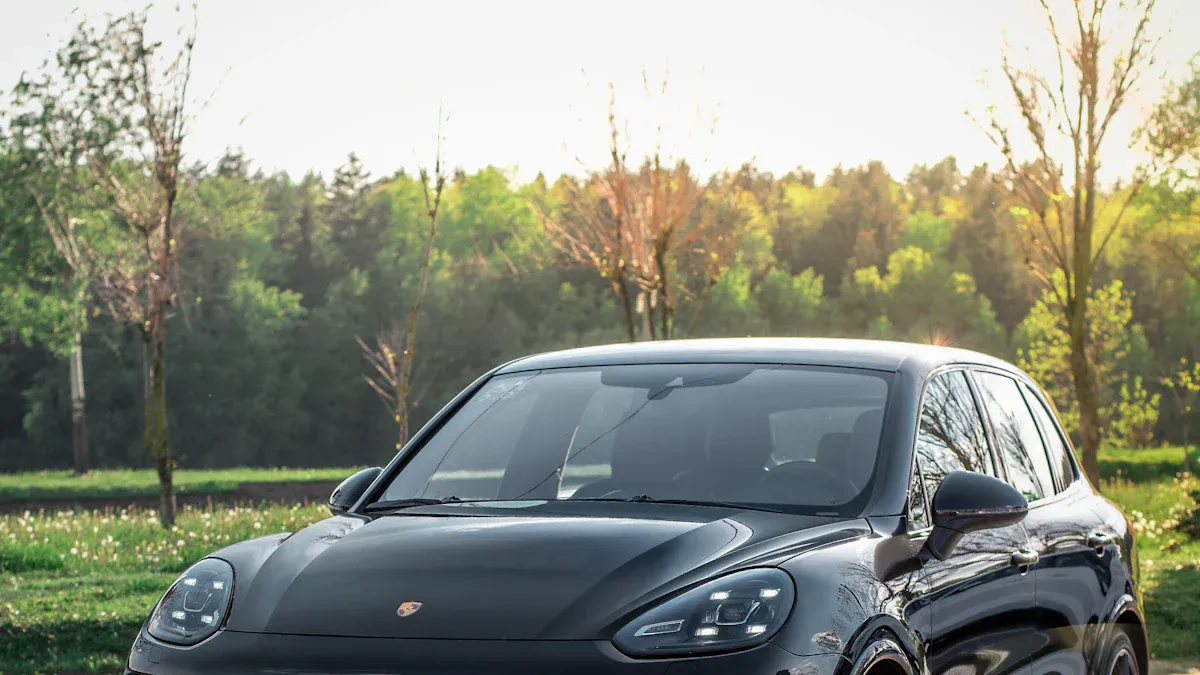
When you look at today’s hybrid electric cars, you can see how early Porsche ideas shaped the industry. What makes Porsche stand out is its ability to blend performance with sustainability. The Porsche 918 showed you that a car can be both fast and eco-friendly. This model pushed other companies to rethink their own electric and hybrid electric cars. You now see more luxury brands offering electric vehicles because of this influence.
Here are some ways Porsche’s early work changed the car world:
The Porsche 918 proved high performance and environmental care can go together.
Its success made other brands focus more on electric and hybrid electric cars.
More luxury car makers now build electric models because of Porsche’s example.
You can also find modern cars that use Porsche’s early hybrid designs. The 1986 Porsche Targa Hybrid uses Vonnen hybrid technology to reach 550 horsepower. The Vonnen 1, a hybrid version of the 2013 Porsche 911, adds a hybrid system to boost performance. These cars show you how Porsche’s early ideas still inspire new models.
Porsche’s Ongoing Innovation
You might wonder what Porsche has done to keep leading in hybrid electric technology. Since 2010, Porsche has launched several important electric and hybrid electric cars. The Cayenne S Hybrid was the first parallel full hybrid in its class. The 918 Spyder brought plug-in hybrid power with an electric-only range. The 919 Hybrid introduced 800-volt technology and advanced energy recovery.
Year | Model | Key Features |
|---|---|---|
2010 | Cayenne S Hybrid | First parallel full hybrid in luxury class, 6.8 l/100 km fuel use |
2013 | 918 Spyder | Plug-in hybrid, 652 kW output, up to 31 km electric-only range |
2013 | 919 Hybrid | 800-volt tech, advanced hybrid management, energy recovery during braking |
You can compare Porsche’s hybrid electric cars to other luxury models. For example, the Cayenne S E-Hybrid uses just 3.4 liters of fuel per 100 km and produces only 79 grams of CO₂ per km. The 918 Spyder uses even less fuel and has lower emissions.
Model | Fuel Use (l/100 km) | CO₂ Emissions (g/km) | Electricity Use (kWh/100 km) |
|---|---|---|---|
Cayenne S E-Hybrid | 3.4 | 79 | 20.8 |
Panamera S E-Hybrid | 3.1 | 71 | 16.2 |
918 Spyder | 3.0 – 3.1 | 70 – 72 | 12.7 |
Porsche’s electric and hybrid electric cars have won awards for their innovation. The Porsche 911 Carrera GTS earned the World Performance Car Award in 2025 for its hybrid technology. The Macan Electric won MotorWeek’s Drivers’ Choice Award in 2023.
Porsche’s focus on electric and hybrid electric cars has changed its brand. In 2024, 27% of new Porsche cars delivered were electrified. Porsche plans for 80% of its sales to be electric by 2030. You can see how Porsche leads the way in electric and hybrid technology.
You might find it amazing that the first Porsche was a hybrid car. This early step changed what you expect from car technology. Today, you see how Porsche’s hybrid and electric models shape the future.
The Porsche 918 blends high performance with sustainability.
Its design inspires new luxury sports cars and smart features.
Experts predict Porsche will lead with new electric models and better batteries.
“History shows us that a balanced cocktail of technology, business, and culture is the recipe for innovation success, and if any of those ingredients is missing, the endeavor will fail.”
You can appreciate what hybrid technology has achieved and look forward to what Porsche will create next.
FAQ
What makes a hybrid car different from a regular car?
A hybrid car uses both an electric motor and a gasoline engine. You get better fuel efficiency and lower emissions compared to regular cars that use only gasoline.
What was special about the Semper Vivus?
You saw the Semper Vivus combine two engines with electric motors. This design let you drive farther and recharge batteries while moving, which was new for its time.
What is a wheel-hub motor?
A wheel-hub motor sits inside the wheel and powers it directly. You do not need a transmission. This makes the car simpler and easier to maintain.
What modern cars use ideas from early Porsche designs?
You find many modern hybrid and electric cars use technology first seen in the original porsche models. These ideas include battery storage, electric motors, and energy recovery systems.
What are the benefits of driving a hybrid car?
You save money on fuel and help reduce pollution. Hybrid cars also offer quiet rides and smooth acceleration. Many people choose hybrids for these reasons.