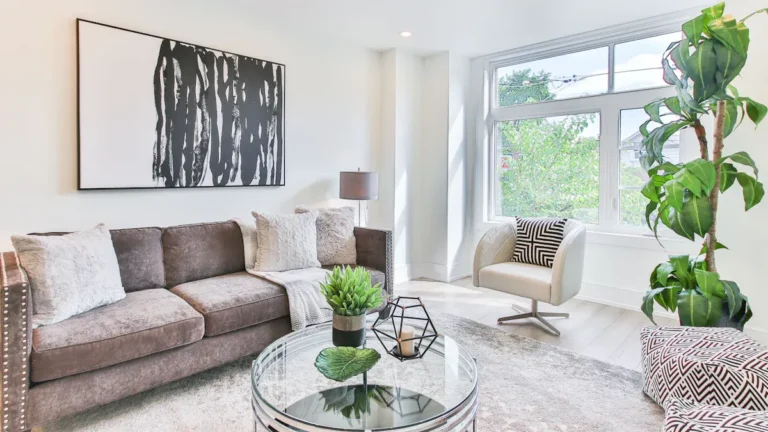
A cozy and inviting lounge starts with a layout that brings people together. Pull seats closer to spark easy conversation and add a soft rug for instant warmth. Layer lamps and overhead lights to create a relaxed glow, then mix in pillows, wood, and woven accents for texture. Finish with a strong focal point, a few plants, and smart storage to keep the space stylish and comfortable.
Plan a Cozy Living Room Layout
When you plan a cozy active room layout, start with pulling the seating inward so the room feels warm, social, and easy to use. Face sofas toward each other, or pair one sofa with chairs to build angled conversation zones that help everyone feel included. Center the group around a fireplace or TV so the room has a clear purpose and a natural gathering spot.
Next, use flexible seating clusters to welcome both everyday hanging out and fuller get-togethers. Add swivel chairs, poufs, or stools that you can move without fuss. Choose a large rug that fits under the seating area, with at least front legs resting on it, so nothing feels scattered.
Should you have space, tuck in a reading chair or small game table to make the room feel shared, lived-in, and yours.
Choose a Warm Living Room Palette
Once your layout feels inviting, the color palette is what gives the room its warmth and calm. You want shades that make everyone feel welcome, settled, and at home. That’s why earth tone palettes work so well. They bring in clay, sand, olive, and stone, which feel grounded and easy to live with.
- Paint walls in soft, nature-based shades for instant comfort.
- Layer warm neutrals through pillows, curtains, and upholstery.
- Add lacquered wall colors when you want depth with a polished, cocooning feel.
- Mix wood tones and woven textures to help the palette feel shared and lived in.
As you build your palette, keep contrast gentle. You’re creating a room that invites people to stay, talk, laugh, and feel like they belong right there with you, every single day.
Pick a Living Room Focal Point
You can anchor your lounge room with a fireplace, because it gives the space a natural place to gather and relax.
Then, you can strengthen that focus with statement wall art that adds personality and pulls your eye exactly where you want it to go.
As you choose your focal point, keep your furniture balanced around it so the room feels calm, connected, and easy to use.
Fireplace As Anchor
One strong focal point can make your lounge room feel calm, welcoming, and easy to use, and a fireplace does that beautifully. When you arrange seating toward it, you create a natural place where everyone feels included. That sense of togetherness matters, especially in a room meant for sharing time.
- Center chairs and sofas around the fire for easy conversation.
- Use hearth symmetry to give the room balance without making it stiff.
- Keep mantel styling simple with candles, greenery, or meaningful pieces.
- Let the fireplace guide nearby tables, rugs, and lighting choices.
Because the fireplace already draws attention, your layout feels settled faster. You don’t have to force coziness. The warmth, shape, and presence of the hearth help your lounge room feel grounded, relaxed, and ready for real life together.
Statement Wall Art
How do you give your room a clear focal point whenever the layout feels a little plain? You choose wall art that instantly welcomes people in and helps the room feel like home. Oversized statement pieces create confidence, warmth, and personality without adding clutter. If you love collected style, gallery wall symmetry keeps everything feeling calm, connected, and easy to enjoy.
| Art choice | Feeling created |
|---|---|
| Large scenery | Grounded and serene |
| Bold abstract | Energetic and modern |
| Family photo series | Personal and welcoming |
| Vintage botanical prints | Soft and timeless |
To deepen that inviting mood, echo your room’s colors in the artwork. Then hang pieces at eye level, so everyone feels included, not dwarfed. When your walls speak clearly, your whole space feels more settled, shared, and beautifully yours every single day.
Balanced Furniture Placement
A moment a lively room feels flat, a clear focal point gives the whole space direction and calm. You help everyone feel at home as you arrange seating around one strong feature, like a fireplace, television, or large window. That anchor makes conversation easier and the room more welcoming.
- Choose one feature that naturally draws the eye initially.
- Build symmetrical seating if you want a settled, gathered look.
- Keep furniture spacing even, so people can move and connect comfortably.
- Angle chairs inward to create warmth and shared attention.
From there, place your sofa to face the focal point, then add chairs or stools that support easy flow. Should your room feel formal, mix in a swivel chair or pouf.
You aren’t just filling space, you’re creating a place where everyone belongs.
Layer Living Room Lighting
Because lighting shapes both mood and function, you’ll get the best result via layering it instead of relying on a single overhead fixture. Start with soft ambient lamp layers that spread an even glow across the room. Then add table lamps, floor lamps, and wall sconces to build warmth at different heights, so the space feels welcoming from every angle.
Next, create mood lighting zones that support how you gather, relax, and unwind. Place a reading lamp near your favorite corner, set dimmable bulbs beside the sofa, and use candles or shaded accents for a gentle evening glow. This mix helps your abode feel connected, calm, and lived in.
Whenever you control brightness throughout the space, you make everyone feel at ease, including yourself. Good lighting quietly says, you belong here tonight, together.
Choose Comfortable Living Room Furniture
Often, the furniture you choose does more than fill the room. It shapes how you relax, connect, and feel welcomed every day. When you pick pieces with deep seating and ergonomic support, your living room becomes a place where everyone wants to stay awhile.
- Choose a sofa that invites people in, not one that feels stiff or formal.
- Add chairs with soft cushions and supportive backs, so guests feel at ease.
- Use moveable ottomans or stools to keep conversations easy and natural.
- Arrange seating to face inward, which helps your space feel warm and shared.
As you build comfort, consider fabric too. Velvet, chenille, and soft woven materials make the room feel gentle and lived in.
Oversize pieces can work beautifully provided they still leave enough space to move comfortably.
Use a Rug to Anchor the Room
As your seating starts to feel more welcoming, the rug is what pulls it all together and gives the room a clear center. It helps everyone feel connected, like each seat belongs in the same conversation. Choose the right rug size so your furniture doesn’t seem scattered or lost in the room.
Then focus on rug placement to create visual unity. A larger rug usually works best because it grounds the full seating area. Try to place at least the front legs of your sofa and chairs on it. That simple move makes the room feel settled, warm, and ready for real life.
Whenever you want more softness underfoot, pick a plush texture that invites people to stay awhile. You want the space to feel easy, shared, and naturally welcoming every day.
Layer Throws and Pillows for Warmth
Once your rug has grounded the seating area, throws and pillows add the softness that makes people want to stay. You create instant comfort whenever you drape a blanket over an armrest and tuck cushions into each corner.
This simple layer makes your room feel welcoming, lived-in, and ready for real connection.
- Choose throw textures like knit, velvet, or fleece for touchable warmth.
- Build pillow layers with different sizes so the sofa feels relaxed, not stiff.
- Repeat two or three colors to keep everything calm and connected.
- Place one throw within easy reach on every main seat so guests feel at home.
Whenever you mix soft fibers and varied shapes, your home feels like a place where everyone belongs. That comfort invites people to settle in and stay longer.
Mix Wood, Stone, and Woven Accents
While soft throws make a room feel gentle, wood, stone, and woven accents give that comfort a strong, grounded base. You create a space that feels lived in and welcoming when you mix a wooden coffee table, a stone vase, and baskets with soft, useful texture.
That balance matters because your room should feel warm, not too polished. Start with wood stone textures through side tables, candle holders, or a fireplace surround.
Then bring in woven accent layers with baskets, rattan trays, cane details, or a handwoven stool. These pieces add depth without making the room feel busy. They also help everyone feel at ease, like they can settle in and stay awhile. Should your seating feel plush, these natural materials keep the room from drifting into flat, forgettable softness.
Decorate Living Room Walls With Purpose
Natural textures give your active room warmth at eye level too, so your walls shouldn’t feel like blank space you forgot to finish.
As you choose art, shelving, or a rich wall treatment, you help the room feel lived in, welcoming, and truly yours. That matters, because people settle in faster as a space feels personal.
- Hang oversize photographs or nature art to echo your grounded palette.
- Build a balanced gallery composition with heirlooms, prints, and simple frames.
- Add wood paneling or textured wallpaper for softness, depth, and quiet comfort.
- Use one bold paint color to anchor the room and make everyone feel held.
As your seating invites conversation, your walls should support that same sense of connection.
Consider them as a backdrop that tells your story without shouting for attention.
Style a Coffee Table Without Clutter
To keep your coffee table polished, mix a few items with different heights and sizes so the arrangement feels balanced, not busy.
Then group them on a simple tray, which gives everything a clear home and makes the surface look calmer right away.
Most notably, leave some breathing room so your table feels styled, useful, and easy to enjoy.
Balance Height And Scale
Whenever your coffee table feels busy instead of beautiful, scale is usually the missing piece. When each object supports the others, your table feels calm, welcoming, and naturally pulled together. You don’t need more decor. You need better vertical proportions and layered silhouettes so every piece belongs.
- Start with one taller element to lift the eye and give the arrangement presence.
- Add a lower, wider piece so the grouping feels grounded and steady.
- Vary heights gently to create movement without making the surface feel crowded.
- Leave breathing room between items so each object feels chosen, not squeezed in.
This balance helps your table connect with the room around it. A low sofa, chunky books, or a sculptural bowl can echo nearby shapes, making your whole space feel like it fits and welcomes everyone in.
Use A Simple Tray
Because a coffee table can collect loose items fast, a simple tray gives everything one calm place to land. You create order without making the room feel stiff, and that balance helps everyone feel at home. A wood, woven, or stone tray can hold a candle, coasters, a small plant, and your current book.
That small boundary matters because it keeps daily life looking cared for, not crowded. You can borrow ideas from entryway trays and vanity catchalls, which group essentials in a way that feels easy and welcoming. Choose one tray that fits your table, then keep the contents useful and personal. Add a bud vase for softness, a candle for warmth, or a meaningful object that sparks conversation. Your table will feel styled, settled, and ready for real existence every day.
Leave Breathing Room
Even though you love a styled coffee table, it needs open space to feel calm and useful. Whenever every inch is covered, the room feels busy, and your table stops serving your everyday life. Leave enough surface area for drinks, books, or a board game, so everyone feels welcome to settle in.
- Group decor in one small zone, not across the whole tabletop.
- Keep the center or one side clear for open circulation and easy reach.
- Choose low pieces that create visual breathing room and protect sightlines.
- Edit often, and keep only items that feel beautiful and personal.
That balance helps your lounge feel warm, easy, and shared.
You create a table that looks thoughtful without seeming precious, so your space invites real connection, not careful hovering around clutter.
Add Plants and Greenery
While furniture and rugs shape the room, plants bring it to life with color, softness, and a calm energy you can feel right away. They help your occupied room feel lived in, welcoming, and connected to the natural world.
Start with easy varieties like pothos, snake plants, or ZZ plants if you’re new to indoor plant care. Then consider greenery placement so each corner feels balanced, not crowded. Set a leafy plant near a window, place a trailing one on a shelf, and add a small pot to a side table for gentle texture.
You can also use woven baskets or ceramic planters to add warmth and character. As you layer in greenery, your space feels more relaxed and familiar, like a room that truly welcomes everyone who walks in.
Display Personal Decor With Intention
After bringing in fresh greenery, you can make the room feel even more like home through choosing keepsakes that truly matter to you.
Mix those personal pieces with art, books, or natural textures so your space tells your story and still looks polished.
Then arrange each item with care, because as you give special decor room to breathe, your home feels warm, clear, and deeply personal.
Curate Meaningful Keepsakes
Because a active room should feel like your story, not a showroom, display keepsakes with care and give each piece room to matter. Whenever you choose only what truly connects to your life, your space feels warmer, calmer, and more welcoming to everyone who enters.
- Group travel finds, heirlooms, and photos using shared meaning, so your sentimental displays feel personal, not crowded.
- Use memory boxes on shelves or tables to hold small treasures while keeping them visible and protected.
- Rotate seasonal mementos, kids’ art, or handwritten notes, so the room keeps growing with your life.
- Place one special object where people naturally pause, like beside books or near a lamp, to spark easy conversation.
This approach helps your residence feel rooted, loved, and deeply yours every day.
Balance Style And Story
Even though you love a polished room, the space feels best whenever your decor reflects your life as much as your taste. As you choose pieces with heart, your residence room feels welcoming, not staged. Blend personal heritage with finishes you already love, so the room feels deeply yours and easy for others to connect with.
| Decor piece | Why it belongs |
|---|---|
| Family photo | Shares warmth and roots |
| Curated mementos | Add meaning without clutter |
Try framing one heirloom textile, stacking favorite books, or placing handmade pottery where people can notice it naturally. This approach lets style support story. It also helps guests feel your values, your memories, and your sense of home. In turn, your space becomes more than attractive. It becomes a place where you, your family, and friends truly belong together.
Arrange Decor Thoughtfully
Personal pieces feel most powerful when you place them with care, not just where there’s empty space. When you group meaningful decor with purpose, your home feels welcoming and truly yours.
Start by giving treasured objects room to breathe, so each one adds warmth instead of clutter. Then use decorative symmetry to create calm, especially on shelves, mantels, or side tables.
- Pair similar items to make displays feel balanced and easy to trust.
- Mix books, framed photos, and natural pieces for visual layering and depth.
- Keep heirlooms near seating areas, where guests can enjoy your story.
- Leave some open space, because breathing room helps special pieces stand out.
This thoughtful approach helps everyone who enters feel included, settled, and connected. It quietly says, you belong here with us, always.
Balance Storage and Comfort
When your existing room needs to work hard without feeling crowded, the best approach is to blend smart storage into the pieces that already make the room feel warm and easy to use. You can choose concealed storage ottomans, benches, and side tables that keep blankets, games, and remotes close without adding visual noise. Multipurpose furniture helps everyone feel welcome because the room stays calm, useful, and ready for real life.
| Piece | Comfort Benefit | Storage Benefit |
|---|---|---|
| Ottoman | Supports feet | Stores throws |
| Bench | Adds seating | Holds baskets |
| Coffee table | Anchors gathering | Masks clutter |
Then layer in vintage baskets, soft textiles, and a large rug so storage feels like part of your home’s story. This way, your space stays open, cozy, and easy for everyone to share.
Frequently Asked Questions
How Do I Make a Living Room Pet-Friendly Without Sacrificing Style?
Select performance fabrics, layered rugs, and refined storage so the room feels curated instead of chaotic. Tuck toys into woven baskets, ground seating with durable textures, and shape a space that feels inviting for both people and pets.
What Are the Best Decorating Ideas for Renters With Strict Lease Rules?
Try peel and stick accents, freestanding storage, oversized rugs, layered fabrics, and easy to move seating. These choices bring texture, color, and comfort while staying within lease limits, giving your space a more finished and personal feel.
How Can I Soundproof a Living Room for Quieter Conversations and TV Watching?
You can make a living room quieter by laying down thick rugs, sealing gaps around doors and windows, and hanging dense sound blocking curtains. Place acoustic panels where sound first bounces off the walls, then add softer wall finishes and upholstered furniture to reduce echo and make conversations and TV audio easier to hear.
What Living Room Updates Add the Most Resale Value on a Budget?
On a budget, the living room updates that boost resale value most are fresh paint, updated light fixtures, a properly sized rug, and furniture arranged to make the space feel open and functional. Soft earthy colors and a layout that highlights flow and comfort help buyers picture themselves living there right away.
How Do I Decorate a Living Room That Also Serves as a Home Office?
Define two distinct zones by anchoring the seating area with a large rug, then set up a polished work corner with a compact desk, a swivel chair, and wall shelves. This layout preserves movement, layers in texture, and gives the room a comfortable, inviting balance.