Bluefin tuna stands as the most expensive fish in the world. In 2019, a single Bluefin sold for a record-breaking ¥333.6 million—about $3.1 million. You might wonder what makes this seafood so valuable. Rarity, high demand, and the thrill of auction prestige all play a part. Many people crave the unique taste and silky texture that only the finest gourmet fish can offer. When you see these prices, you witness the fascination with exclusivity and luxury in dining.
Key Takeaways
Bluefin tuna is the most expensive fish, with record sales reaching over $3 million. Its rarity and high demand drive its price.
The unique flavor and texture of bluefin tuna, especially the toro cut, make it a sought-after delicacy in gourmet cuisine.
Other luxury seafood items, like caviar and fugu, also command high prices due to their rarity and the skill required to prepare them safely.
Sustainability and strict regulations on fishing contribute to the high cost of luxury seafood, as overfishing has made some species scarce.
When dining on luxury seafood, expect not just a meal, but an experience that showcases the artistry and care of fine dining.
Most Expensive Fish: Bluefin Tuna

Bluefin Tuna Record Sales
When you look at the world of luxury seafood, bluefin tuna always stands out. This fish has broken records at major seafood auctions. Here are some of the most jaw-dropping sales:
In Tokyo, a bluefin tuna sold for $3.1 million at the Toyosu fish market. This is the highest price ever paid for a single fish.
Before that, the record was 155 million yen (about $1.4 million) in 2013.
In 2017, another bluefin tuna fetched $632,000, which was the second highest at that time.
You can see that the most expensive fish can reach prices that seem almost unreal. Bluefin tuna prices can swing wildly. Sometimes, a fish sells for $1.8 million, which is much less than the record but still far above what you see for other high-value fish. No other seafood comes close to these numbers. This makes bluefin tuna the most expensive fish in the world.
Why Bluefin Tuna Is Prized
You might wonder what makes bluefin tuna so special. Chefs and seafood lovers look for certain qualities in the most expensive fish. Here are some reasons why bluefin tuna is prized:
Impressive size and striking appearance
Deep red, marbled flesh that looks beautiful on a plate
Rich, complex flavor that mixes umami, sweetness, and a hint of the sea
Buttery texture, especially in the ‘toro’ or belly cut
Rarity and high demand
Let’s break it down even more:
The color of high-grade bluefin ranges from deep red to pink, with white marbling.
The flavor is complex. You taste umami, sweet, salty, sour, and even a little bitterness.
The texture is so tender that you barely need to chew.
The fat content in bluefin tuna, especially in the toro, can reach 30-40%. This part melts in your mouth and gives a rich, unforgettable taste. The ‘Otoro’ cut, taken from the underbelly, is the most luxurious. It is packed with healthy Omega-3 oils and can sell for millions. When you eat it, you get a unique experience that no other fish can match.
Tip: If you ever get the chance to try bluefin tuna, start with the toro. You will understand why it is the most expensive fish on the menu.
Bluefin Tuna in Gourmet Cuisine
You find bluefin tuna in some of the world’s best restaurants. Japanese cuisine celebrates this fish, especially in sushi and sashimi. Chefs love its rich flavor and smooth texture. Here are some signature dishes that feature bluefin tuna:
Seared Bluefin Tuna Tartare
Seared Bluefin Tuna Ceviche
Asian Seared Bluefin Tuna
Seared Tuna Ramen
Southern Bluefin Tuna Tataki
You also see bluefin tuna served as sashimi, seared tuna steak, or even in tuna ceviche. In Japan, people eat more bluefin tuna than anywhere else. The country is the largest importer, but the USA, Spain, and Italy are catching up. Sushi and sashimi have become popular in many places, so more people want to try the most expensive fish.
Bluefin tuna is not just a meal. It is a symbol of luxury and skill in the kitchen. When you taste it, you join a tradition that spans cultures and continents.
Most Expensive Seafood: Beyond Bluefin Tuna
When you think about the most expensive seafood, Bluefin tuna often comes to mind first. But there are other delicacies that can surprise you with their price and prestige. Let’s explore what makes these expensive seafoods so special and why they stand out in luxury dining.
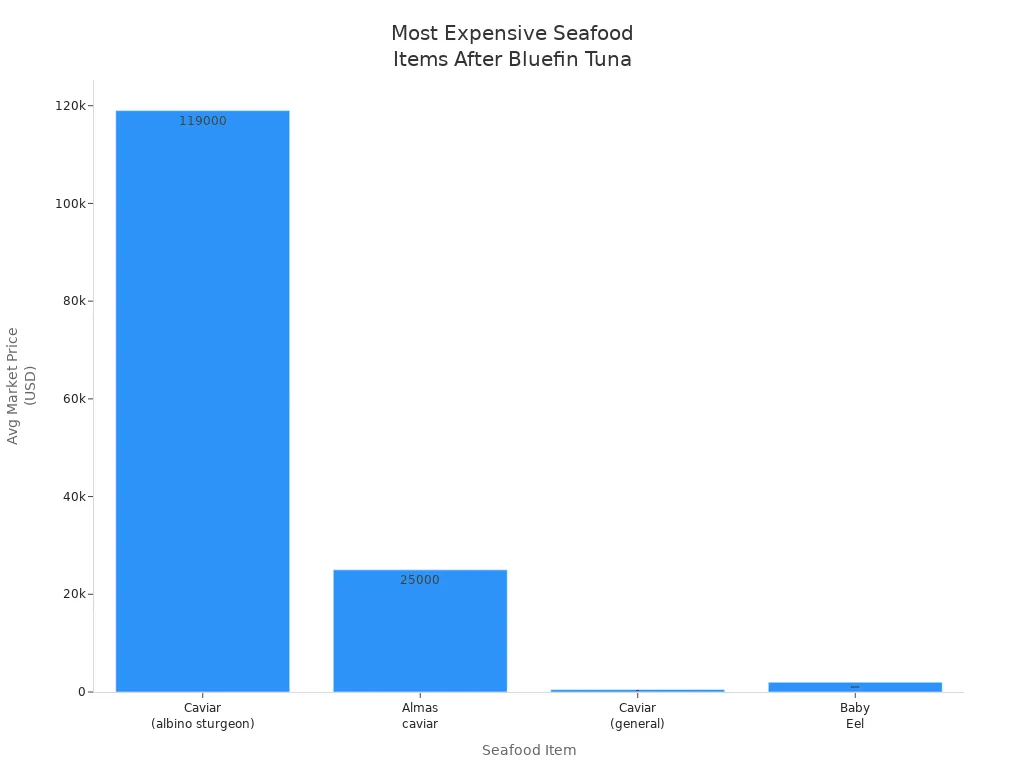
Here’s a quick look at some of the priciest seafood items after Bluefin tuna:
Seafood Item | Average Market Price |
|---|---|
Caviar (albino sturgeon) | Approximately $119,000 for 2 pounds |
Almas caviar | Approximately $25,000 for 1 kg |
Caviar (general) | $80 to $500 per ounce |
Puffer Fish (Fugu) | Price varies, luxury item |
Baby Eel | $2,000 per serving |
Beluga Sturgeon Caviar
You might know caviar as a symbol of luxury. Beluga sturgeon caviar is the most famous and expensive type. This caviar comes from the Beluga sturgeon, a fish that can live for decades and grow very large. The eggs, or roe, are the biggest among all sturgeon caviars. You can spot them by their shiny, gray pearls.
Beluga sturgeon caviar costs between $400 and $500 per ounce. Some rare types, like albino sturgeon caviar, can reach $119,000 for just two pounds. The price stays high because traditional harvesting often means the sturgeon does not survive, making the roe even rarer. Today, many farms use humane methods to protect the species and keep the supply steady.
When you taste Beluga sturgeon caviar, you get a creamy, buttery flavor that melts on your tongue. People love to serve it cold, often with blinis, crackers, or toast points. You might see it on top of pasta or risotto in high-end sushi restaurants. This delicacy is usually reserved for special occasions or for those who want to try the most expensive seafood.
Note: The timing of harvesting is key. Farmers collect the roe during the sturgeon’s spawning season, which affects both quality and availability.
Almas Caviar
If you want to try the rarest caviar in the world, look for Almas caviar. This delicacy comes from the albino Beluga sturgeon, which lives mostly in the Caspian Sea. These sturgeons can take decades to mature before they produce roe, making Almas caviar extremely scarce.
Almas caviar sells for about $25,000 per kilogram. What makes it even more special is the way it’s packaged. You get it in a 24-karat gold-plated tin, which keeps the taste pure and adds to its luxury status. Each tin has a unique tracking number and comes with documents that tell you about the fish and the harvest date. Only a few dealers in the world can sell Almas caviar, so you know you’re getting something exclusive.
The flavor of Almas caviar is complex. You might taste butter, nuts, and a hint of the ocean. The eggs are firm but delicate, bursting with a silky, rich texture. Producers use strict quality checks to make sure only the best caviar reaches your table. Because of overfishing and environmental rules, Almas caviar is even harder to find today. Many farms now use eco-friendly methods to protect the sturgeon and keep this delicacy available for future generations.
Fugu (Pufferfish)
Fugu is one of the most famous delicacies in Japan. This pufferfish is known for its unique taste and the thrill of eating something that can be deadly if not prepared right. Only licensed chefs can serve fugu in Japan. They train for years and must pass tough exams to make sure they can remove the toxic parts safely. The pass rate for these exams is only about 35%, so you know you’re in good hands when you eat fugu at a top restaurant.
You can try fugu as sashimi, in hot pots, or as part of a multi-course meal. Prices for fugu sashimi start at around 3,000 yen and can go much higher. A full fugu meal can cost between 10,000 and 30,000 yen. In the United States, fresh cuts of fugu range from $3 to $13 per pound, but the real experience comes from a high-end sushi restaurant in Japan.
Since 2012, restaurants in Japan can also serve fugu that has been prepared and packaged by licensed experts elsewhere. This keeps safety standards high and lets more people try this rare treat. Fugu is not just about taste—it’s about the excitement and skill behind the dish.
Turbot
Turbot is a flat fish that many chefs call the “king of the sea.” You find it mostly in Europe, especially in Spain and Portugal. Turbot stands out for its delicate, mild flavor and firm, white flesh. It’s a favorite in gourmet kitchens and high-end sushi spots.
The price of turbot has gone up a lot in recent years. Before the pandemic, it cost about £18 per kilo. Now, you might pay as much as £65 per kilo. In Japan, turbot sells for about 10.73 to 30.81 per kilogram. The high price comes from the cost of breeding and farming turbot, plus strong demand from top restaurants around the world.
Turbot is rich in protein and nutrients, making it a healthy choice as well as a luxury. Chefs love to serve it grilled, roasted, or as sashimi. Its subtle taste lets the natural flavors shine, making it a true delicacy for seafood lovers.
Dover Sole
Dover sole is another prized fish in European fine dining. You find it on the menus of many Michelin-starred restaurants. This fish has a sweet, mild flavor and a firm, yet tender texture. Chefs often serve it whole, filleted at the table, or cooked in classic French styles like “Sole Meunière.”
The average price for Dover sole in Europe ranges from £26 to £38 per kilogram, with a common price around £29 per kilo. In some markets, you might see it for about $48.99 for a whole fish. The high price reflects its delicate taste, careful handling, and the skill needed to prepare it perfectly.
Dover sole is a favorite for special occasions. Its subtle flavor pairs well with simple sauces and fresh herbs. When you order Dover sole, you get a dish that shows off the chef’s technique and the quality of the seafood.
Tip: If you want to explore more expensive seafoods, try wild king salmon or king crab. Both are known for their rich flavor and are often featured in high-end sushi and gourmet dishes. Wild king salmon offers a deep, buttery taste, while king crab brings sweet, tender meat that’s perfect for special celebrations. Roe from these species is also considered a delicacy and adds a burst of flavor to many luxury plates.
What Makes Luxury Seafood Expensive
Luxury seafood comes with a high price tag for several reasons. You might wonder what sets these delicacies apart from everyday fish. Let’s break down what makes these items so valuable in the world of fine dining.
Rarity and Harvesting
Rarity plays a huge role in the price of luxury seafood. When a species becomes hard to find, like the white abalone or Napoleon wrasse, the price goes up fast. Overfishing has made some seafood almost impossible to catch. For example, the sturgeon, which produces the world’s most famous caviar, faces strict limits because its numbers have dropped. The rarer the sturgeon, the higher the price you pay for its eggs. Harvesting these rare fish is not easy. Some, like the sturgeon, live for decades before they produce caviar. This long wait adds to the cost. You see the same pattern with other luxury seafood—when it’s hard to find and even harder to harvest, the price climbs.
The price of caviar and abalone rises as these species become rare.
The sturgeon’s long life and slow reproduction make its caviar even more exclusive.
Some fish, like the Napoleon wrasse, have become luxury items because of their scarcity.
Culinary Demand
Culinary trends shape what you see on fine dining menus. When chefs and diners want more seafood, the price follows. Health trends have made seafood, especially omega-3 rich options like sturgeon and salmon, more popular. Sushi, poke bowls, and beautiful seafood platters have turned these dishes into lifestyle choices. You might notice that during holidays or tourist seasons, the price of luxury seafood jumps. People want the best, and they are willing to pay for freshness and presentation.
“Menu prices overall continue to rise, so seafood dishes rising in cost is in line with the rest of the industry,” says one expert. The health benefits and the look of these dishes keep demand high.
Sustainability and Regulation
Sustainability rules also affect what you pay for luxury seafood. Many wild fish stocks, including sturgeon, have dropped because of overfishing. Even with fish farms, the supply cannot always meet demand. Some countries have strict rules to protect rare species, which limits how much can be caught. This makes the price go up. You might see more seasonal or less common fish on menus as chefs try to support healthy oceans. Sometimes, wild-caught or fresh seafood costs more than frozen options, especially when it comes from countries with strong regulations.
Sustainable seafood can be expensive, especially if it’s wild-caught.
Many sturgeon products come from places with different rules, which affects both price and availability.
Choosing seasonal fish helps support fishing communities and keeps prices fair.
Caviar and Fine Dining Experiences

Caviar Service
What does caviar service look like in a fine dining restaurant? You often see caviar served with style and care. Chefs want you to enjoy every detail. Many restaurants offer caviar flights, where you taste different types side by side. Some places, like Caviar Russe in New York City, pair caviar with dishes such as Wagyu beef or foie gras. Others, like The Caviar Co. in San Francisco, create a relaxed setting and match caviar with local drinks.
Here’s a look at how top restaurants serve caviar:
Restaurant Name | Location | Caviar Service Tradition |
|---|---|---|
Caviar Russe | New York City | Caviar flights, pairings with Wagyu beef and foie gras |
The Caviar Co. | San Francisco | Modern flights, local beverage pairings |
Petrossian | West Hollywood | Russian style with blinis and crème fraîche, plus caviar-topped eggs |
Beauty & Essex | Las Vegas | Playful caviar-topped tacos and caviar-stuffed donuts, with special cocktails |
Caviar Bar | Las Vegas | Premium caviar, traditional and creative dishes, elegant setting |
Atlas | Atlanta | Southern twist, caviar with regional dishes and a big wine list |
You might see caviar served on a cold plate, with mother-of-pearl spoons. This keeps the taste pure. Classic sides include blinis, toast points, and crème fraîche. Some chefs add a modern touch, topping eggs or even tacos with caviar. You get to taste the salty, buttery flavor in many ways.
Luxury Seafood Presentation
What makes luxury seafood stand out on your plate? Presentation is key. Chefs use simple, elegant plates to let the seafood shine. You might see fresh lobster split and arranged with herbs and lemon. Sometimes, lobster comes with drawn butter or a light sauce. Alaskan king crabs often arrive cracked and ready to eat, with the sweet meat displayed on ice.
Crab dishes can look like art. Chefs stack crab legs or shape crab salad into neat towers. You may find caviar on top of lobster or crab for extra flavor and style. Fine dining restaurants love to pair these dishes with sparkling wine or chilled vodka.
When you order luxury seafood, you get more than just food. You get a show. Servers might present the dish at your table, explaining each part. You taste the freshness and see the care in every detail. This is what makes luxury seafood, like caviar, lobster, and crab, a true experience.
You see what makes luxury seafood so special—rare finds like tuna, king crab, and salmon bring unique flavors and stories to your table.
The most expensive fish and seafood, such as bluefin tuna, king crab, and salmon, stand out for their rarity and taste.
Prices reflect not just the food, but the hard work and care behind each dish.
Salmon, in particular, shows up in many fine dining menus, loved for its rich flavor and versatility.
From salmon platters to smoked salmon, you get a taste of true craftsmanship.
“A great seafood platter is all about balance—combining raw, cooked, and smoked options like oysters, crab, and smoked salmon, accompanied by tangy sauces and citrus.”
When you enjoy salmon, tuna, or caviar, you join a world where taste, rarity, and tradition matter most.
FAQ
What makes sturgeon caviar so expensive?
You pay a lot for sturgeon caviar because it comes from rare fish. Farmers wait years for sturgeon to mature. The eggs are large and taste rich. Many people want this delicacy, so prices stay high.
What is the difference between sturgeon caviar and other types?
Sturgeon caviar comes from sturgeon fish. Other caviar types use eggs from salmon or trout. Sturgeon caviar has bigger eggs and a smoother taste. Chefs prefer it for luxury dishes.
What does the term caviar mean?
The term caviar means fish eggs, usually from sturgeon. People use it for fancy seafood. True caviar always comes from sturgeon, not other fish.
What is special about the beluga species?
The beluga species gives you the largest sturgeon caviar eggs. These eggs look shiny and taste creamy. Only a few places in the world can harvest beluga caviar, making it rare.
What foods pair well with sturgeon caviar?
You can eat sturgeon caviar with blinis, toast, or eggs. Some chefs serve it with crème fraîche. Simple foods help you taste the caviar’s flavor.